
Drie Dames — History & Facts
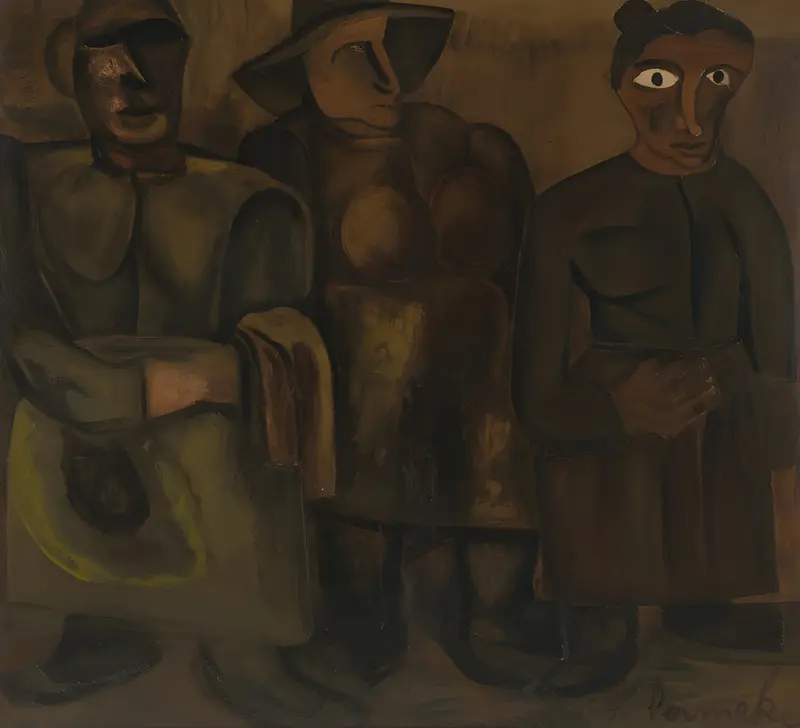
Drie Dames by Constant Permeke features three women, depicted in a rural setting. The colors are earthy and warm, with browns, greens, and muted tones dominating the palette. Each figure is robust and expressive, reflecting the artist's focus on the human form.
The background suggests a simple, pastoral landscape, enhancing the intimate atmosphere of the scene. The painting is executed in oil on canvas, showcasing Permeke's characteristic bold brushwork and thick application of paint. The figures are rendered with a sense of volume and solidity, emphasizing their physical presence. The composition is balanced, with the three women arranged in a way that draws the viewer's eye across the canvas.
The approximate dimensions of the work are 100 x 80 cm. Constant Permeke was a prominent figure in Belgian Expressionism, known for his depictions of rural life and the human condition. Drie Dames is a notable example of his work from the 1920s, reflecting the artist's interest in the strength and resilience of women in agricultural settings. An interesting fact about this painting is that it embodies Permeke's belief in the dignity of labor, showcasing the everyday lives of women in a way that elevates their status in society.
More Artworks by Constant Permeke
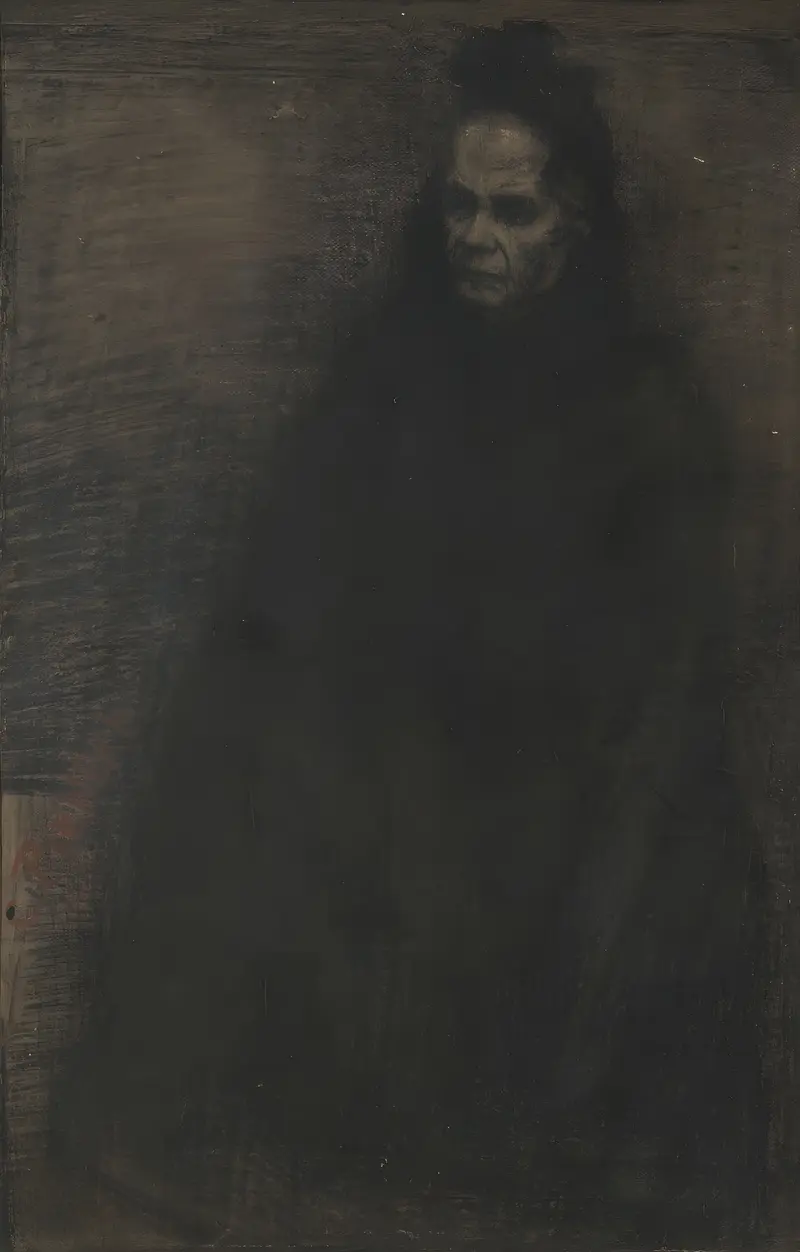
De moeder van de schilder
Constant Permeke
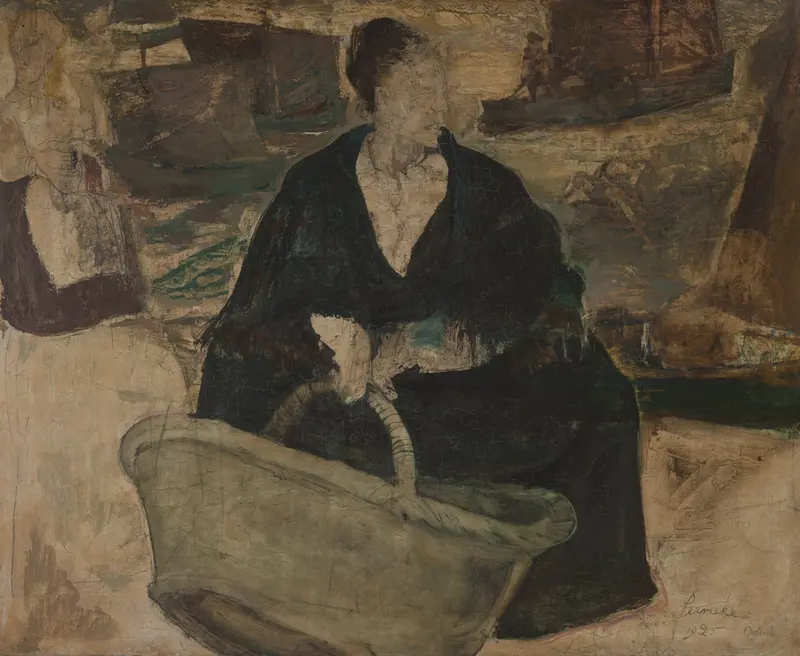
Fisherman’s Wife
Constant Permeke
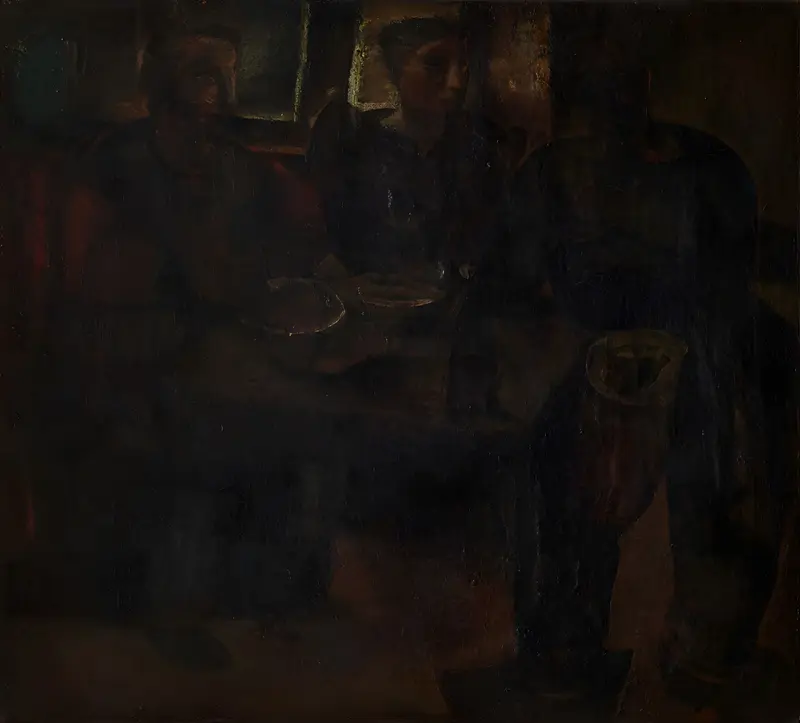
Het maal van de vissers
Constant Permeke

Rechtstaand naakt
Constant Permeke

De roeier
Constant Permeke

Den welgezinden
Constant Permeke
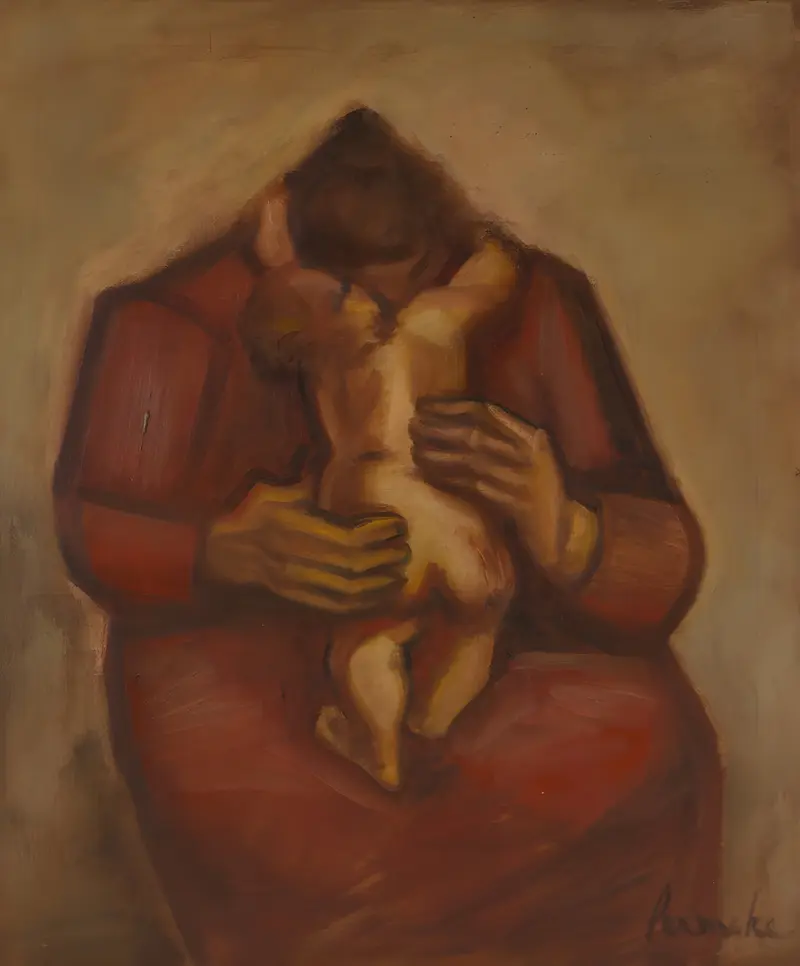
Moederschap
Constant Permeke
De Sjees
Constant Permeke
Portret van Gustave Van Geluwe
Constant Permeke
Drie boerinnen
Constant Permeke



