Drie koppen van geiten — History & Facts
In the stillness of Drie koppen van geiten, the echoes of life and legacy resonate through the painted canvas, urging us to confront the weight and fleeting nature of existence. Look to the left at the prominent goat head, its gaze piercing and unwavering. The intricate detailing of its fur invites you closer, while the muted earth tones harmonize with the understated background, allowing the subject to emerge with quiet authority. The careful brushwork reveals a masterful balance of light and shadow, capturing the texture and vitality of the animal, suggesting both life and stillness in a moment frozen in time. As you explore further, notice the contrasts within the composition — the two heads, one lively and the other lifeless, whisper stories of vitality and mortality.
This dichotomy might allude to the transience of youth and vigor, juxtaposed with the inevitability of decay. Each gaze holds a different narrative, layered with unspoken truths about legacy and the passage of time, inviting reflections on what remains after the end. Created in the early 17th century, this work emerged during a period of immense artistic achievement in the Dutch Golden Age. Berchem, known for his pastoral scenes and animal studies, produced this piece amidst a flourishing art market, where patrons sought to celebrate life's simplicity and beauty through nature’s forms.
It stands as a testament to both his talent and the era's fascination with capturing the essence of existence in all its complexities.
More Artworks by Nicolaes Pietersz Berchem
Browse all →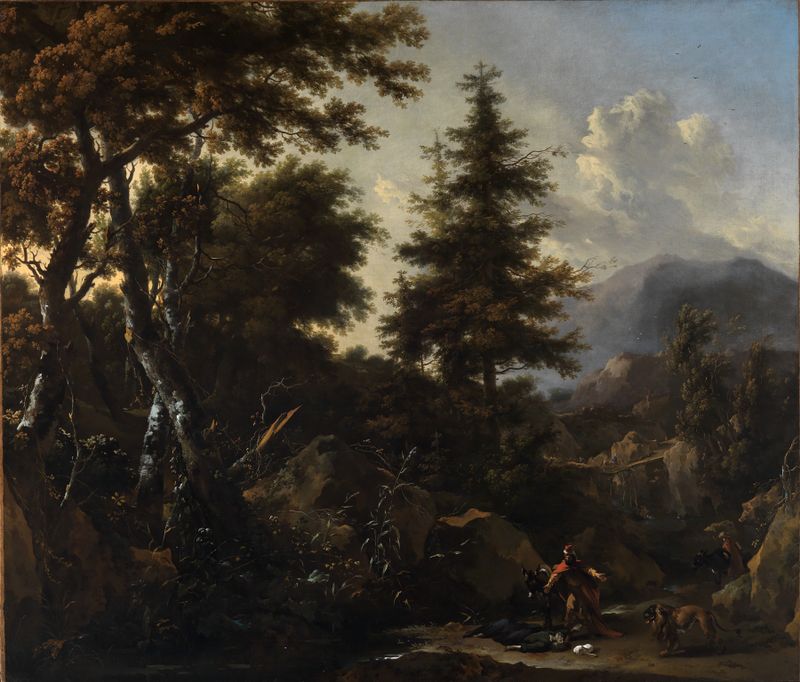
Schlucht im Bergwald mit alttestamentlicher Staffage
Nicolaes Pietersz Berchem
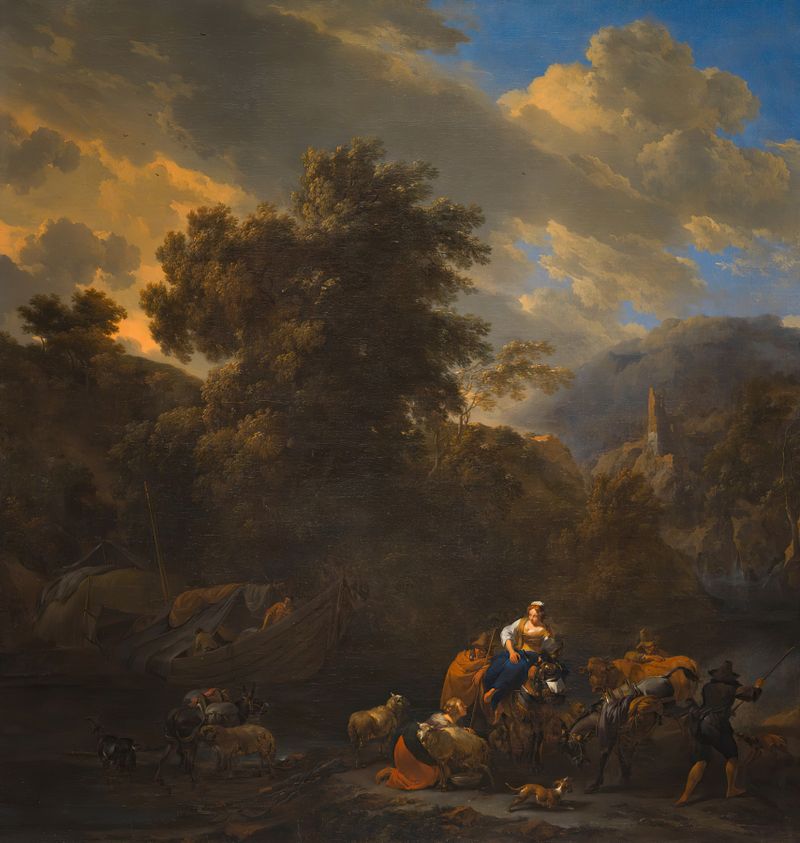
Italianate Landscape with Figures and Pack Animals on the Banks of a River
Nicolaes Pietersz Berchem
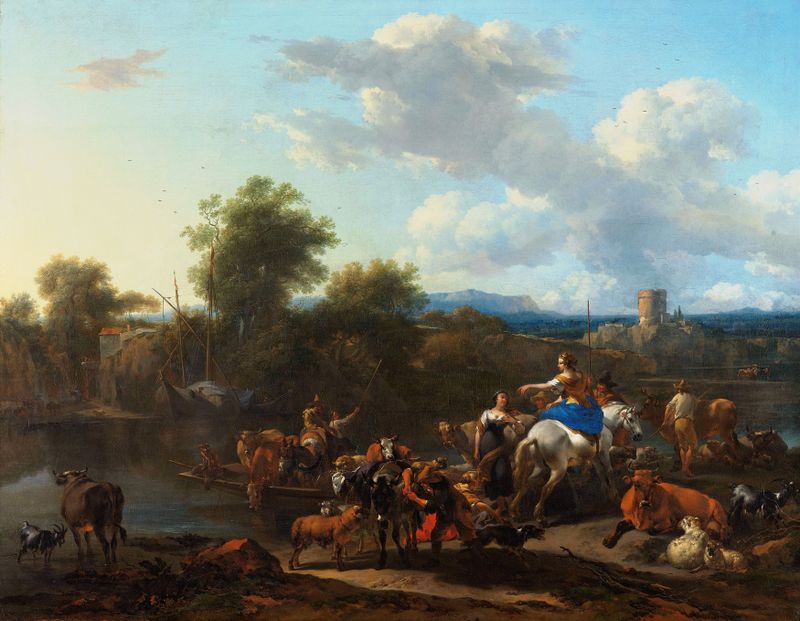
The Cattle Ferry
Nicolaes Pietersz Berchem
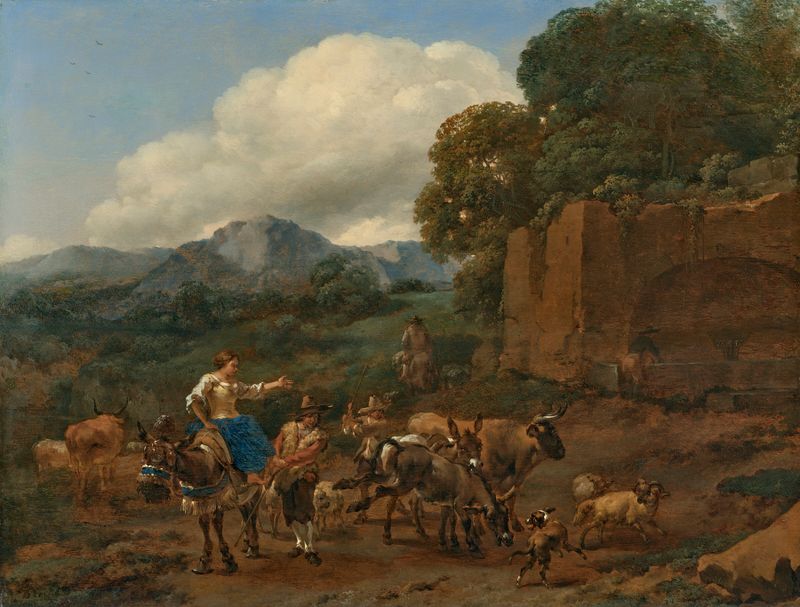
An Italianate landscape with a shepherdess on a mule and a shepherd, herding cattle, sheep, donkeys and dogs on a mountain track next to ruins
Nicolaes Pietersz Berchem
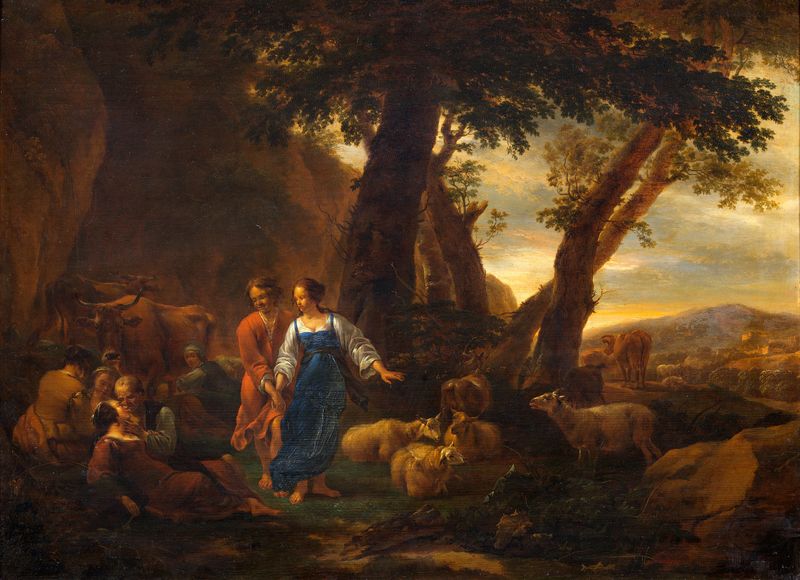
Landscape with Peasants and Cattle
Nicolaes Pietersz Berchem
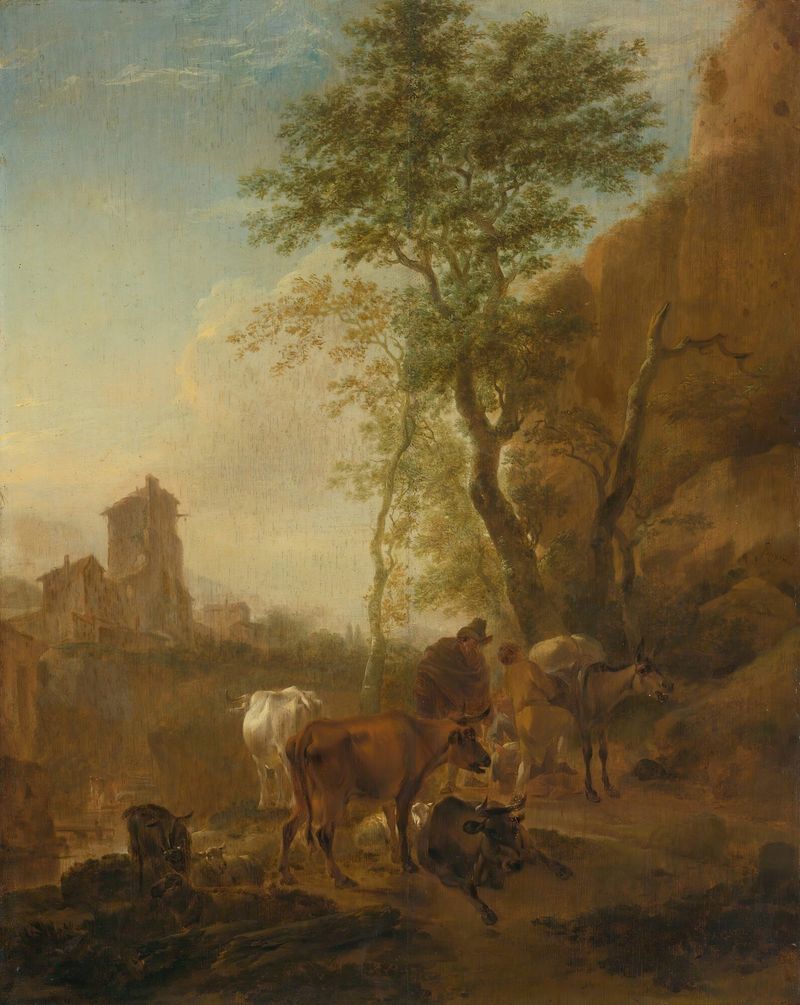
Italianate Landscape With Cows
Nicolaes Pietersz Berchem
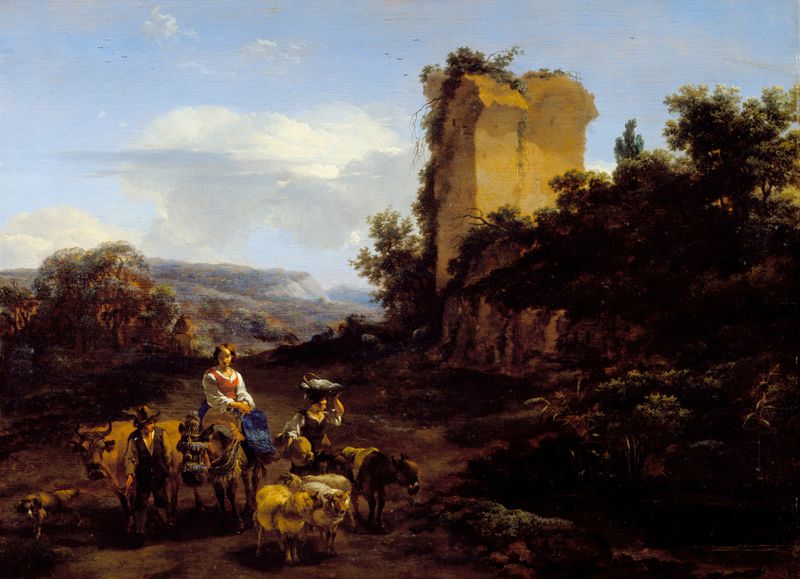
Landscape with Ruins and Travelers
Nicolaes Pietersz Berchem
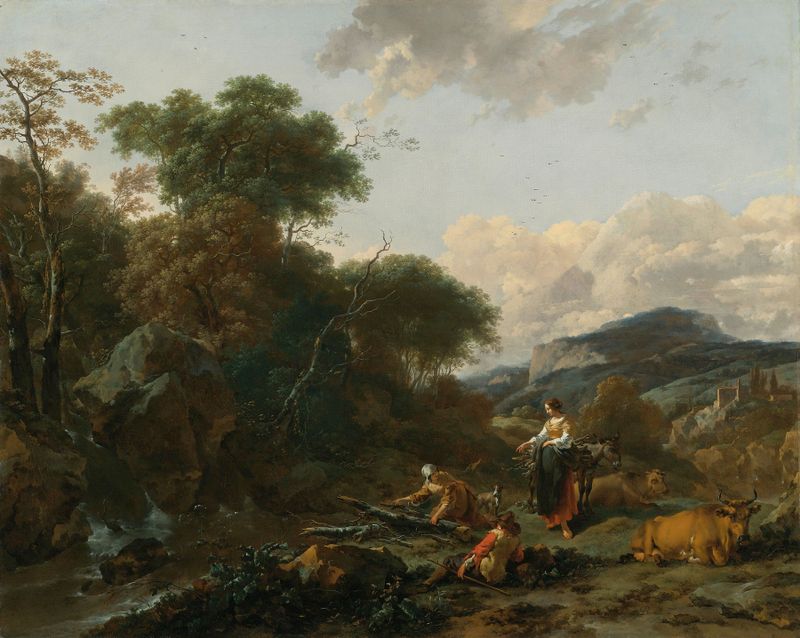
A Landscape With Figures
Nicolaes Pietersz Berchem
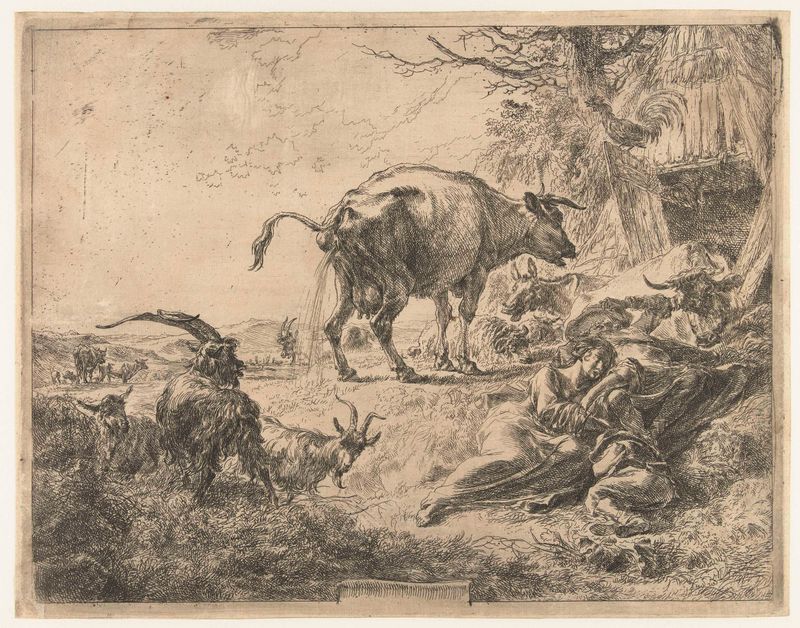
Slapende herdersfamilie en rustend vee
Nicolaes Pietersz Berchem
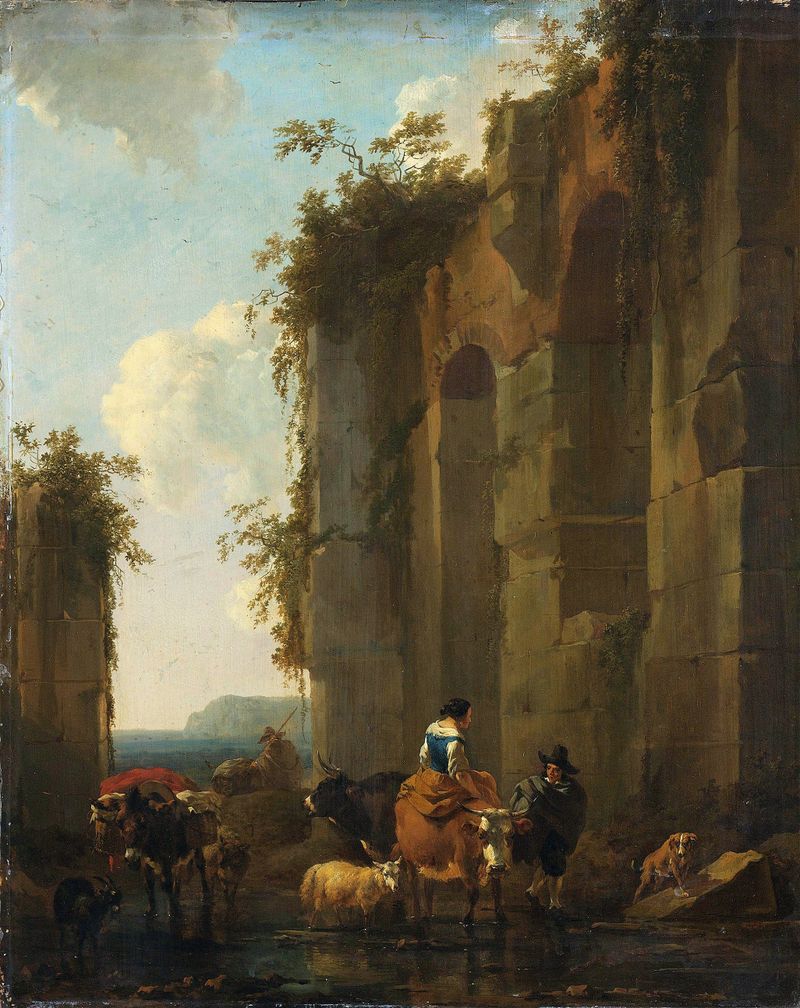
Ruins in Italy
Nicolaes Pietersz Berchem