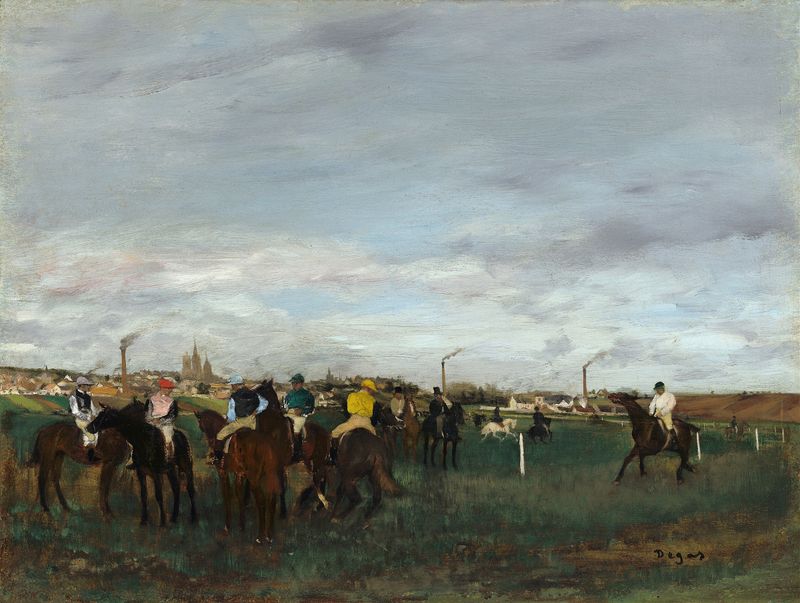
Drie schapen — History & Facts
Can beauty exist without sorrow? In Drie schapen, the gentle presence of three sheep evokes an unsettling contemplation of mortality, inviting viewers to ponder the delicate balance between life and loss. Look to the center of the canvas, where the sheep graze tranquilly, their woolly coats a soft contrast to the earthy palette surrounding them. Notice how the light bathes them in a warm glow, enhancing the texture of their fleece and creating a serene atmosphere. The artist's deft use of soft brushwork and nuanced colors emphasizes their peaceful existence against an idyllic pastoral backdrop, drawing the viewer’s gaze to the harmony of nature. Yet, beneath this tranquil exterior lies an emotional tension.
The lush grasses and soft sky suggest abundance, while the sheep's solitary posture hints at vulnerability. The composition subtly reinforces the inevitability of life's fragility, reminding us that even in moments of beauty, there exists an undercurrent of sadness. The sheep, symbols of innocence, may also embody the transient nature of life, challenging us to reflect on what it means to exist in a world where beauty is often shadowed by sorrow. During the years between 1646 and 1652, Berchem worked amidst a thriving Dutch art scene, renowned for its bucolic imagery.
The tranquility depicted in this piece aligns with the broader Caravaggisti influence, as artists explored themes of nature and everyday life. It was a time of great prosperity in the Netherlands, yet the awareness of mortality lingered in the collective consciousness, influencing the way beauty was portrayed in art.
More Artworks by Nicolaes Pietersz Berchem
Browse all →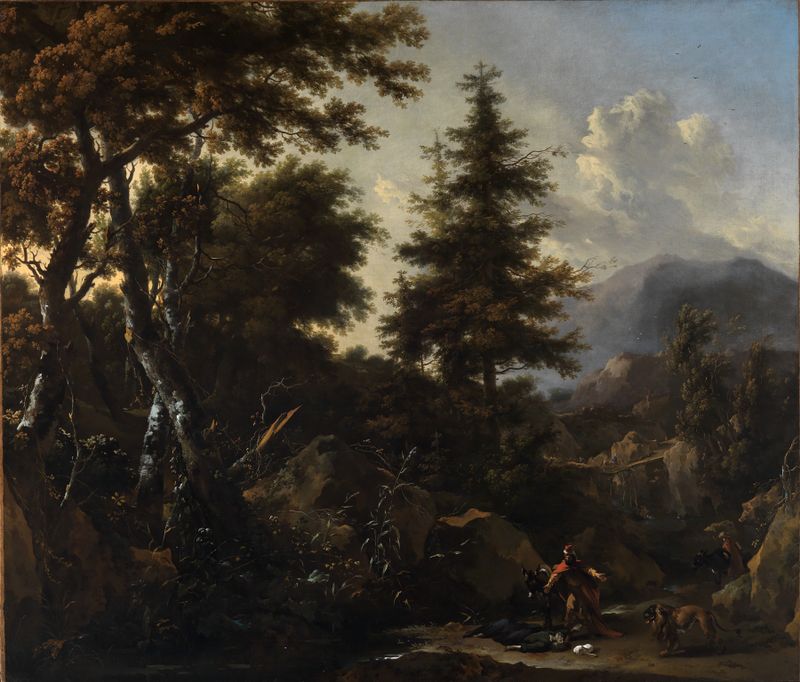
Schlucht im Bergwald mit alttestamentlicher Staffage
Nicolaes Pietersz Berchem
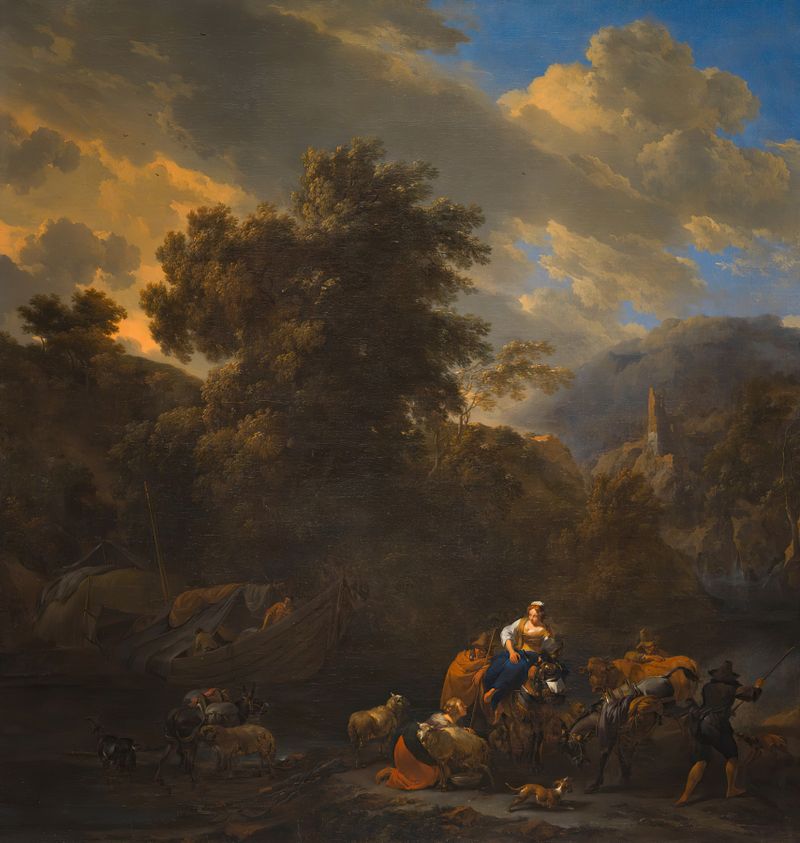
Italianate Landscape with Figures and Pack Animals on the Banks of a River
Nicolaes Pietersz Berchem
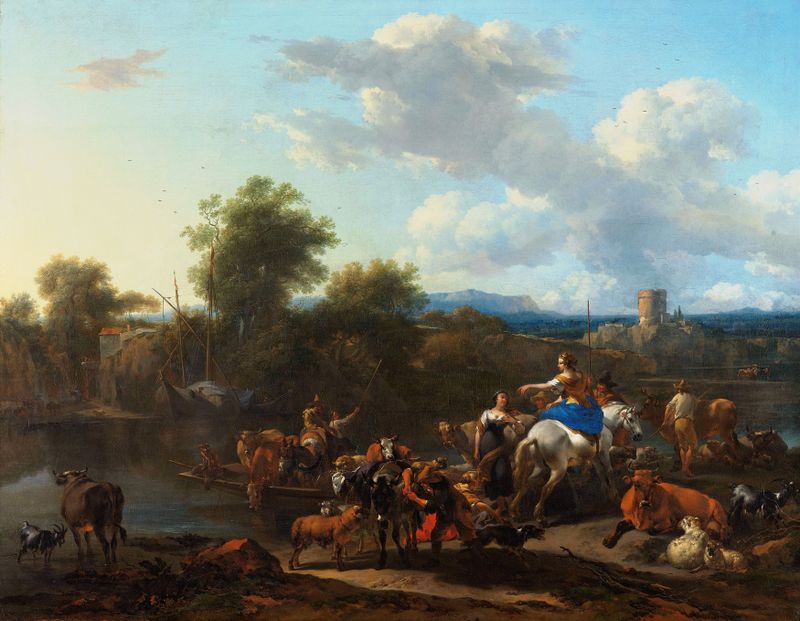
The Cattle Ferry
Nicolaes Pietersz Berchem
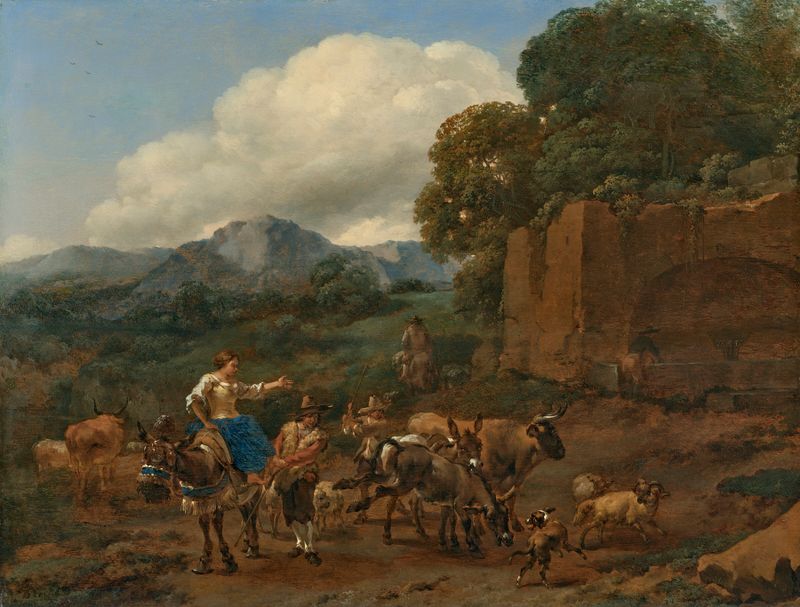
An Italianate landscape with a shepherdess on a mule and a shepherd, herding cattle, sheep, donkeys and dogs on a mountain track next to ruins
Nicolaes Pietersz Berchem
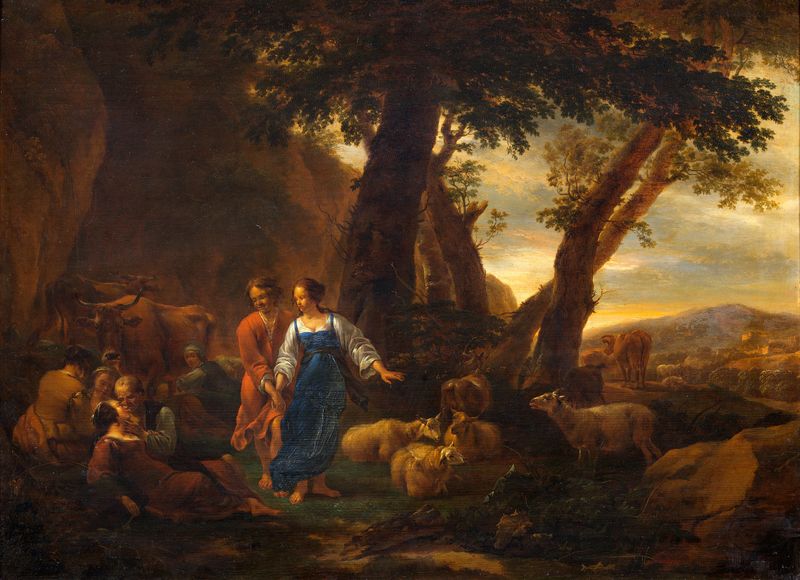
Landscape with Peasants and Cattle
Nicolaes Pietersz Berchem
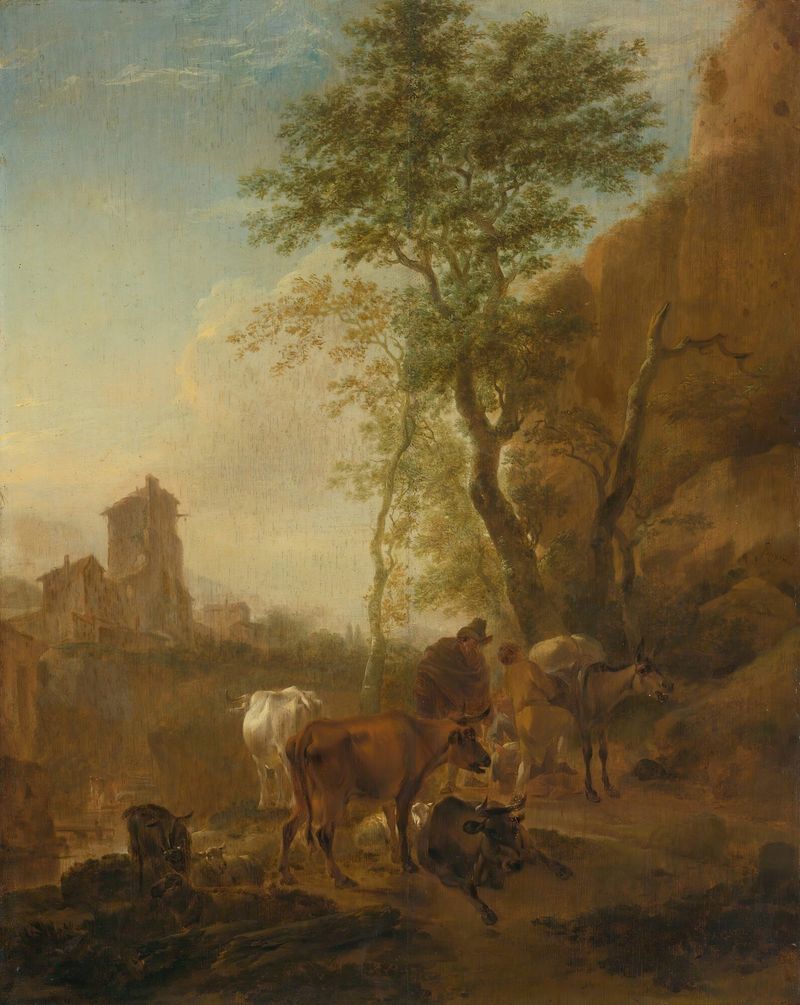
Italianate Landscape With Cows
Nicolaes Pietersz Berchem
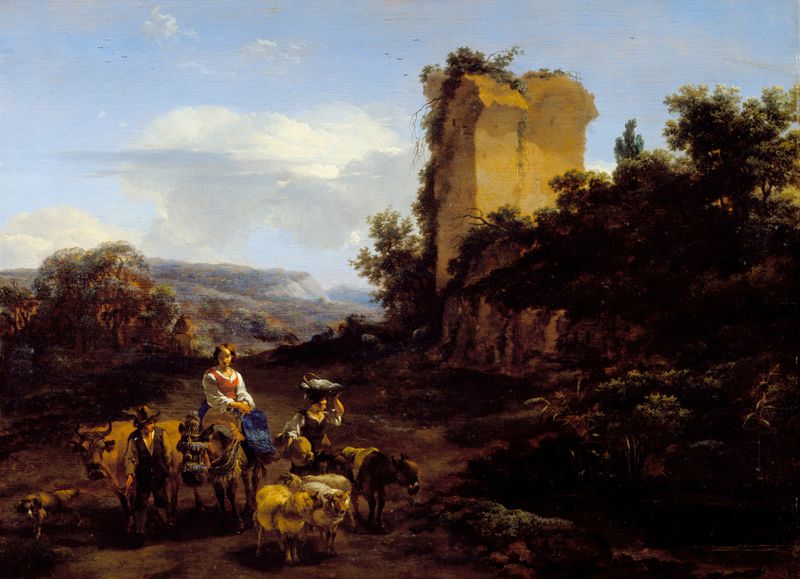
Landscape with Ruins and Travelers
Nicolaes Pietersz Berchem
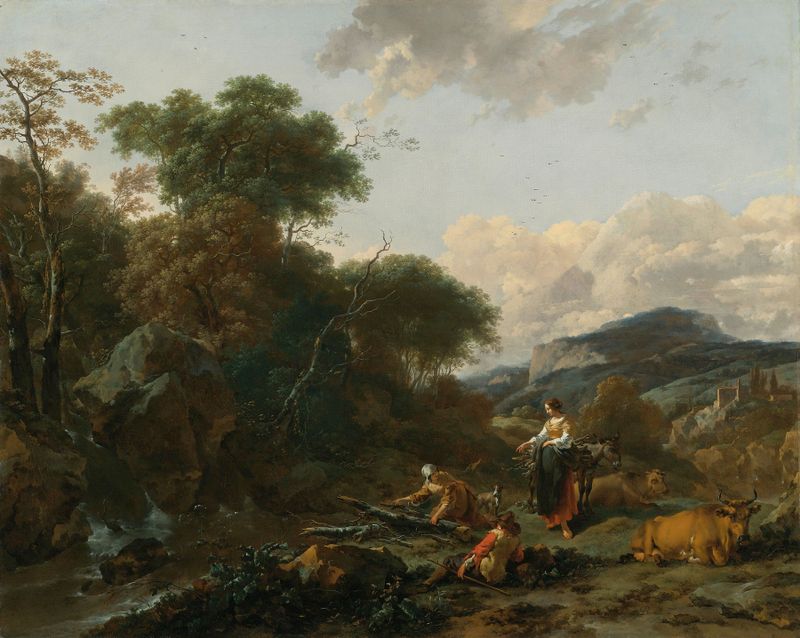
A Landscape With Figures
Nicolaes Pietersz Berchem
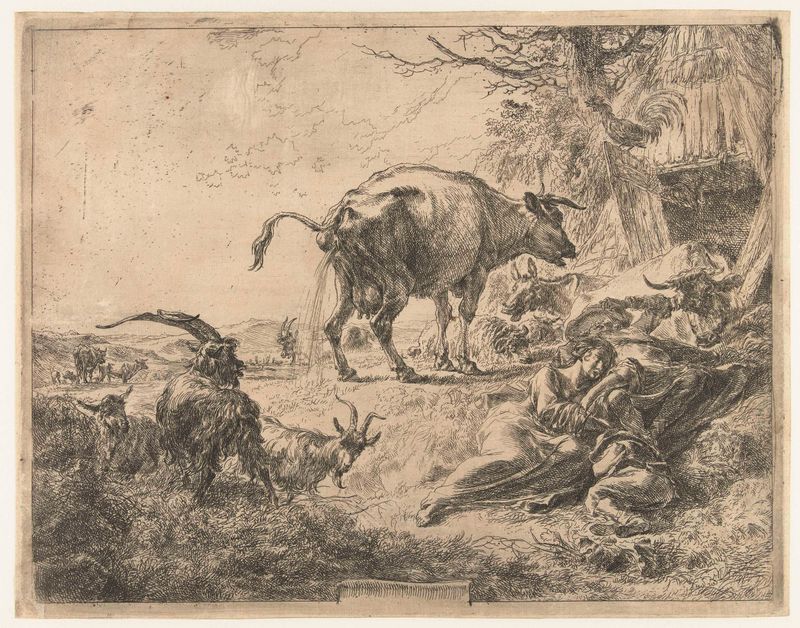
Slapende herdersfamilie en rustend vee
Nicolaes Pietersz Berchem
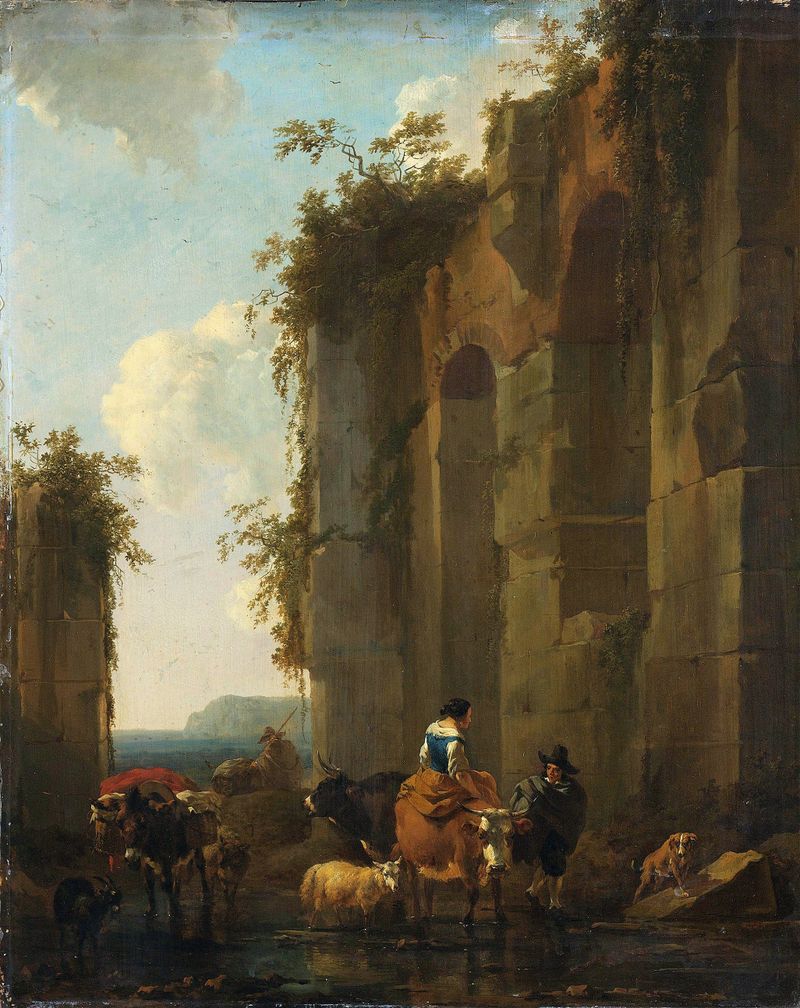
Ruins in Italy
Nicolaes Pietersz Berchem