Drie schapen — History & Facts
What secret hides in the quiet of the canvas? Beneath the serene exterior of pastoral landscapes, deeper emotions often linger, waiting to be uncovered. Focus on the foreground; there, three sheep stand poised, their woolen coats a clash of pure white against the muted earth tones of the surrounding landscape. Notice how the softness of their forms contrasts sharply with the jagged outlines of distant trees, suggesting an unspoken tension between innocence and the encroaching world. The light, filtered gently through a haze of clouds, bathes them in a warm glow, yet an undercurrent of unease creeps in like a shadow at twilight. As you delve deeper, observe the tension in the sheep's collective gaze; their wide eyes seem aware of a lurking danger just beyond the edges of the canvas.
The tranquility of their pastoral existence is marred by an unseen threat, evoking a subtle fear as if they sense the inevitable approach of change. The quietude of the scene whispers of vulnerability, a reminder that even in nature’s calm, the pulse of anxiety can be felt. Painted between 1646 and 1652, this work reflects the artist's immersion in the idyllic Dutch landscape and his fascination with pastoral life during a period of burgeoning economic prosperity and societal change. Berchem, known for his ability to capture both beauty and emotional depth, was influenced by the broader European context of shifting artistic styles and the emergence of realism.
In Drie schapen, he presents more than a mere visual delight; he invites contemplation on the fragility of serenity in an unpredictable world.
More Artworks by Nicolaes Pietersz Berchem
Browse all →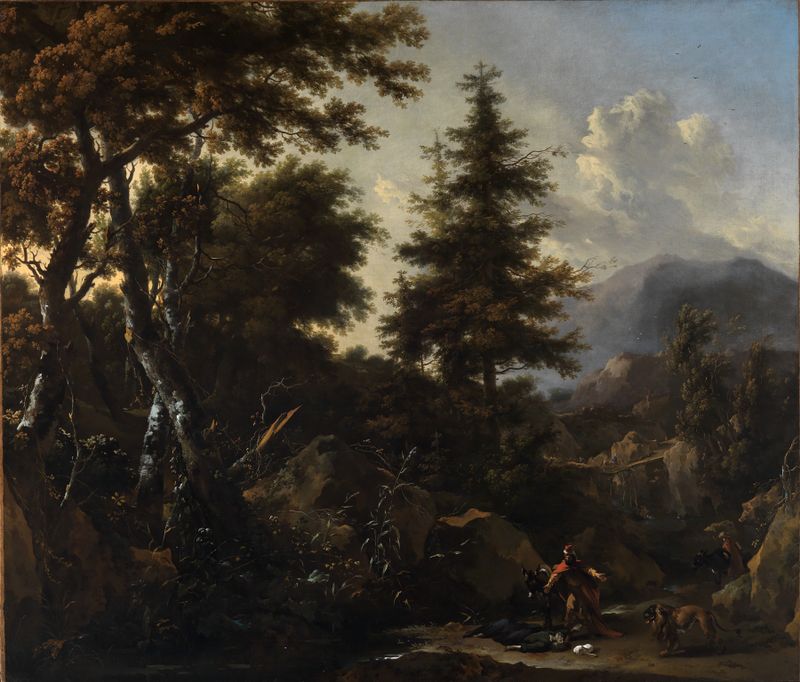
Schlucht im Bergwald mit alttestamentlicher Staffage
Nicolaes Pietersz Berchem
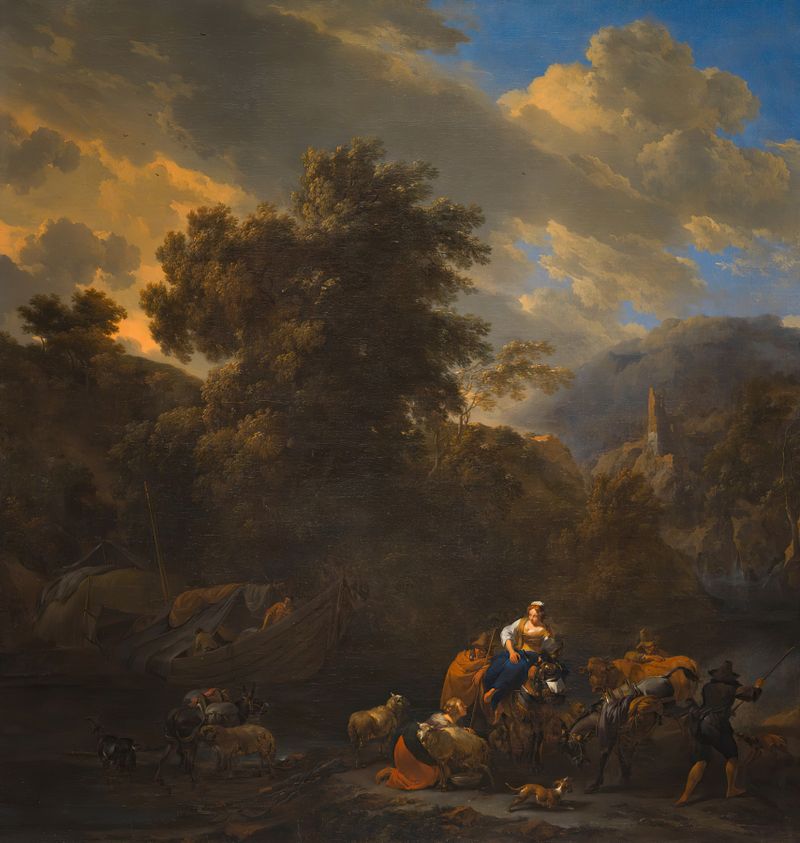
Italianate Landscape with Figures and Pack Animals on the Banks of a River
Nicolaes Pietersz Berchem
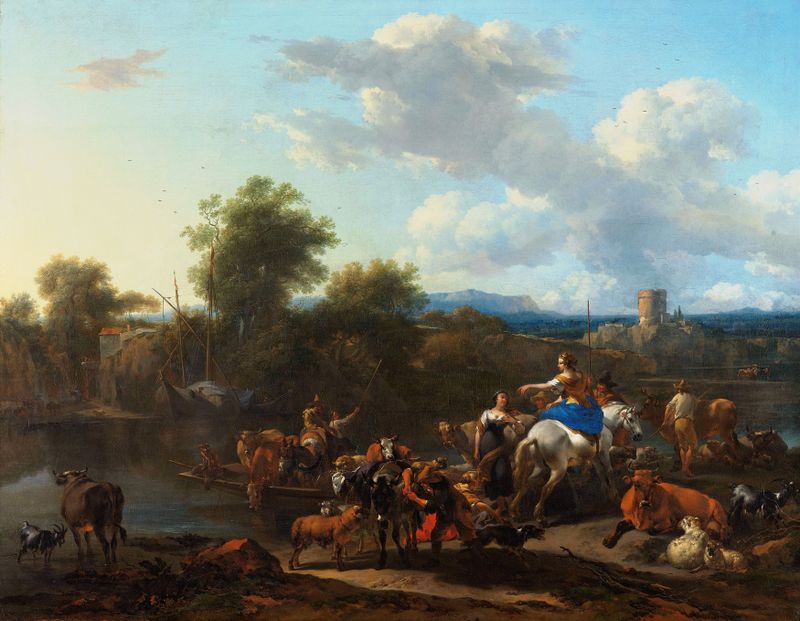
The Cattle Ferry
Nicolaes Pietersz Berchem
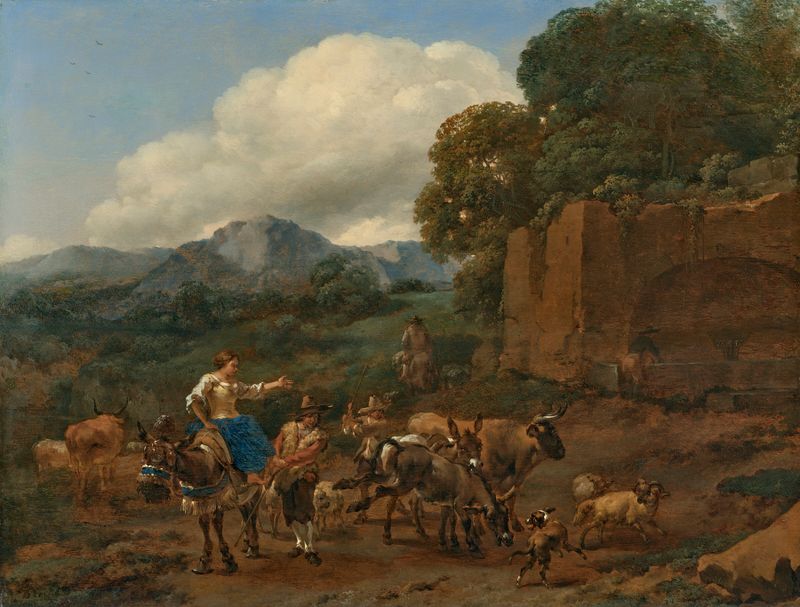
An Italianate landscape with a shepherdess on a mule and a shepherd, herding cattle, sheep, donkeys and dogs on a mountain track next to ruins
Nicolaes Pietersz Berchem
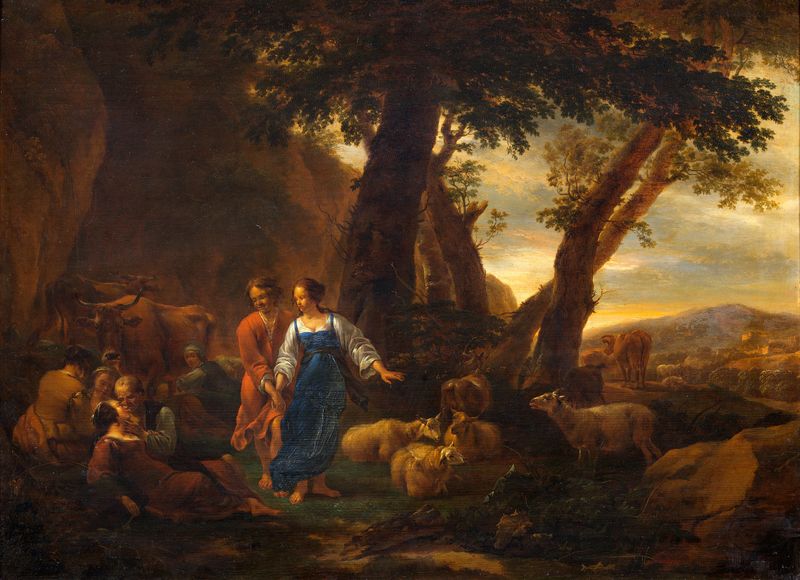
Landscape with Peasants and Cattle
Nicolaes Pietersz Berchem
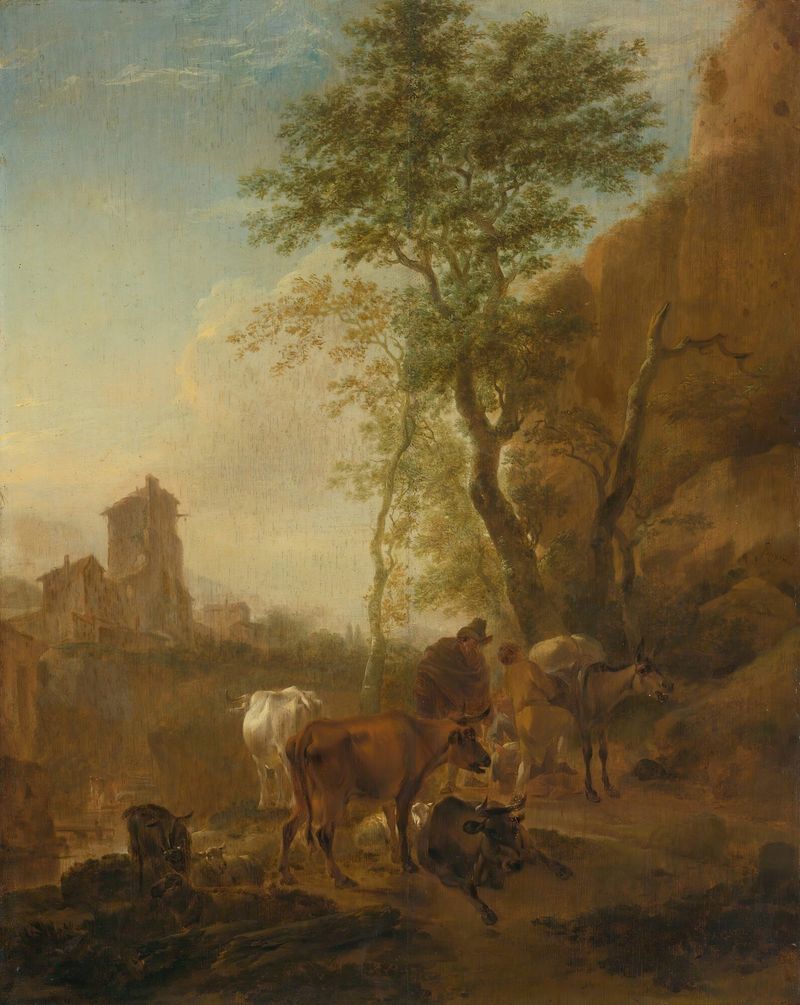
Italianate Landscape With Cows
Nicolaes Pietersz Berchem
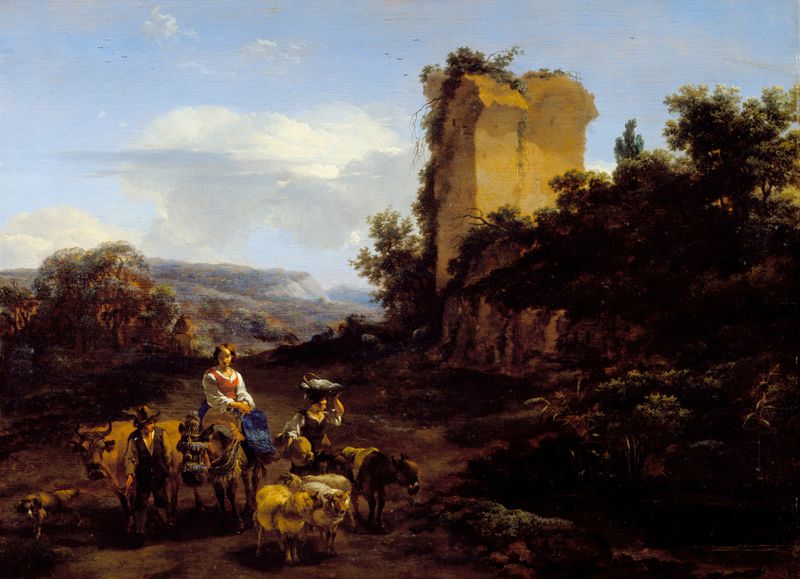
Landscape with Ruins and Travelers
Nicolaes Pietersz Berchem
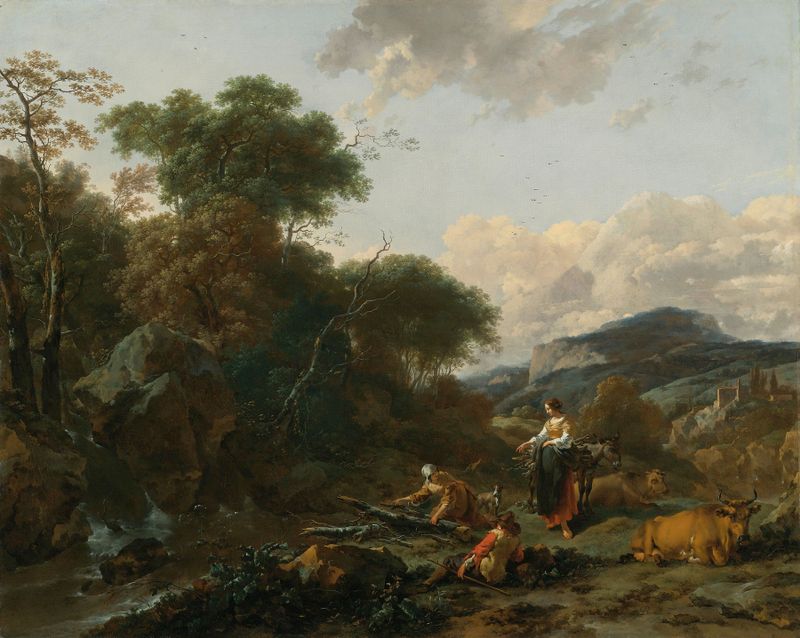
A Landscape With Figures
Nicolaes Pietersz Berchem
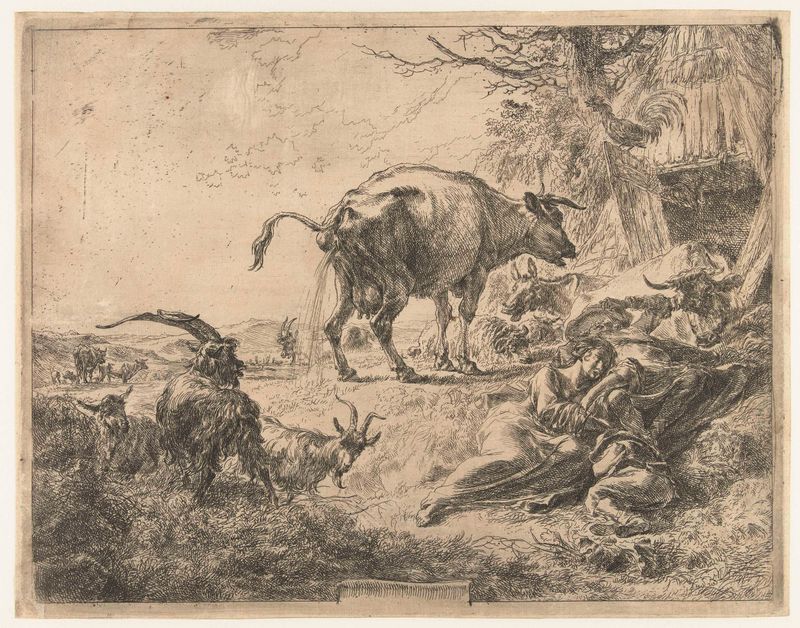
Slapende herdersfamilie en rustend vee
Nicolaes Pietersz Berchem
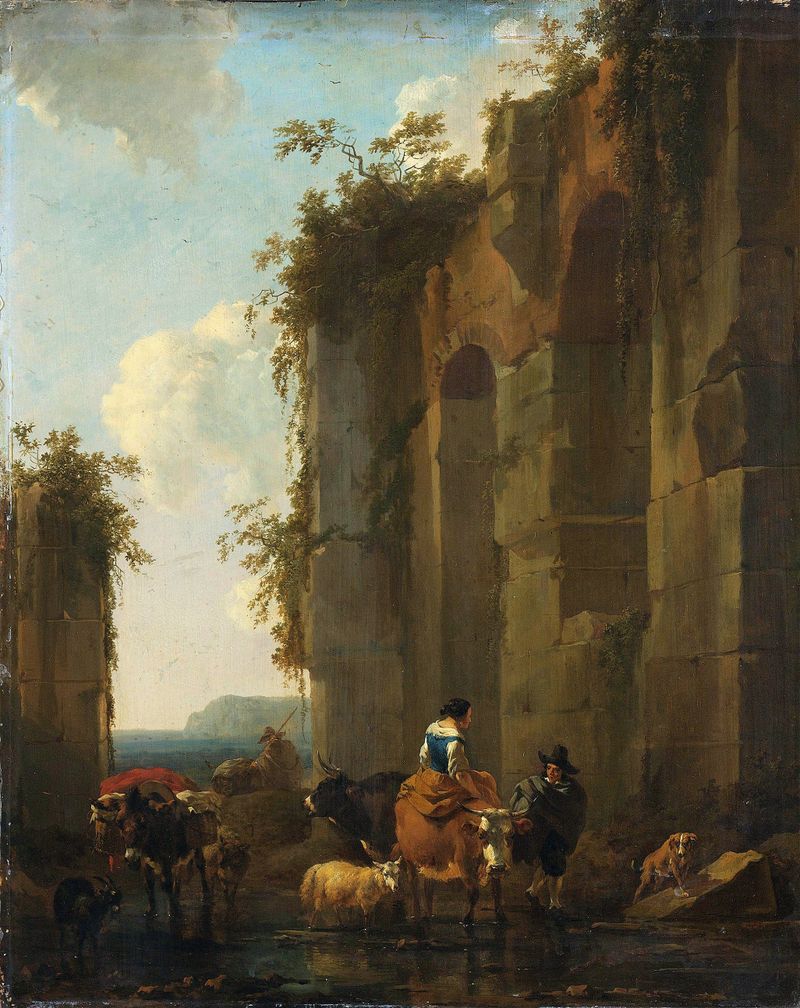
Ruins in Italy
Nicolaes Pietersz Berchem