Dürnstein Gassenszene — History & Facts
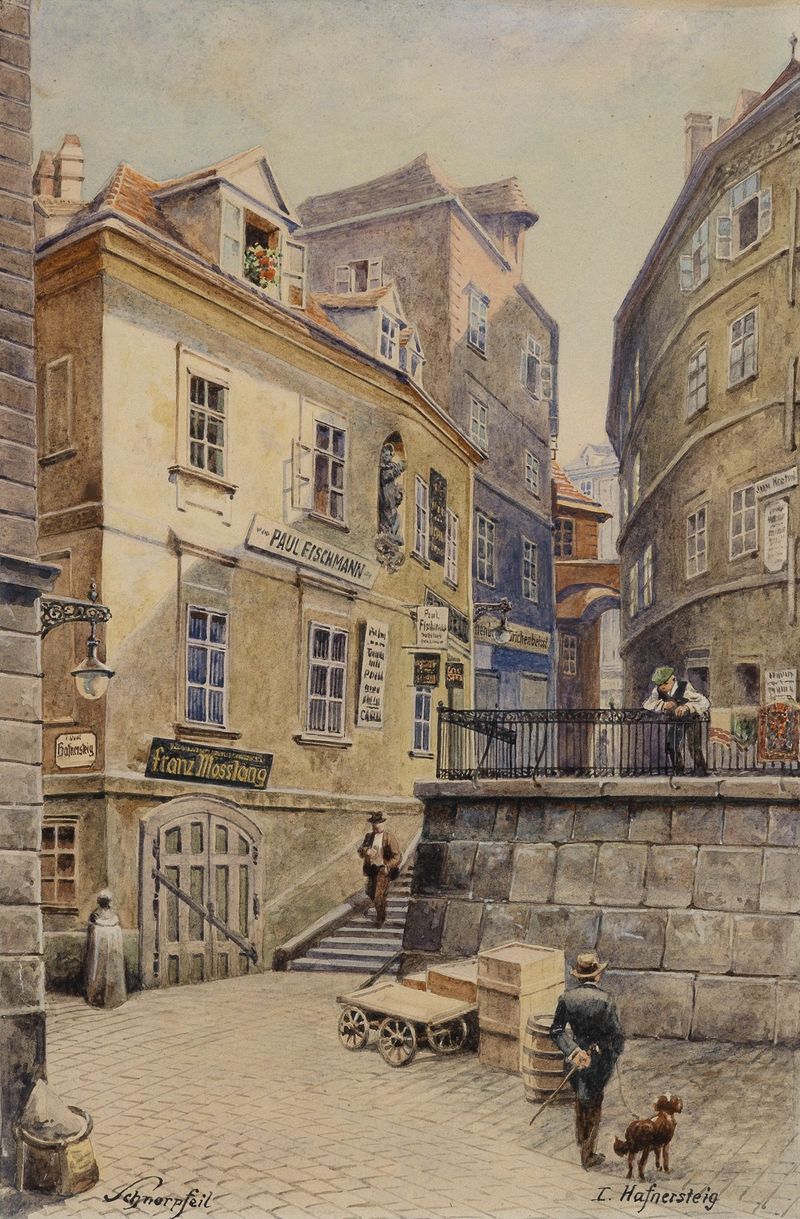
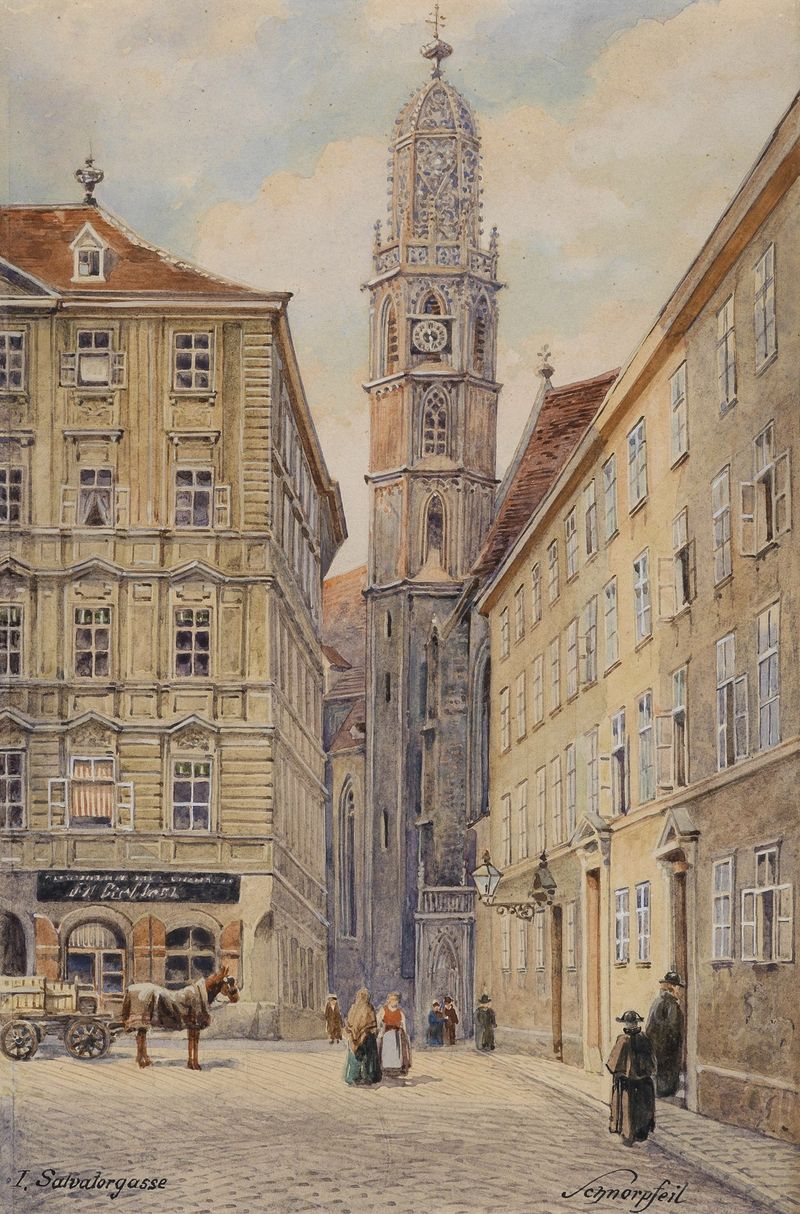
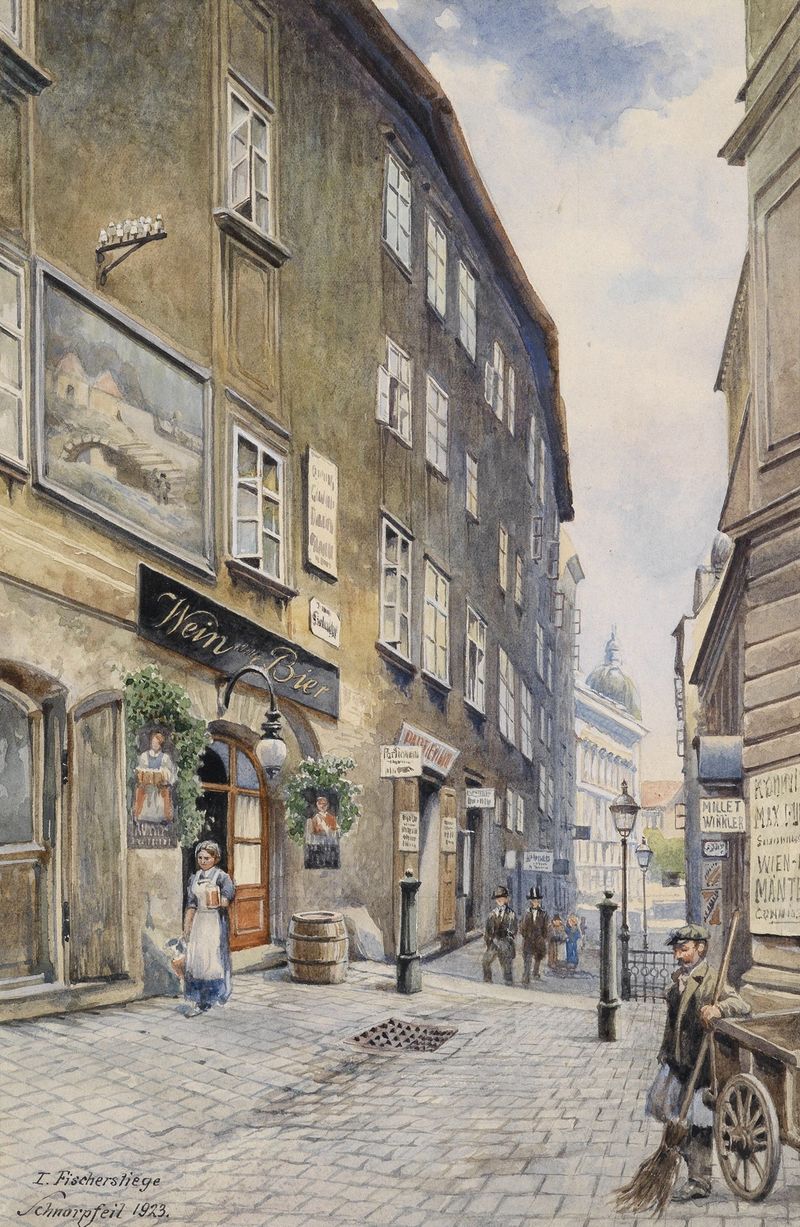
Who listens when art speaks of silence? In the stillness captured in this piece, every shadow holds a memory, and every unfilled space echoes the weight of loss. Look to the center, where the cobbled street unwinds like an unspoken story. The muted palette evokes a sense of nostalgia, while the aged buildings lean slightly, as if sharing secrets of the past. Notice how the light yet clings to the edges, casting soft halos that illuminate forgotten corners, tempting the viewer into a deeper contemplation of time and absence.
This careful play of light and shadow creates a haunting atmosphere that both invites and repels. The emotional tension of the work lies not only in its physical composition but also in the emptiness it conveys. The absence of figures suggests a once vibrant life now shrouded in history, prompting reflections on personal and collective loss. Each detail, from the distanced window frames to the ghostly outlines of the alleyway, serves as a reminder that life carries on in silence, even when those we cherish are no longer present.
It becomes a poignant exploration of memory, longing, and the unvoiced stories that linger in forgotten places. At the time this work was created, Schnorpfeil was immersed in the rich cultural currents of early 20th-century Europe, likely reflecting on the impact of war and the shifting tides of modernity. The lack of a specific date adds a layer of mystery, suggesting that the themes of loss and absence were universally resonant, transcending an exact moment in history. His surroundings, buzzing with change yet haunted by the remnants of the past, undoubtedly influenced this profound exploration of silence through art.