Lively Rochus-Market next to Rochus -Church in Landstraßer Hauptstraße — History & Facts
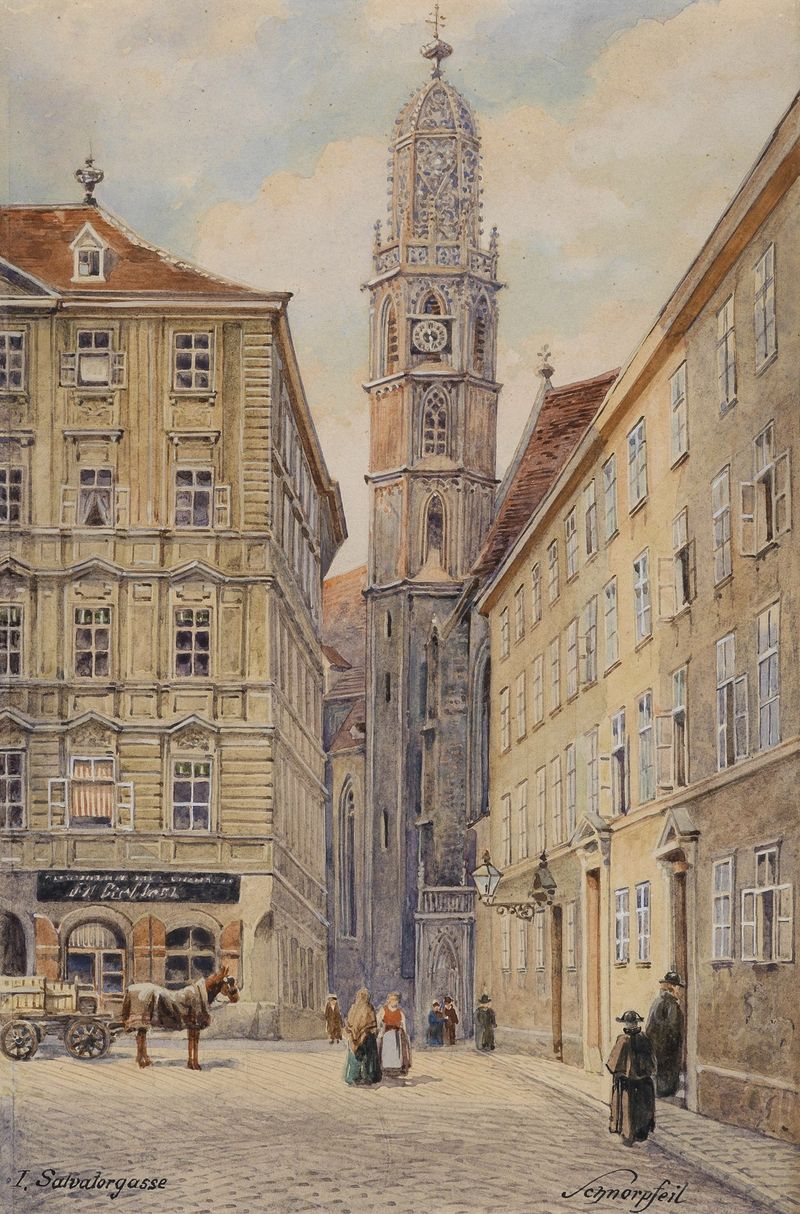
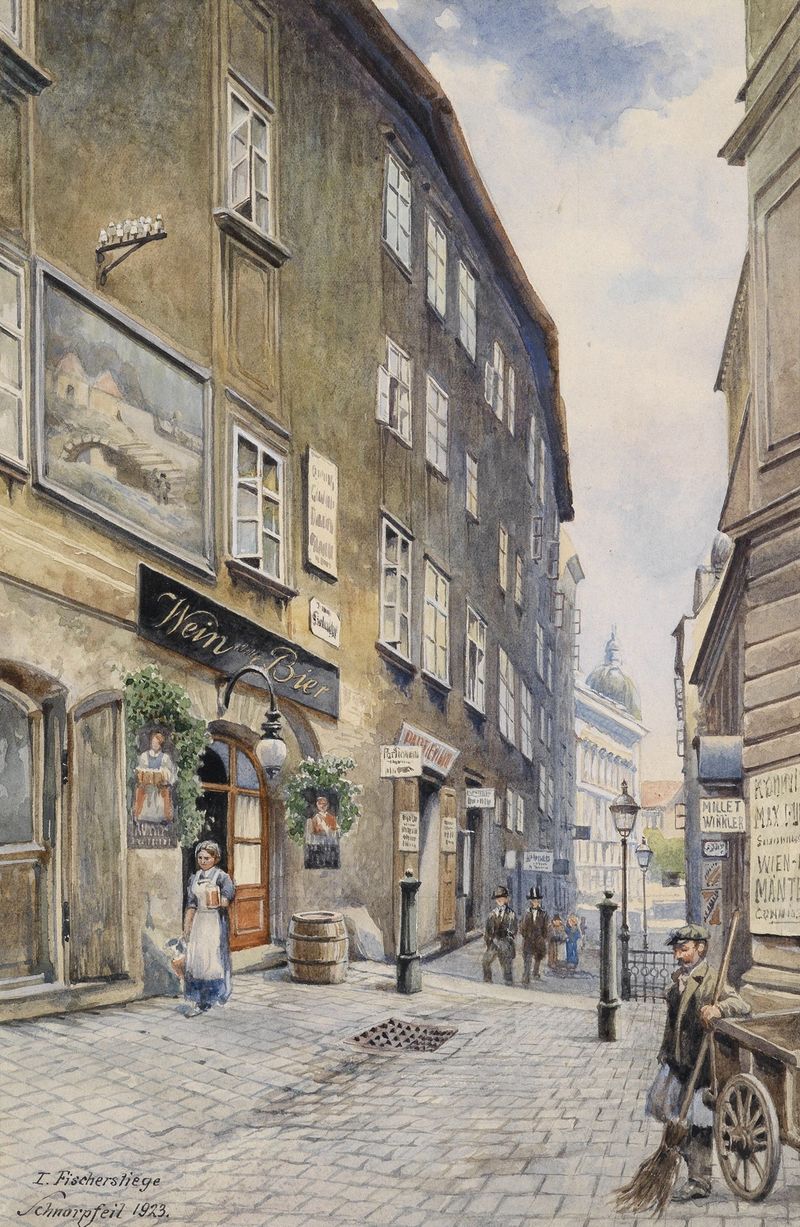
In the vibrant chaos of city life, can divinity truly emerge from the mundane? Look to the left at the market stalls, bursting with color and energy, where vendors call out to passersby. The dynamic brushstrokes create a sense of movement, weaving the figures into a tapestry of everyday existence. Notice how the warm yellows and deep greens dance together, reflecting the hustle of the market.
The church’s steeple looms in the background, a silent witness to the swirling life below, grounding the scene with a hint of solemnity. As you take in the composition, the contrast between the sacred and the profane becomes palpable. This bustling market, alive with commerce and social interaction, stands in stark juxtaposition to the solemn architecture of the church, evoking the tension between the divine and the earthly. The faces of the market-goers, filled with joy and purpose, suggest a celebration of life, while the church symbolizes a yearning for transcendence—a reminder that amidst chaos, there is a quest for something greater. In 1927, Karl Schnorpfeil captured this lively scene in Vienna amidst the backdrop of post-World War I recovery.
The 1920s were a time of vibrant artistic expression as artists sought to represent the complexities of modern life. Schnorpfeil, influenced by Expressionism and the socio-political climate, painted this work to reflect the dynamic spirit of his time while addressing the eternal human connection to divinity in everyday moments.