
Dromende vrouw — History & Facts
In Dromende vrouw, a woman in a flowing dress stands in a tranquil setting, surrounded by lush greenery. The colors are soft and warm, with gentle greens and earth tones dominating the scene. The figure appears contemplative, embodying a sense of peace and serenity.
The background features a blend of natural elements, enhancing the overall harmony of the composition. The painting is executed in oil on canvas, showcasing Alma-Tadema's skillful brushwork and attention to detail. The textures of the fabric and the natural surroundings are rendered with precision, inviting the viewer to appreciate the intricacies of the scene. The dimensions are approximately 100 x 150 cm, making it a sizable work that draws the eye.
The use of light and shadow adds depth, creating a three-dimensional effect. Lawrence Alma-Tadema was known for his depictions of classical themes and Victorian life, often blending the two in a unique manner. Dromende vrouw reflects his fascination with the female form and the natural world. An interesting fact about this work is that it exemplifies the Victorian ideal of femininity, where women are often portrayed in serene and contemplative moments.
Alma-Tadema's works remain popular for their beauty and technical skill.
More Artworks by Lawrence Alma-Tadema

The Roses of Heliogabalus
Lawrence Alma-Tadema

A Juggler
Lawrence Alma-Tadema
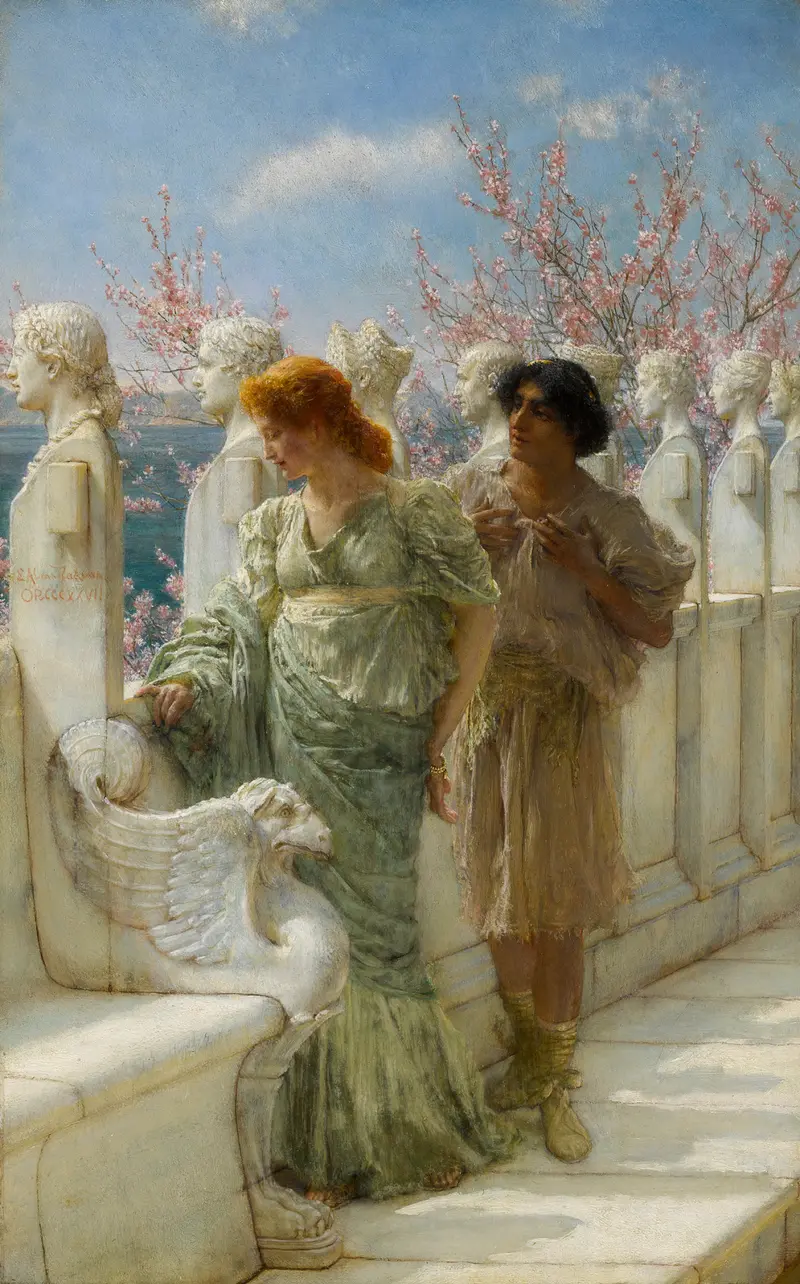
Past And Present Generations
Lawrence Alma-Tadema
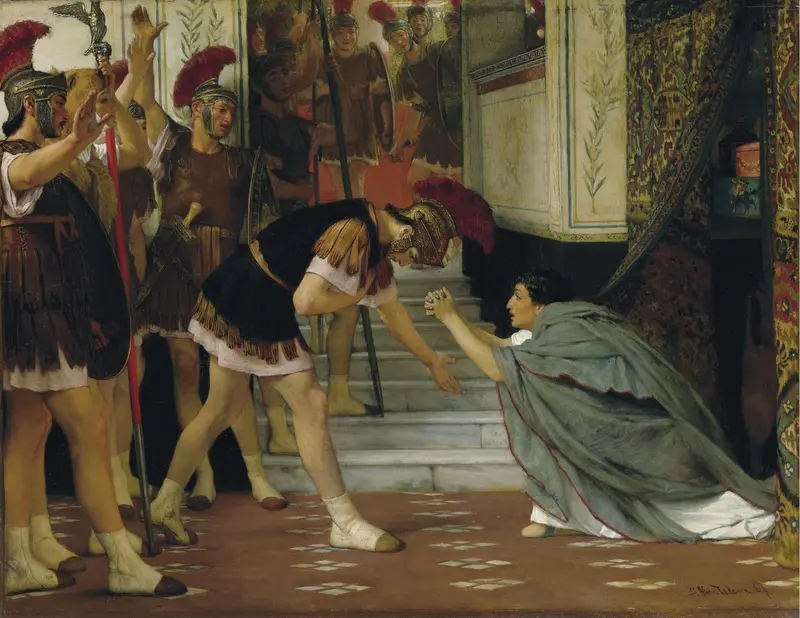
Proclaiming Claudius Emperor, Opus XlVIII
Lawrence Alma-Tadema
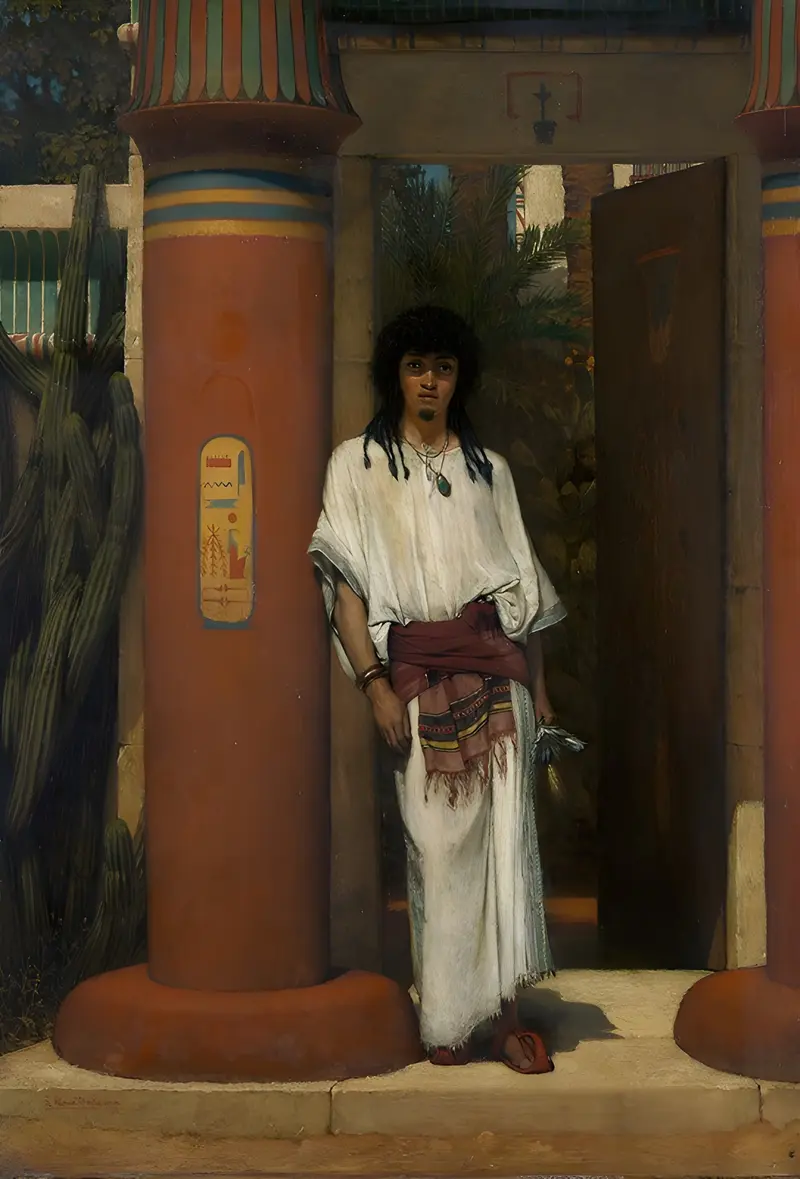
An Egyptian in a Doorway
Lawrence Alma-Tadema
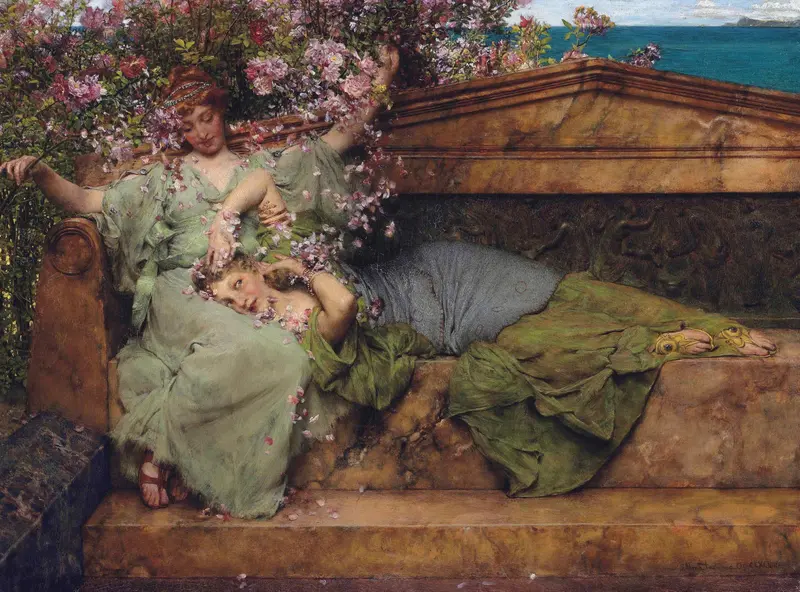
In A Rose Garden
Lawrence Alma-Tadema
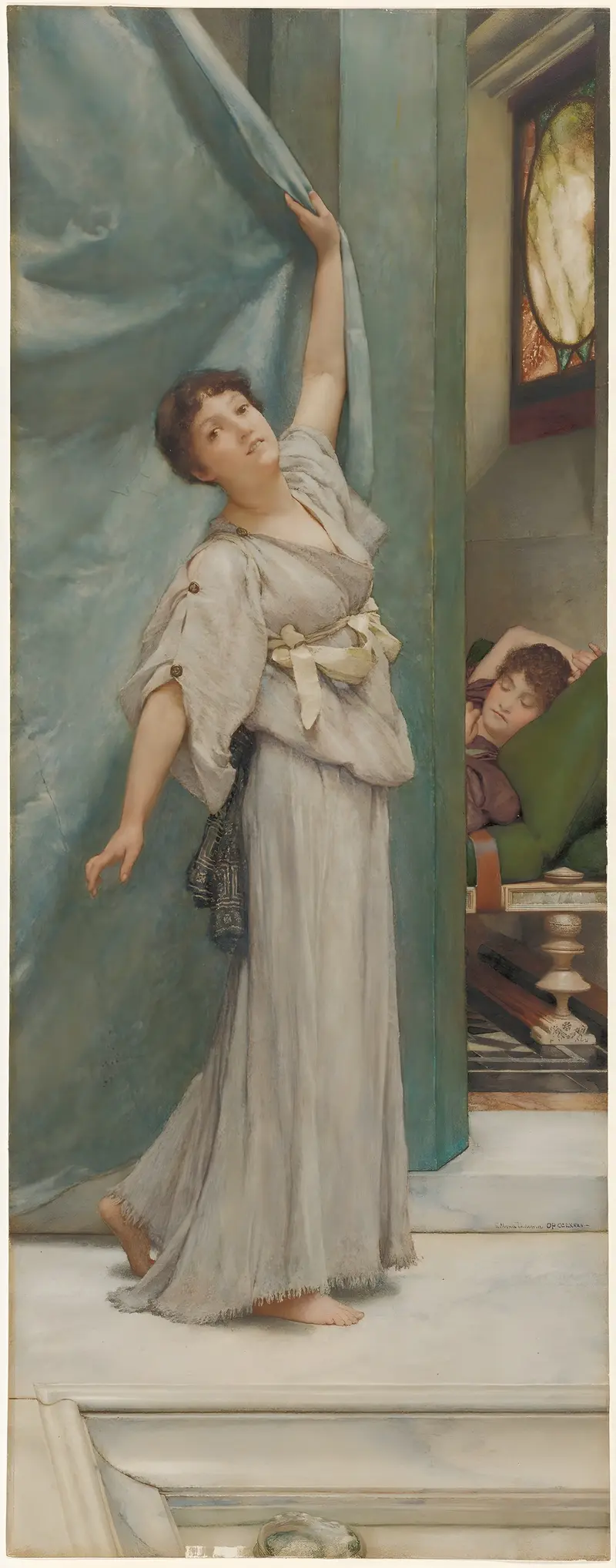
Midday Slumbers
Lawrence Alma-Tadema
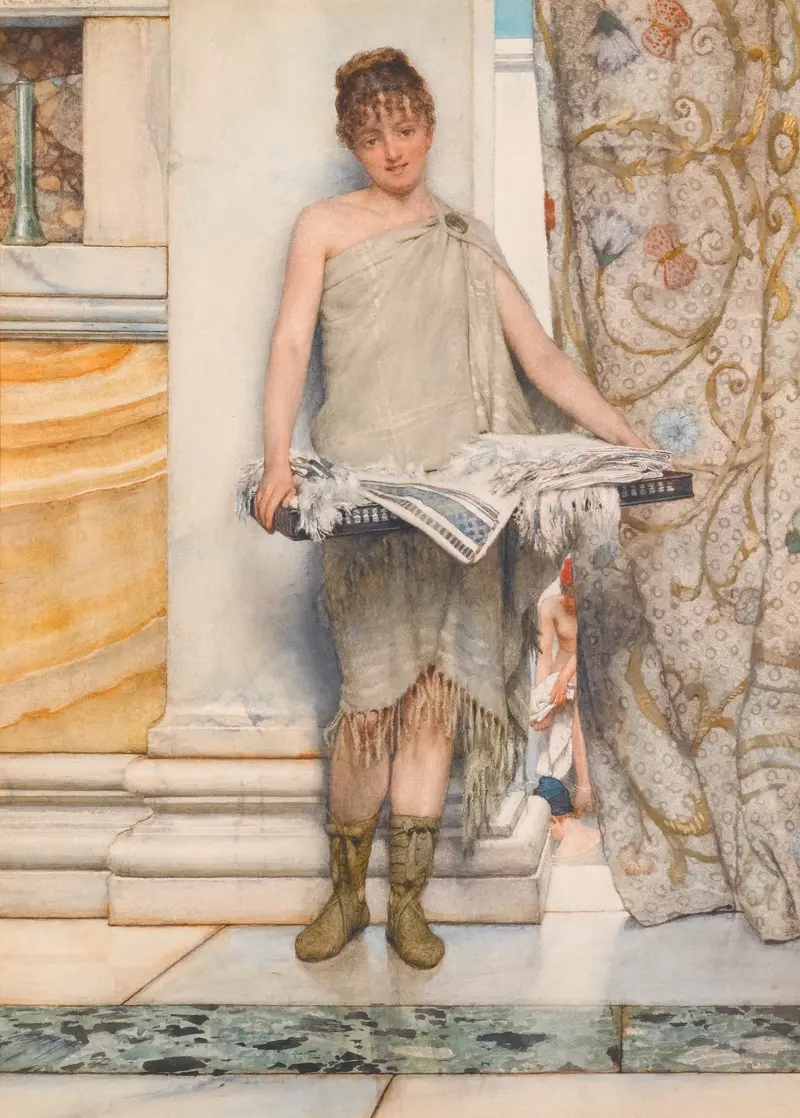
A Balneatrix
Lawrence Alma-Tadema
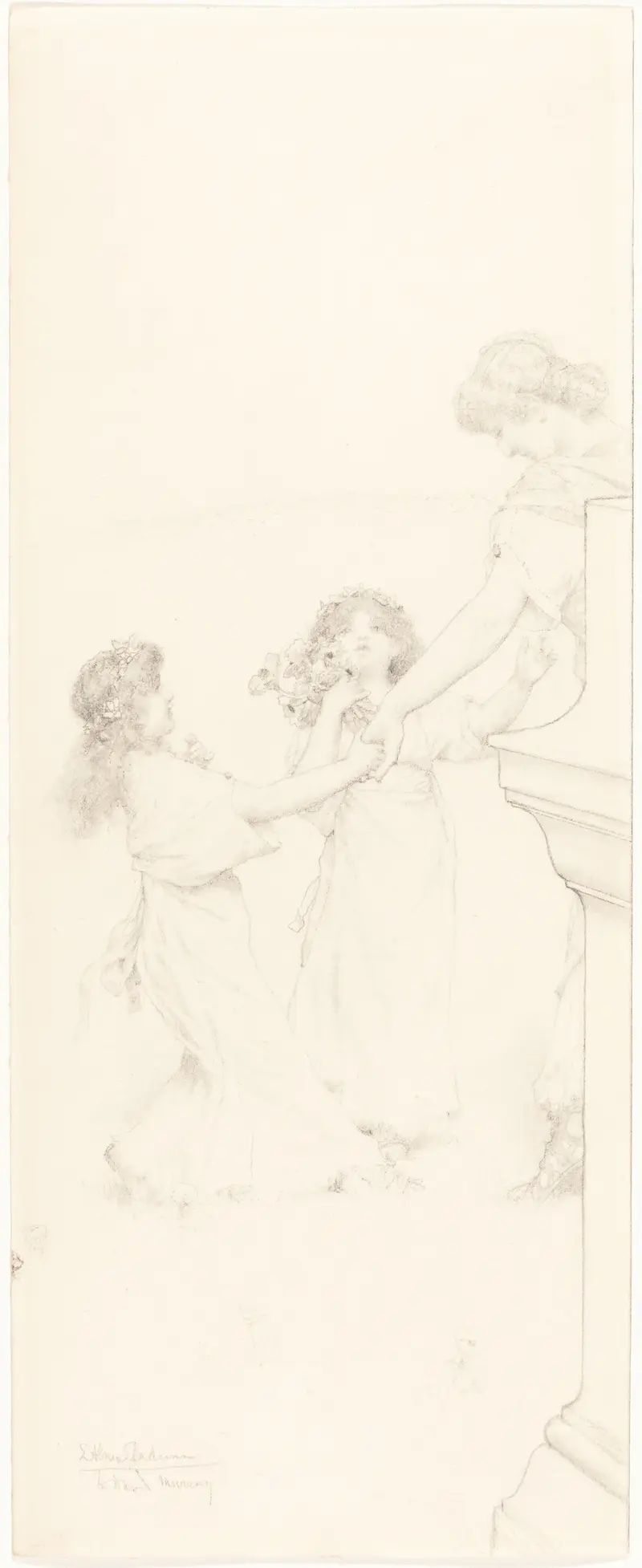
A Dance in Spring
Lawrence Alma-Tadema
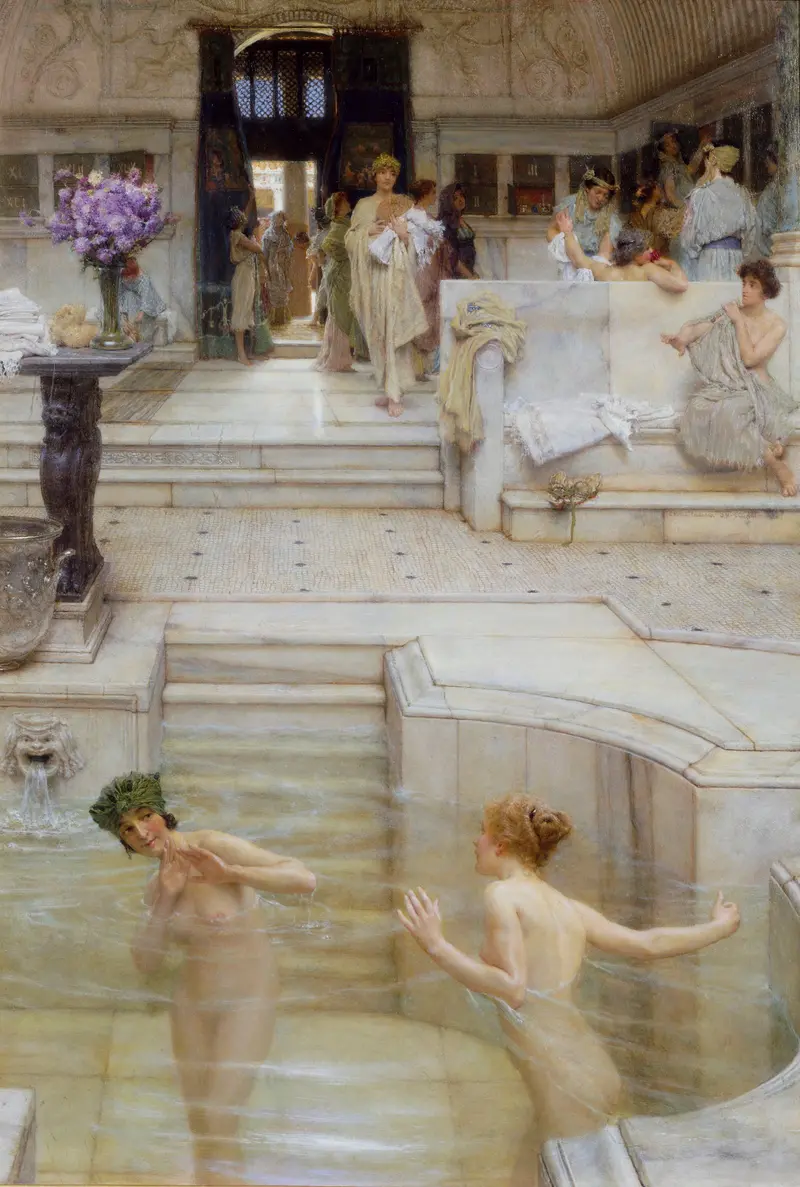
A Favourite Custom
Lawrence Alma-Tadema
More Genre Scene Art

Banquet of the Officers of the St George Civic Guard
Frans Hals

Rembrandt and Saskia in the Scene of the Prodigal Son
Rembrandt van Rijn

Bal du moulin de la Galette
Pierre-Auguste Renoir

Quadrille at the Moulin Rouge
Henri de Toulouse-Lautrec

A Burial at Ornans
Gustave Courbet

When Will You Marry?
Paul Gauguin