
Duck Island — History & Facts
In the tranquility of Duck Island, the essence of fleeting moments is captured, inviting the viewer to pause and reflect on nature's serene beauty. Here, time stands still, yet the world around it flows, creating a tension between permanence and transience. Look to the left at the shimmering water, where brushstrokes dance with light, creating a delicate interplay of reflections that flicker like memories. Notice how the colors blend seamlessly—from the lush greens of the landscape to the soft blues of the sky—imbuing the scene with a sense of harmony.
The composition draws the eye toward the inviting path that winds through the foliage, suggesting an invitation to explore, to connect, and to remember the fleeting joys of life. Amidst the calmness, there exists an undertone of nostalgia; the scene evokes the fleeting nature of existence. The juxtaposition of the vibrant flora against the stillness of the water speaks to the constant cycle of life and decay. Each brushstroke appears to whisper stories of moments once lived, now preserved yet slightly hazed by the passage of time, urging the viewer to cherish their own ephemeral experiences. In 1906, Childe Hassam painted Duck Island while residing in the vibrant world of American Impressionism, a movement that celebrated the beauty of everyday life through light and color.
At this time, he was deeply influenced by his surroundings in Massachusetts, navigating personal transitions that mirrored a burgeoning interest in capturing moments of nature’s quietude. This piece stands as a testament to his mastery of Impressionist techniques and his ability to evoke profound emotional resonance in the serene landscapes he loved.
More Artworks by Childe Hassam
Browse all →
Beach at Newport
Childe Hassam

Washington Arch, Spring
Childe Hassam

Thaxter’s Garden
Childe Hassam

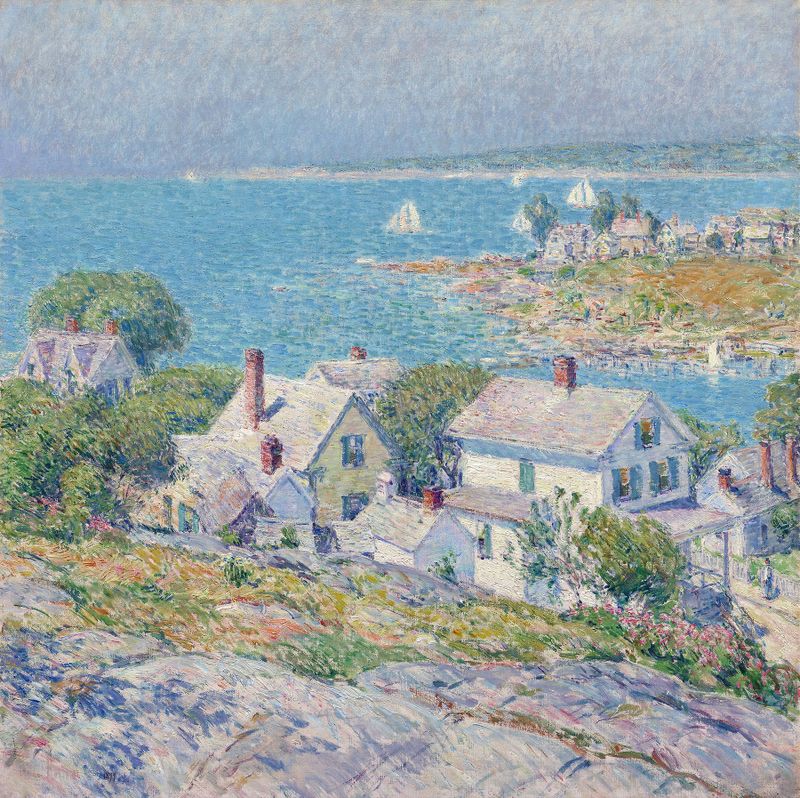
New England Headlands
Childe Hassam

Rocks At Appledore, Morning
Childe Hassam
New England Headlands
Childe Hassam
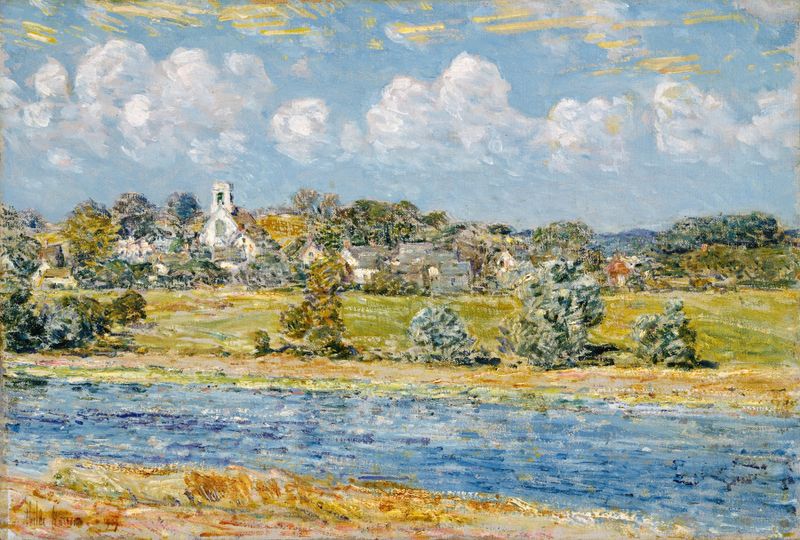
Landscape at Newfields, New Hampshire
Childe Hassam

Piazza di Spagna, Rome
Childe Hassam

The Harbor
Childe Hassam

Late Afternoon, New York, Winter
Childe Hassam





