Ducks in the courtyard — History & Facts
Is this a mirror — or a memory? In a tranquil moment, where time seems suspended, a gathering of ducks exudes a quiet revelation, inviting contemplation of life and nature. Look to the left at the gentle ripples in the water, where the ducks' reflections dance, merging the real with the ethereal. The soft, muted palette of greens and browns evokes a sense of serenity, while the play of light across the surface creates shimmering highlights that animate the scene. The composition balances the ducks' organic forms against the structured courtyard, giving a sense of harmony between the natural and architectural. The interplay of light and shadow is essential in revealing the emotional depth of the work.
Each duck, with its unique posture and presence, suggests individuality within a collective, prompting thoughts of community and belonging. The courtyard itself symbolizes shelter and safety, contrasting the freedom of the ducks, highlighting themes of constraint versus liberation, and the intersection of domesticity and wildness. During this period, Jacque was developing his distinctive style, painting serene landscapes that fused humor with observation. Working in France during the mid-19th century, he found inspiration in rural life and the natural world, reflecting a growing interest in realism and the everyday beauty often overlooked.
This painting captures a slice of that life, inviting viewers to pause and ponder the simplicity of existence.
More Artworks by Charles Emile Jacque
Browse all →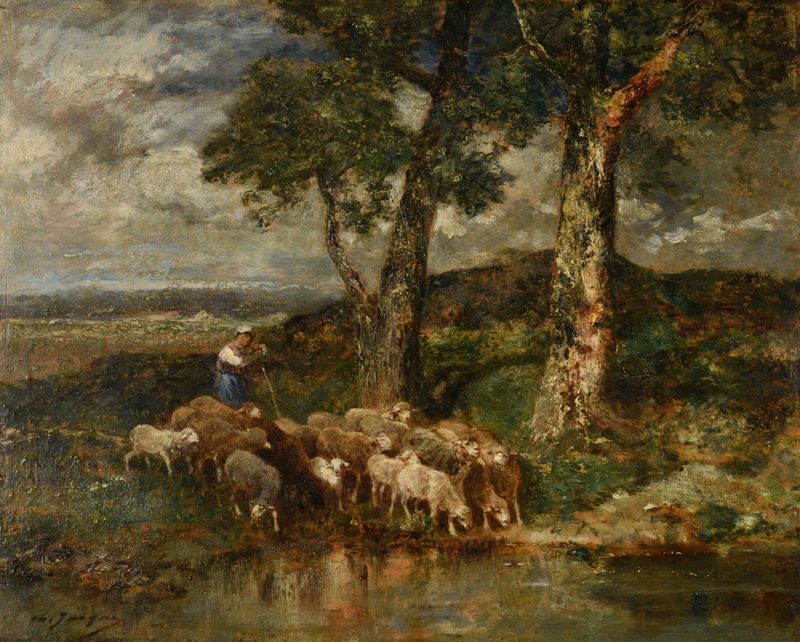
Moutons à l’abreuvoir
Charles Emile Jacque

The Sheepfold
Charles Emile Jacque
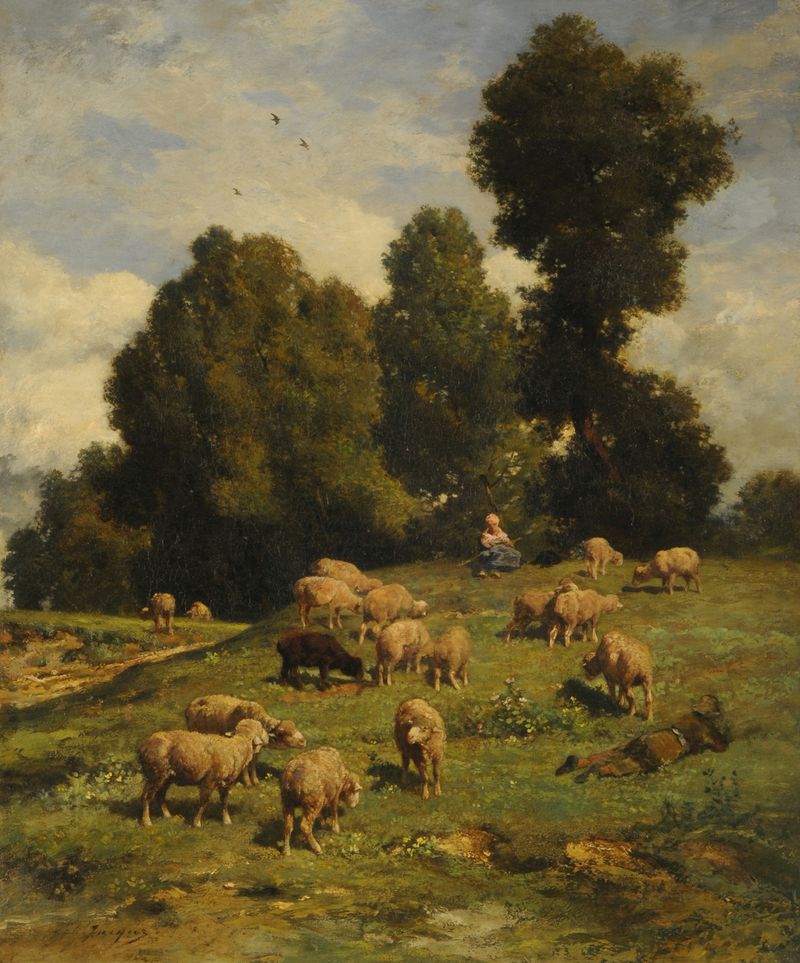
Moutons au pâturage
Charles Emile Jacque
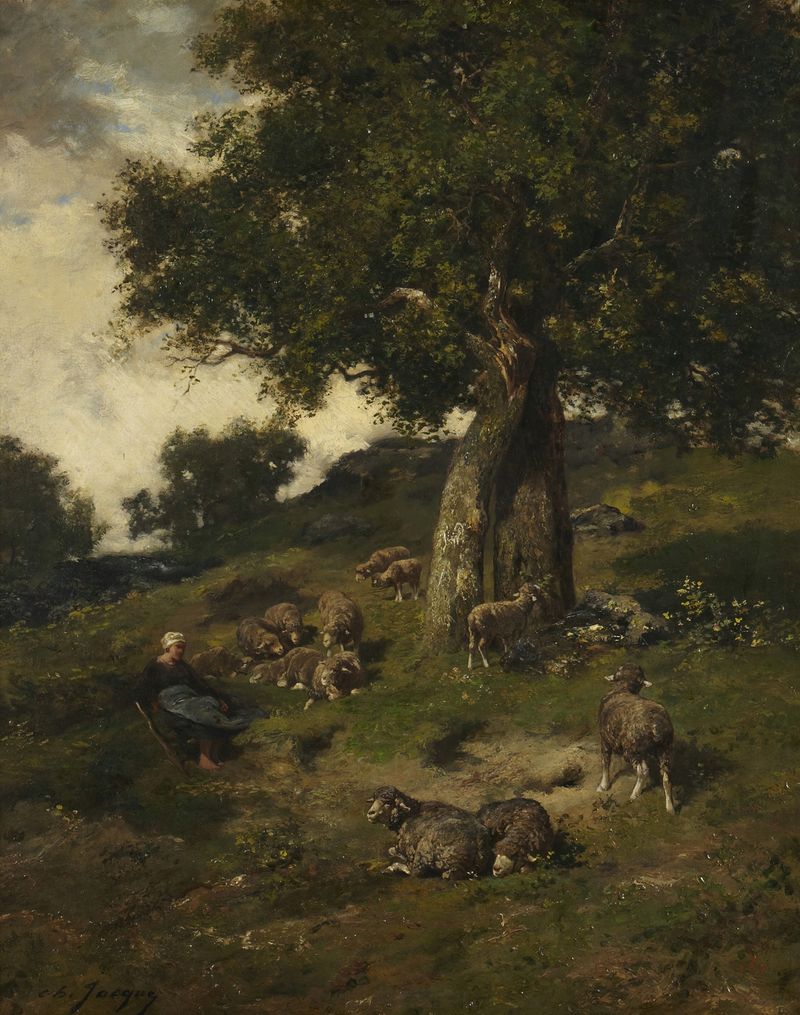
Shepherdess and Sheep
Charles Emile Jacque
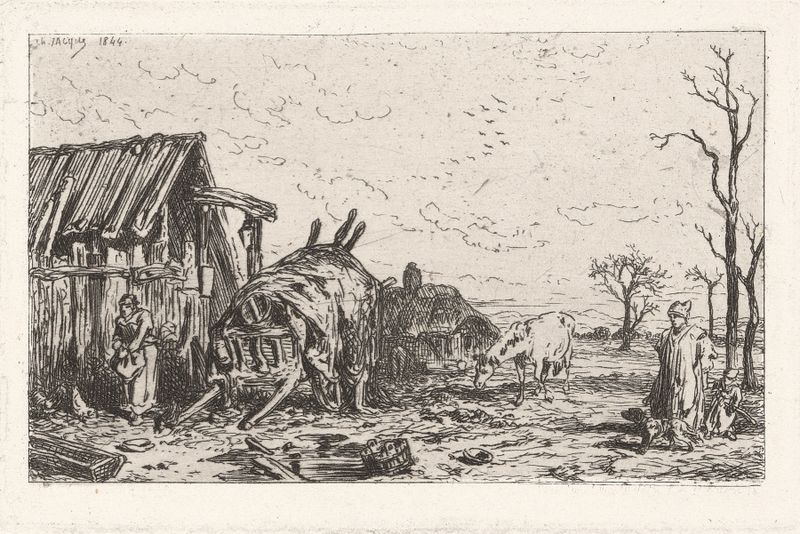
Rural farm scene with barn, cart, two farmers
Charles Emile Jacque

Shepherdess and her flock
Charles Emile Jacque

Two-horse plow in field
Charles Emile Jacque

Farmers loading ox cart
Charles Emile Jacque
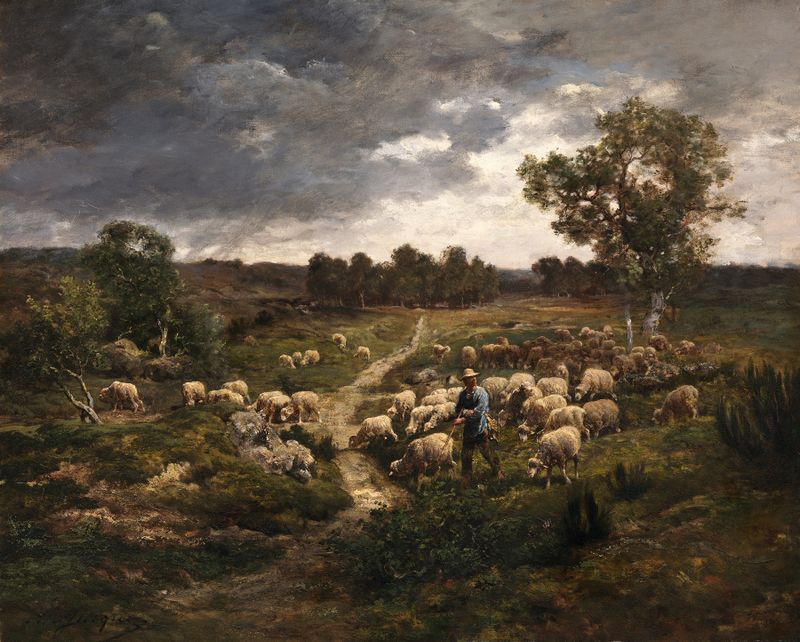
Sheep
Charles Emile Jacque

Shepherd In A Field With His Flock
Charles Emile Jacque