
Moutons au pâturage — History & Facts
When did color learn to lie? Shades of verdant green and soft earth tones conspire to charm the eye, while undercurrents of decay whisper the truth beneath the surface. Look to the left at the grazing sheep, their woolly forms rendered in textured strokes that evoke a palpable softness. The artist masterfully juxtaposes light and shadow, as dappled sunlight filters through a canopy of aging foliage, casting intricate patterns on the rich, muted ground. The subtle blend of colors creates depth, drawing the viewer into the pastoral scene as the gentle rise of the hills beckons exploration, inviting a sense of quietude. Yet, as one absorbs the idyllic imagery, the neglected fenceposts emerge from the background, revealing a space where life and decay intertwine.
The vibrant greens hint at nature’s resilience, while the forlorn structures signify the passage of time, a reminder of fragility amidst the beauty. This contrast evokes a bittersweet tension, forcing one to grapple with the transient nature of pastoral serenity, reflecting the underlying decay of innocence. In 1871, during a period marked by social upheaval and the aftermath of the Franco-Prussian War, the artist found solace in the pastoral landscapes of rural France. Living in the vicinity of Barbizon, he was deeply influenced by the Barbizon School's emphasis on realism and nature.
This painting captures not only a bucolic scene but also the quiet yearning for permanence in a world rife with change, a sentiment resonating deeply during that turbulent time.
More Artworks by Charles Emile Jacque
Browse all →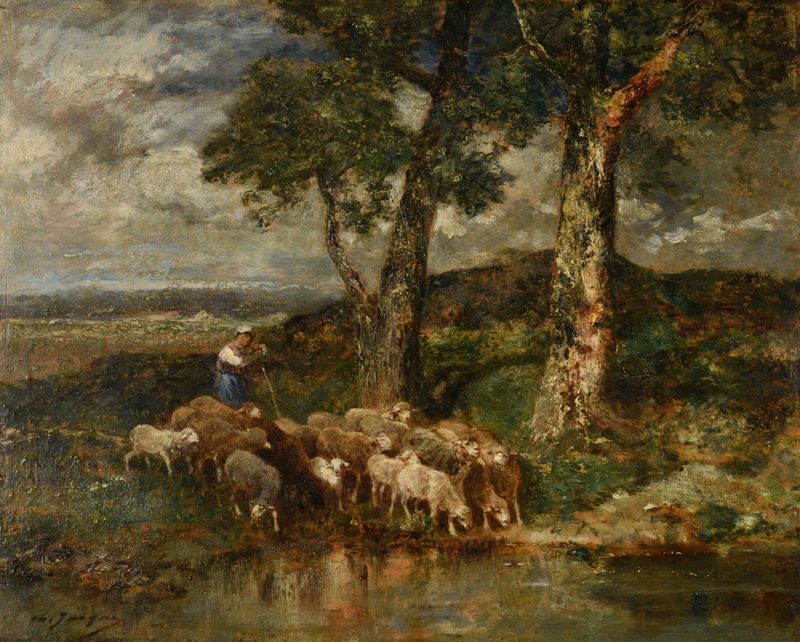
Moutons à l’abreuvoir
Charles Emile Jacque

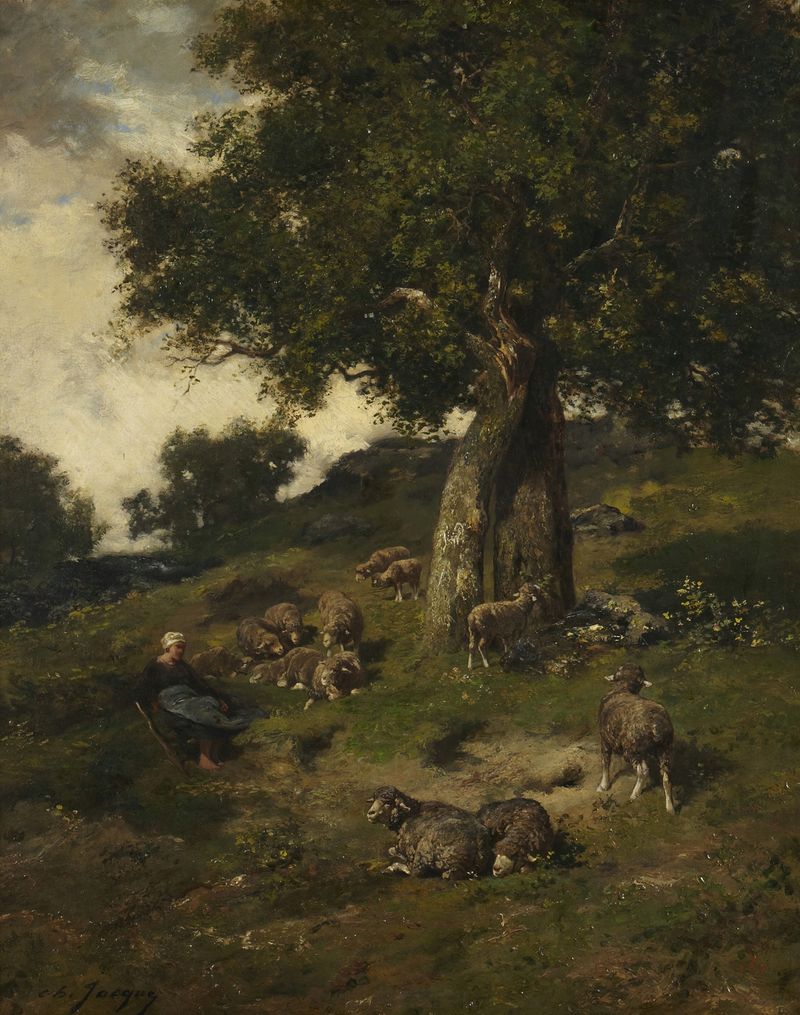
The Sheepfold
Charles Emile Jacque
Shepherdess and Sheep
Charles Emile Jacque
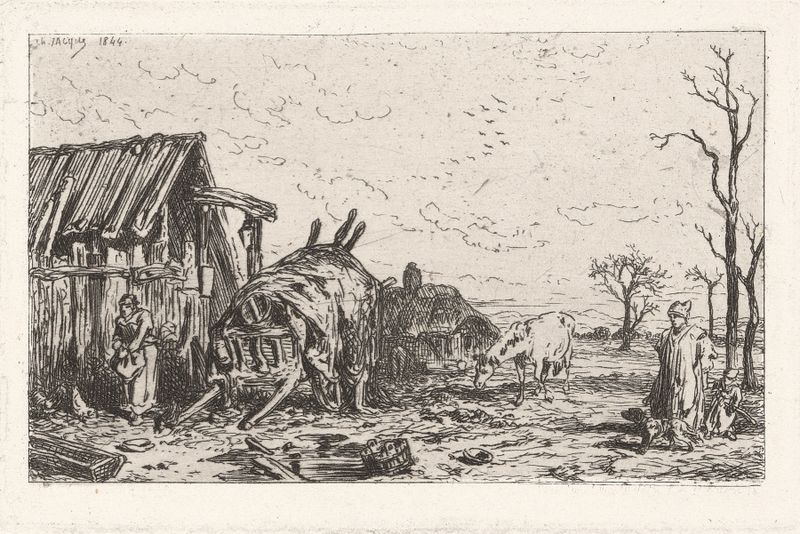
Rural farm scene with barn, cart, two farmers
Charles Emile Jacque

Shepherdess and her flock
Charles Emile Jacque

Ducks in the courtyard
Charles Emile Jacque

Two-horse plow in field
Charles Emile Jacque

Farmers loading ox cart
Charles Emile Jacque
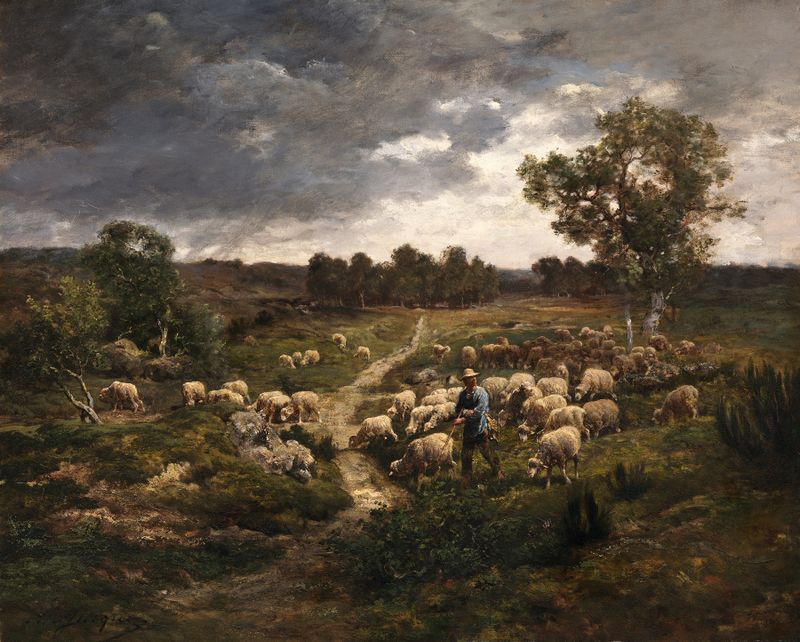
Sheep
Charles Emile Jacque

Shepherd In A Field With His Flock
Charles Emile Jacque





