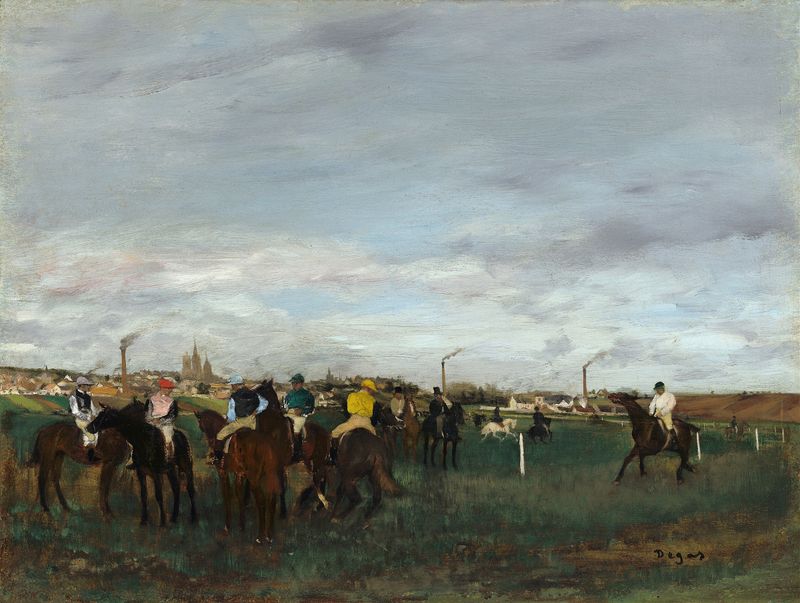
Sheep — History & Facts
In the stillness of Sheep, memories of pastoral life emerge, inviting the viewer to step into a tranquil world captured in time. Look to the left at the gentle curve of the sheep, their woolly bodies rendered with delicate brushstrokes that seem to breathe. Notice how the muted earth tones of browns and greens blend seamlessly, evoking a serene landscape that cradles these creatures. The soft light, filtering down from an unseen sun, illuminates their forms, creating a harmonious balance between shadow and glow, urging the eye to explore the subtleties of texture and form within the composition. Delve deeper, and you’ll find whispers of life and vulnerability in these humble beings.
The way their heads tilt, the slight tension in the muscles, and the intertwined patterns of grasses beneath them speak to the fragility and simplicity of existence. Each sheep, a silent sentinel, encapsulates a moment of quietude amidst the broader cacophony of life, evoking a nostalgia for simpler days and the passage of time. The pastoral setting resonates with the emotions tied to memory, both personal and universal, crafting a reflective space for contemplation. During the years between 1840 and 1894, the artist painted Sheep in France, a time when realism began to take root in the art world.
Amidst the rise of industrialization, Jacque immersed himself in rural life, capturing its essence with authenticity. Despite the tumult of urban growth surrounding him, he found solace in the pastoral scenes that reminded him—and us—of the enduring connection between humanity and nature.
More Artworks by Charles Emile Jacque
Browse all →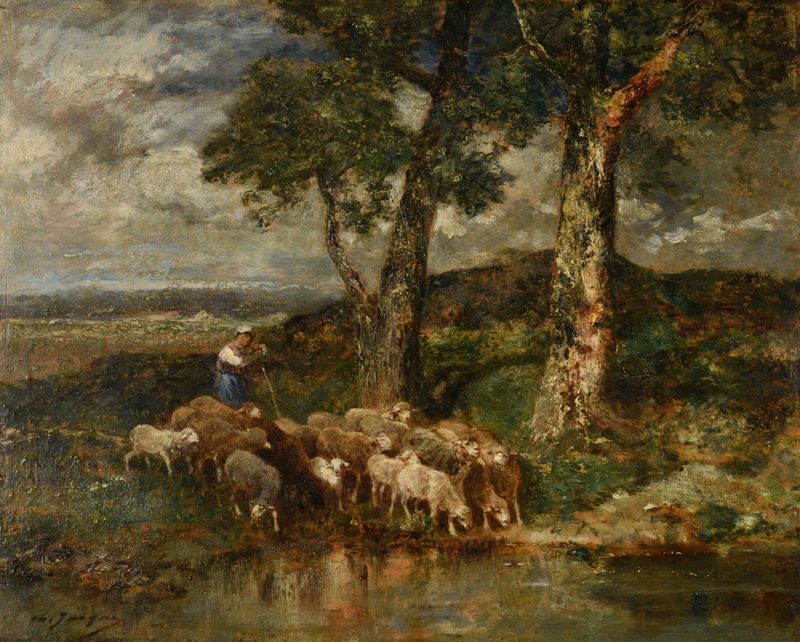
Moutons à l’abreuvoir
Charles Emile Jacque

The Sheepfold
Charles Emile Jacque
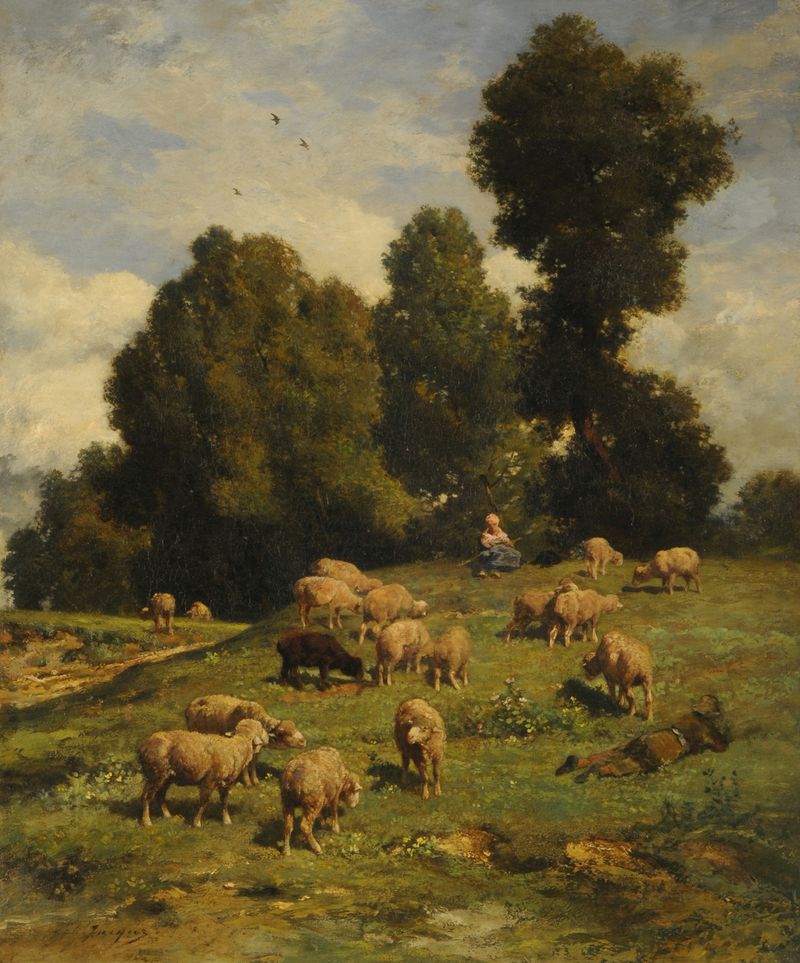
Moutons au pâturage
Charles Emile Jacque
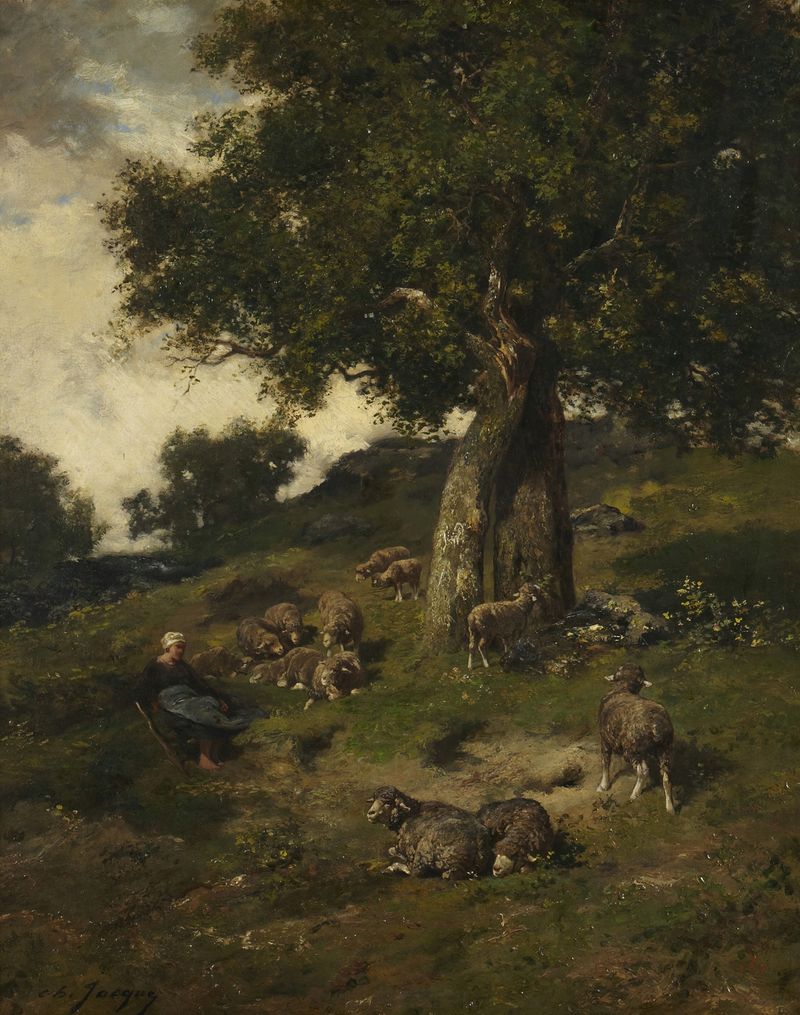
Shepherdess and Sheep
Charles Emile Jacque
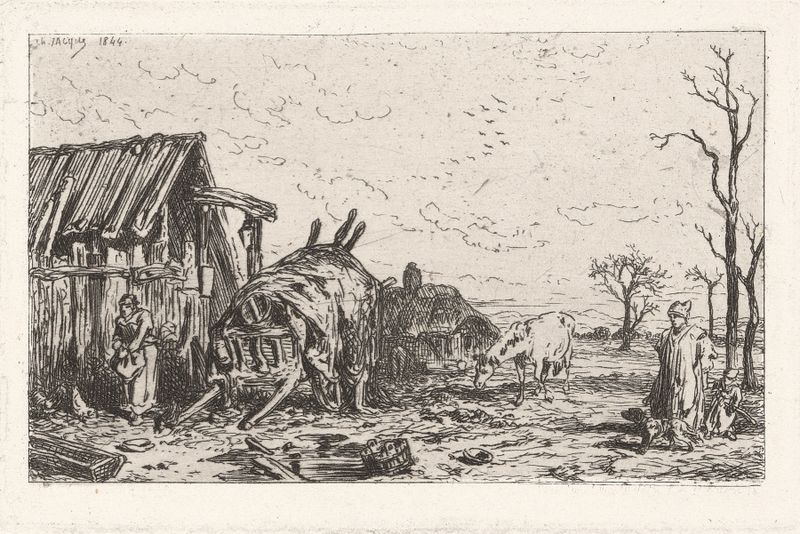
Rural farm scene with barn, cart, two farmers
Charles Emile Jacque

Shepherdess and her flock
Charles Emile Jacque

Ducks in the courtyard
Charles Emile Jacque

Two-horse plow in field
Charles Emile Jacque

Farmers loading ox cart
Charles Emile Jacque

Shepherd In A Field With His Flock
Charles Emile Jacque