
Rural farm scene with barn, cart, two farmers — History & Facts
In the quiet embrace of a rural landscape, the essence of loss looms heavy, encased in the nostalgia of fleeting moments. Focus first on the barn, its weathered wood a testament to years spent under the sun's relentless gaze. The earthy tones of brown and green intermingle, inviting you into a world where simplicity reigns supreme. Notice how the light dances across the scene, illuminating the figures of two farmers, their hands engaged with the land, while a cart stands patiently at rest nearby, hinting at the labor that has come before. The emotional undercurrents ripple through the canvas—the juxtaposition of toil and tranquility reveals a deeper narrative of resilience amidst fragility.
The farmers’ postures speak of shared burden, a silent camaraderie forged through the rhythm of rural life. The barn, standing sentinel, becomes a symbol of both sustenance and abandonment, encapsulating the bittersweet nature of human endeavor against the passage of time. In 1844, the artist found himself amidst the burgeoning effects of the Industrial Revolution in France, which was reshaping traditional ways of life. It was a period marked by a longing for the pastoral, as urbanization threatened the rural existence he cherished.
The work reflects not only his intimate connection to the agrarian world but also captures the heart of an era teetering between the familiar past and an uncertain future.
More Artworks by Charles Emile Jacque
Browse all →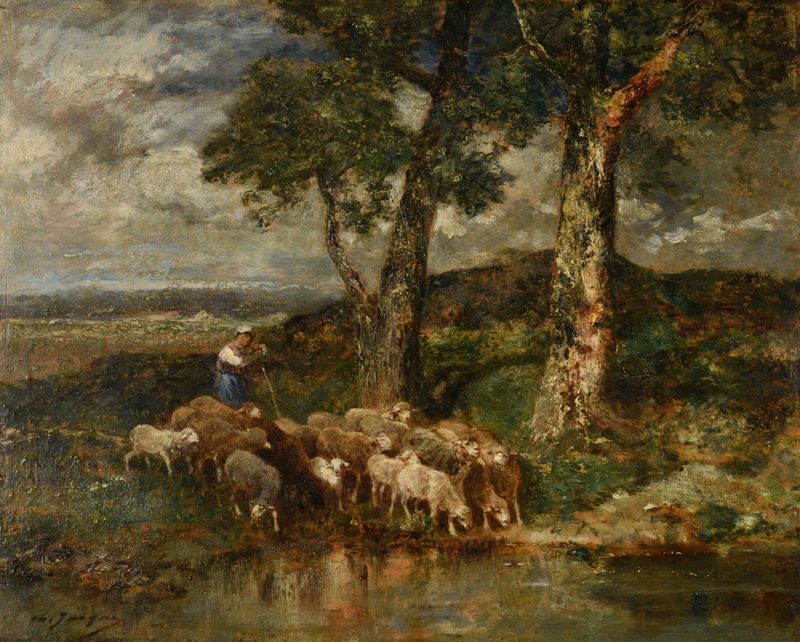
Moutons à l’abreuvoir
Charles Emile Jacque

The Sheepfold
Charles Emile Jacque
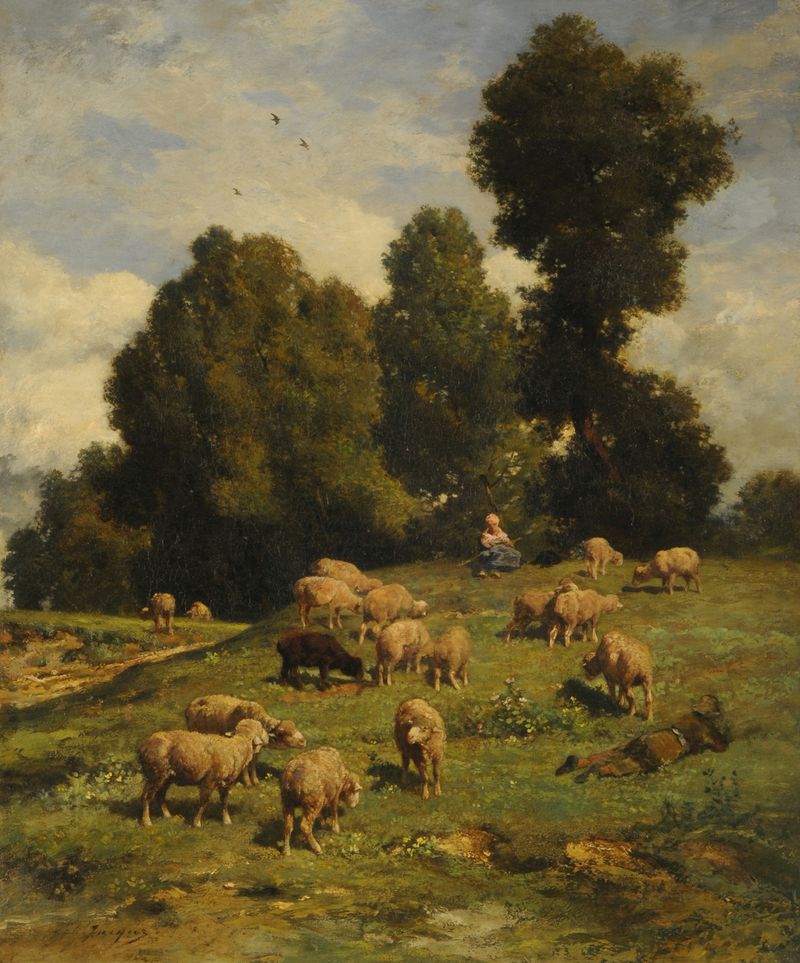
Moutons au pâturage
Charles Emile Jacque
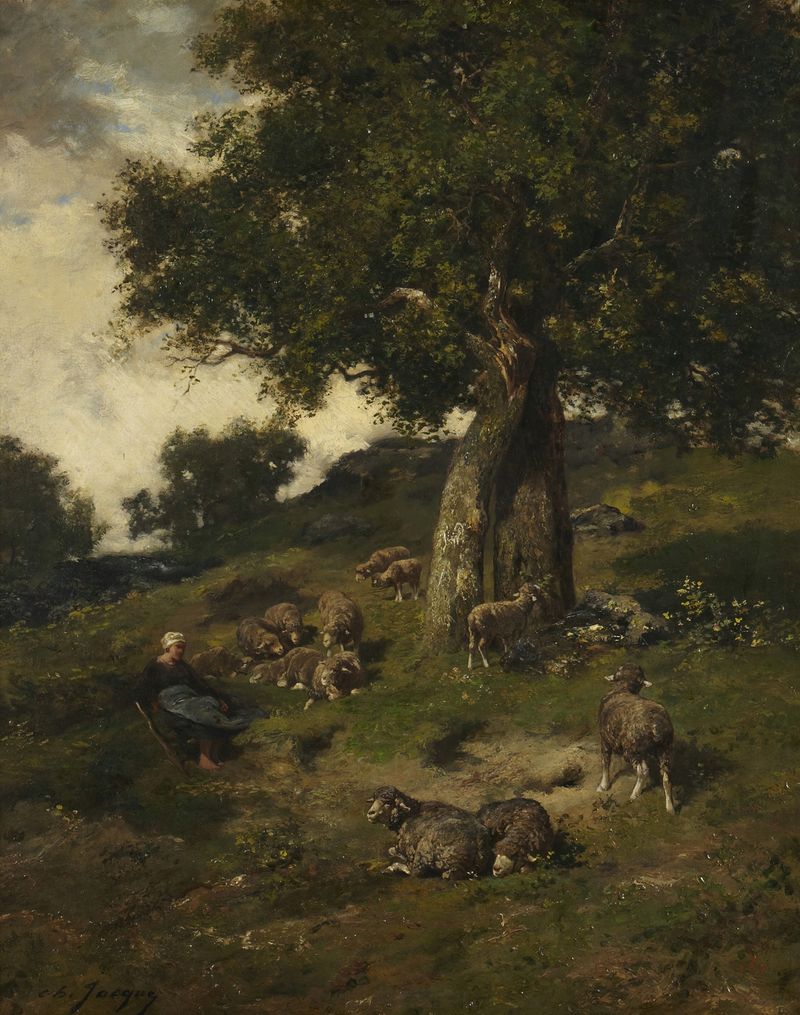
Shepherdess and Sheep
Charles Emile Jacque

Shepherdess and her flock
Charles Emile Jacque

Ducks in the courtyard
Charles Emile Jacque

Two-horse plow in field
Charles Emile Jacque

Farmers loading ox cart
Charles Emile Jacque
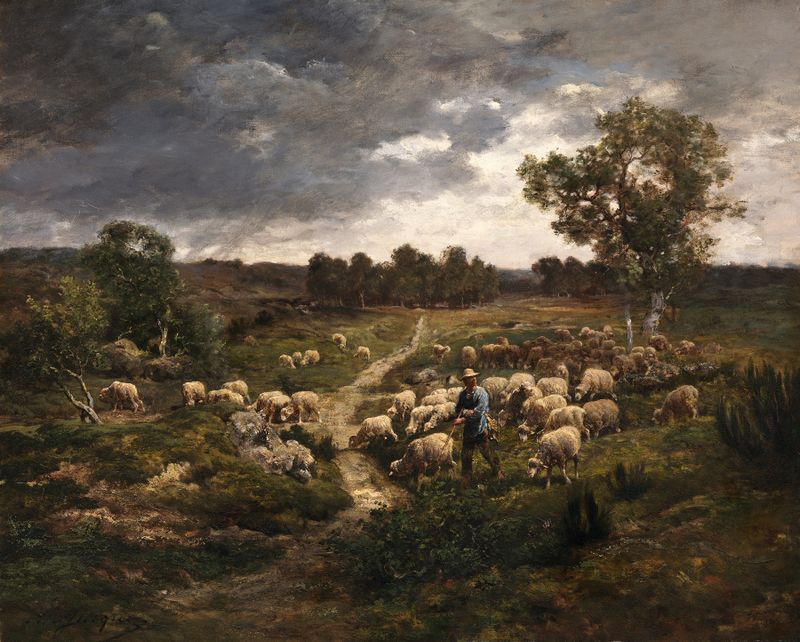
Sheep
Charles Emile Jacque

Shepherd In A Field With His Flock
Charles Emile Jacque





