Moutons à l’abreuvoir — History & Facts
What secret hides in the quiet of the canvas? In Moutons à l’abreuvoir, a tranquil yet haunting stillness envelops the scene, inviting whispers of unease to linger just beneath the surface. Look to the left at the grouping of sheep, their woolly forms rendered in soft, muted tones of gray and white. The subtle play of light cascades down from the overhanging trees, casting dappled shadows across the ground, creating a contrast between the vibrant green foliage and the earth’s dusty browns. Notice how the gentle curvature in the landscape draws the eye toward the tranquil watering trough, a focal point that seems to pulse with an unknown tension, even amidst the serene rural setting. The juxtaposition of the sheep’s placid demeanor against the implied isolation of the watering hole speaks of a fragile peace, hinting at an underlying fear of the unknown.
Each sheep, while seemingly at ease, exists within a world that feels slightly off-kilter, evoking a sense of vulnerability. The surrounding silence wraps around them like a shroud, suggesting that danger might be only a heartbeat away, a fleeting thought that shimmers like the reflection in the water. In the 1850s, while living in France, Charles Emile Jacque was increasingly fascinated by rural life, creating a significant body of work that reveals the bond between humanity and nature. This painting emerged during a period when landscape art was gaining prominence, and Jacque was influenced by both the Barbizon School and the Realism movement, aiming to capture the authenticity of pastoral life amidst the changing social landscape of his time.
More Artworks by Charles Emile Jacque
Browse all →
The Sheepfold
Charles Emile Jacque
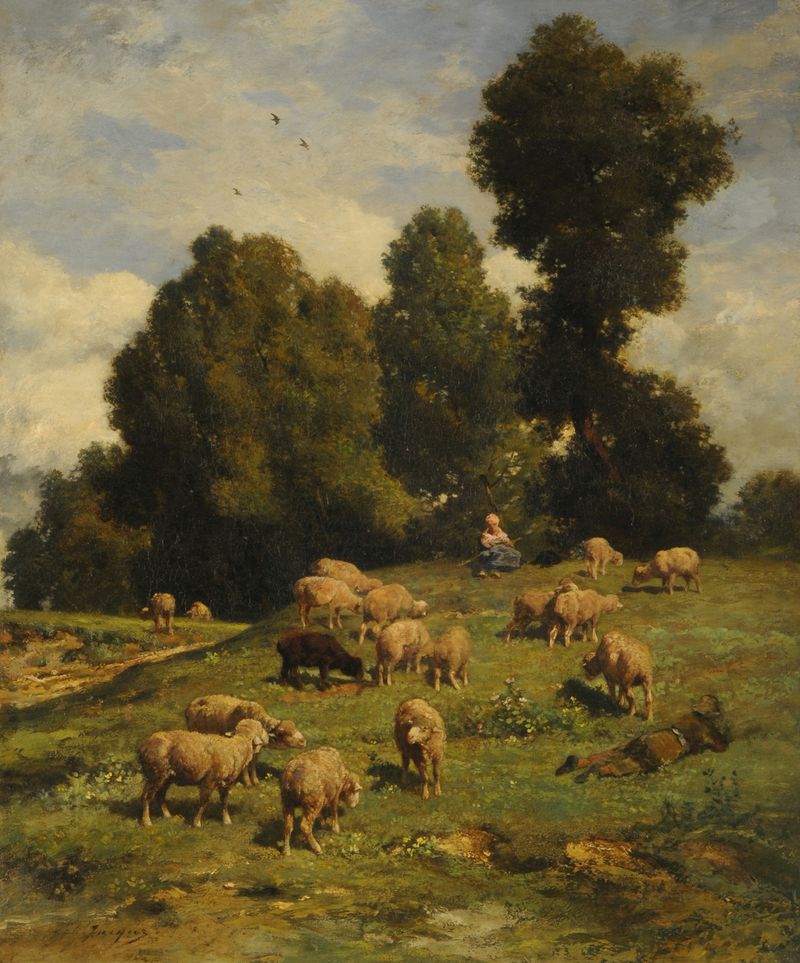
Moutons au pâturage
Charles Emile Jacque
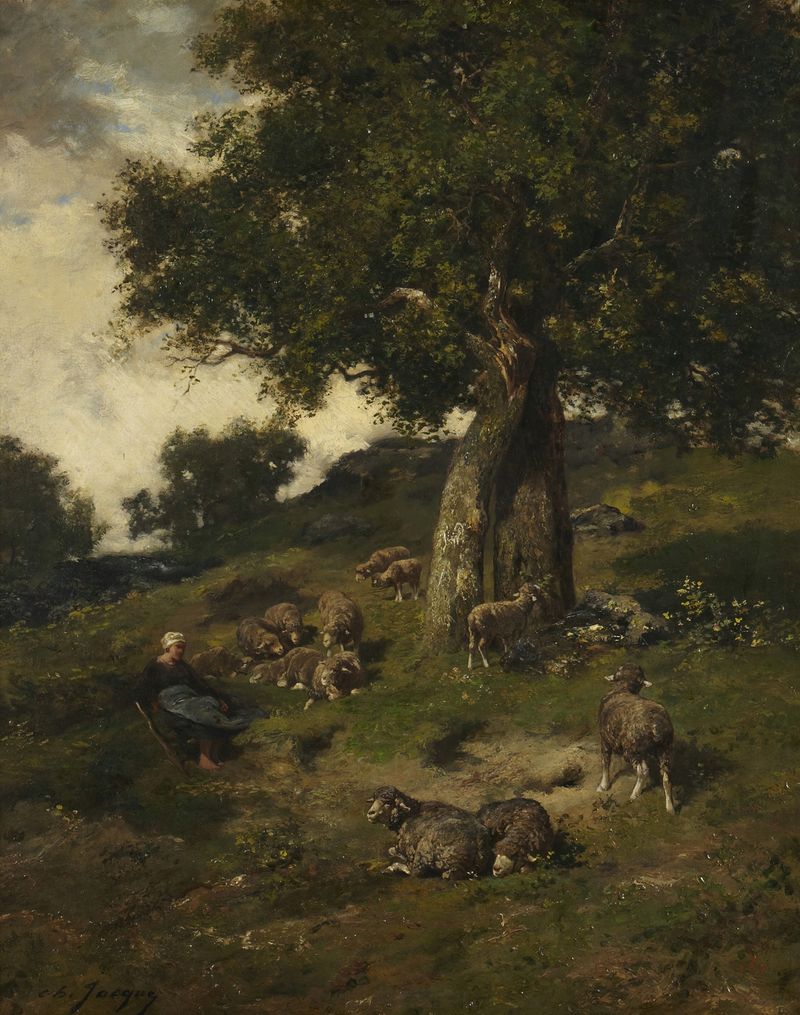
Shepherdess and Sheep
Charles Emile Jacque
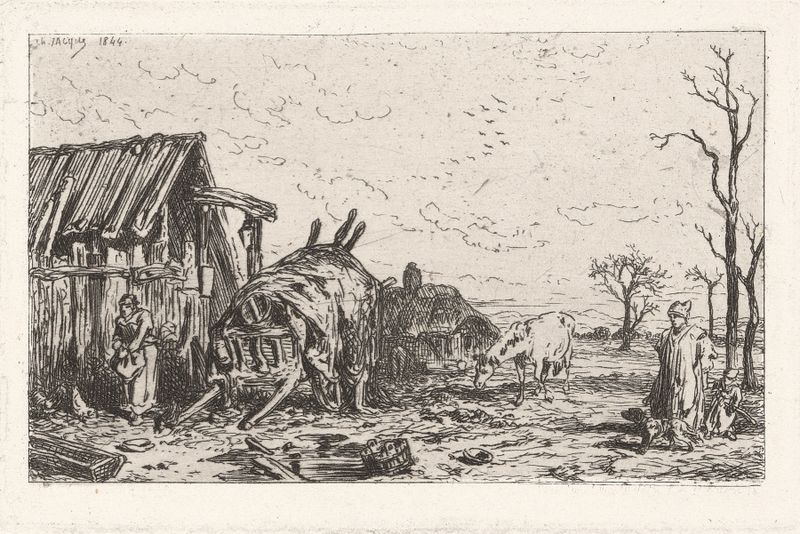
Rural farm scene with barn, cart, two farmers
Charles Emile Jacque

Shepherdess and her flock
Charles Emile Jacque

Ducks in the courtyard
Charles Emile Jacque

Two-horse plow in field
Charles Emile Jacque

Farmers loading ox cart
Charles Emile Jacque
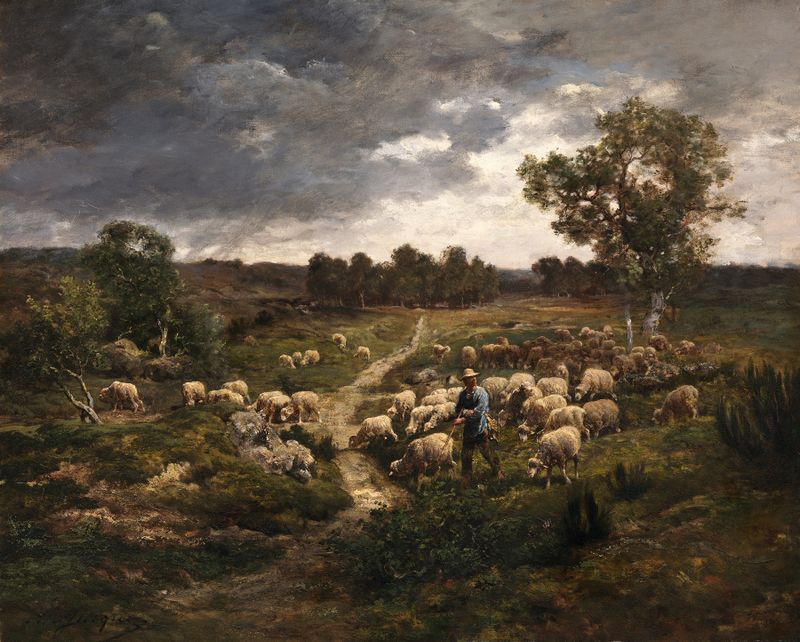
Sheep
Charles Emile Jacque

Shepherd In A Field With His Flock
Charles Emile Jacque