
Duinlandschap bij Zorgvliet — History & Facts
Could beauty survive in a century of chaos? In the stillness of Duinlandschap bij Zorgvliet, one finds an answer in the delicate interplay between emptiness and the vastness of nature. Look to the foreground, where undulating dunes rise softly against the horizon, their gentle contours inviting contemplation. Notice how the muted greens and browns of the grasses contrast with the pale sky, creating a serene yet desolate atmosphere. Shadows stretch across the landscape, subtly indicating the time of day as soft light filters through the clouds, accentuating the textures of sand and vegetation.
The composition draws the eye outward, emphasizing both the isolation of the scene and the boundless expanse of the natural world. At first glance, the painting exudes tranquility; however, there’s an underlying tension between beauty and barrenness. The absence of human figures or structures amplifies a sense of solitude, suggesting a yearning for connection in a world that often feels fragmented. The vastness captures both the awe of nature and an echo of introspection, inviting viewers to confront their own feelings of emptiness amidst the chaos of modern life. Johannes Gijsbert Vogel created this piece in 1880, during a time of artistic transition in the Netherlands.
Emerging from the shadows of realism, he focused on capturing the subtleties of the landscape, aiming to express emotion through the simplicity of natural forms. This period was marked by experimentation, as artists sought new ways to reflect their inner thoughts against the backdrop of an ever-evolving world.
More Artworks by Johannes Gijsbert Vogel
Browse all →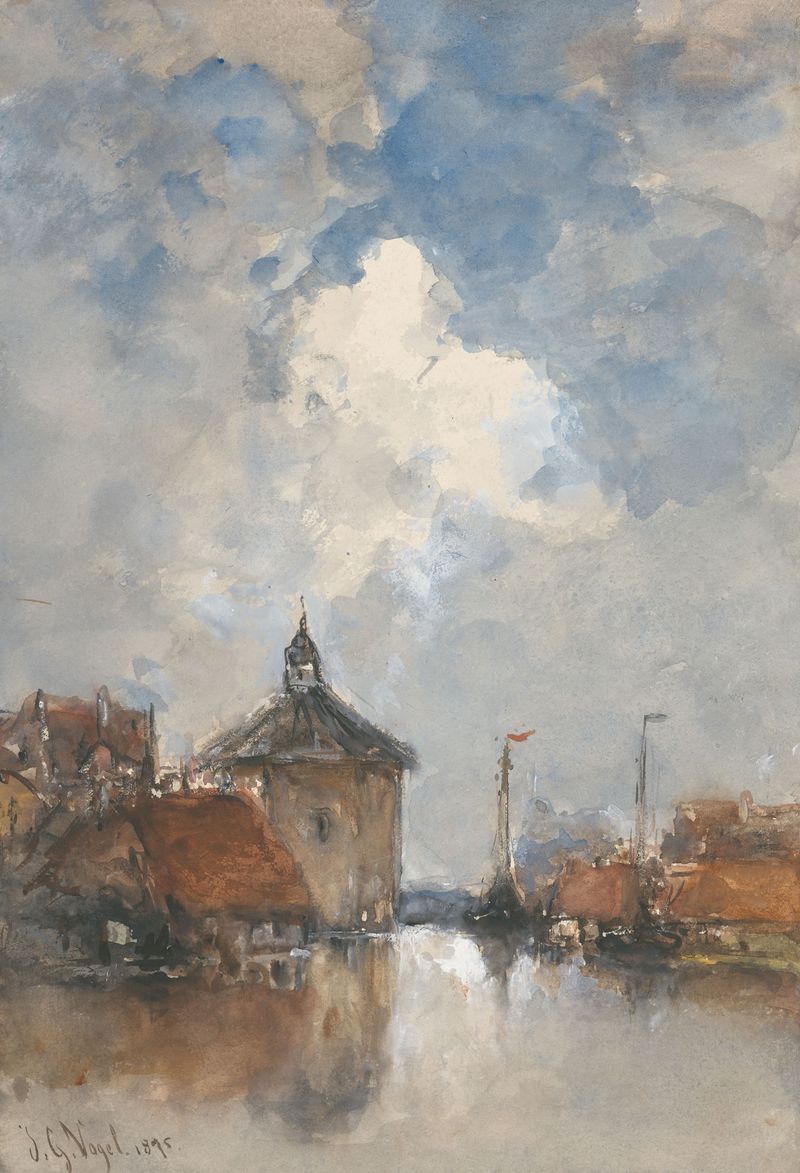
Havengezicht met schepen en een ronde toren
Johannes Gijsbert Vogel
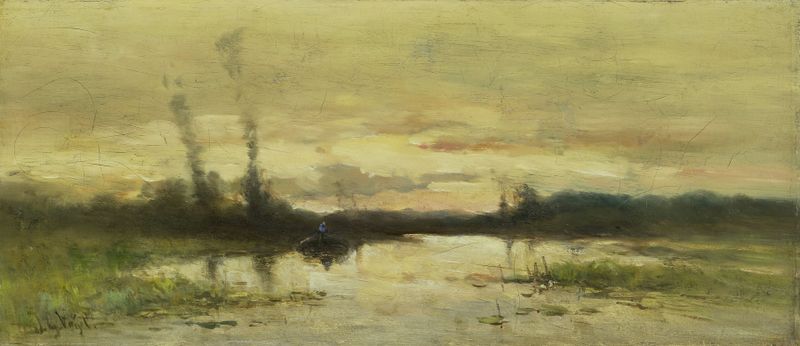
Landschap aan de vaart bij Hilversum
Johannes Gijsbert Vogel
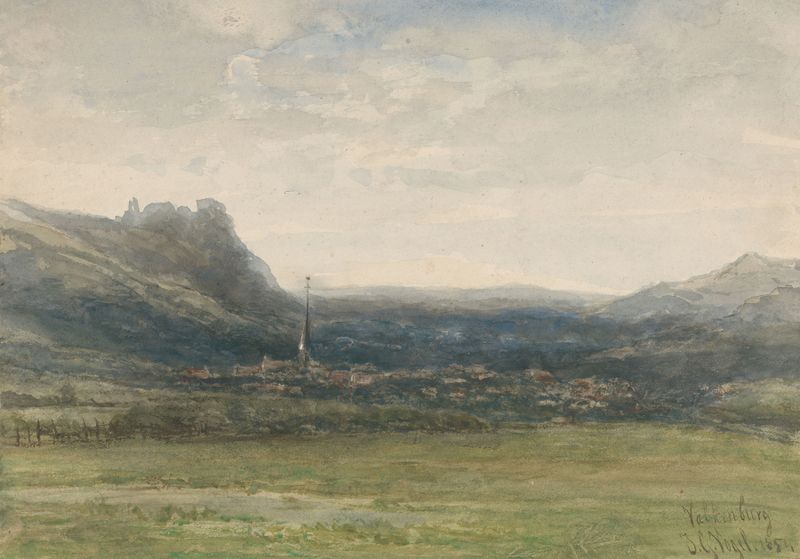
Gezicht op Valkenburg, Limburg
Johannes Gijsbert Vogel

Riviergezicht bij Sliedrecht met zeilschip
Johannes Gijsbert Vogel
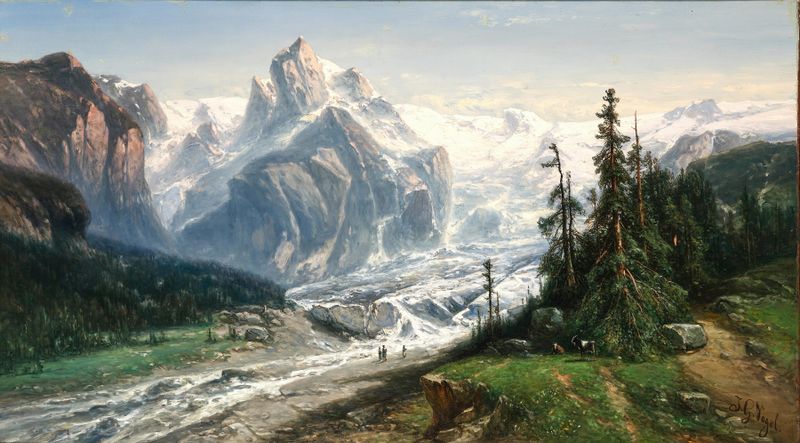
Travellers at the Foot of a Glacier
Johannes Gijsbert Vogel

Rotsachtig landschap met bomen
Johannes Gijsbert Vogel





