
Rotsachtig landschap met bomen — History & Facts
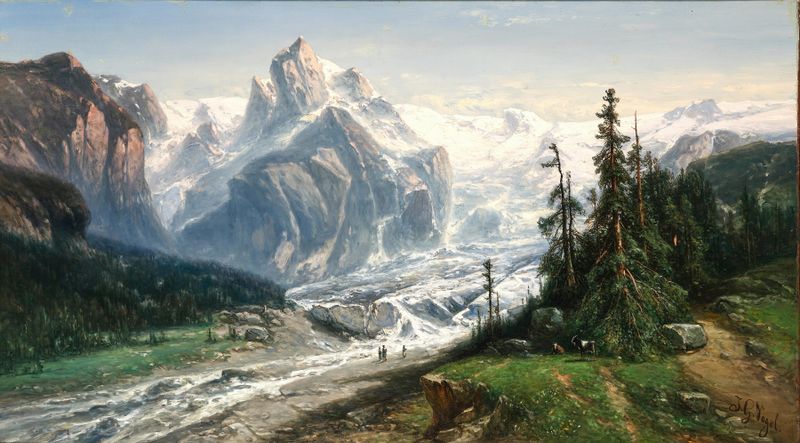
In the quiet folds of nature, where reality blurs into illusion, a hidden landscape yearns for discovery. Focus on the luscious greens and browns that intertwine like whispers of a forgotten tale. Notice how the thick, rotting vegetation sprawls across the canvas, creating a rich, textured tapestry that begs for a closer look. The trees, with their twisted trunks and gnarled branches, draw the eye upward, revealing patches of sky peeking through—an invitation to explore beyond the immediate chaos of nature, and perhaps, into deeper reflections on life. The tension between decay and beauty is palpable.
The vibrant hues of life contrast sharply with the inevitable passage of time, depicted through the rot that anchors the landscape. This duality evokes a bittersweet feeling, as if the artist is challenging us to find grace in deterioration, a reminder that beauty often resides within imperfection. The interplay of light creates shadows that dance across the surface, heightening the sense of movement and evoking the ephemeral quality of existence. Created in 1869, this work emerged during a time when Vogel was deeply engaged with nature's raw beauty in the Netherlands.
His exploration of landscapes coincided with the broader movement in art that sought to capture the fleeting moments of life, reflecting the influence of romanticism and realism in the art world. At this juncture, Vogel’s palette became a personal dialogue with the decay and renewal that define the human experience.
More Artworks by Johannes Gijsbert Vogel
Browse all →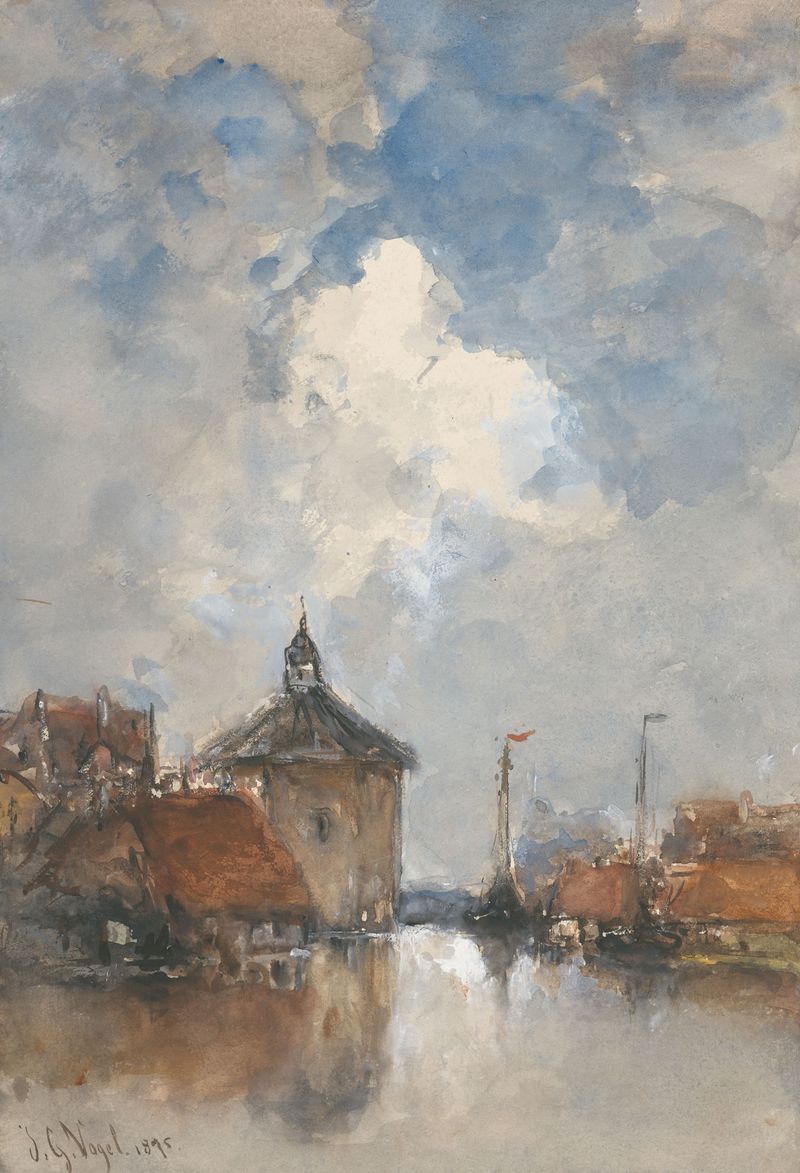
Havengezicht met schepen en een ronde toren
Johannes Gijsbert Vogel
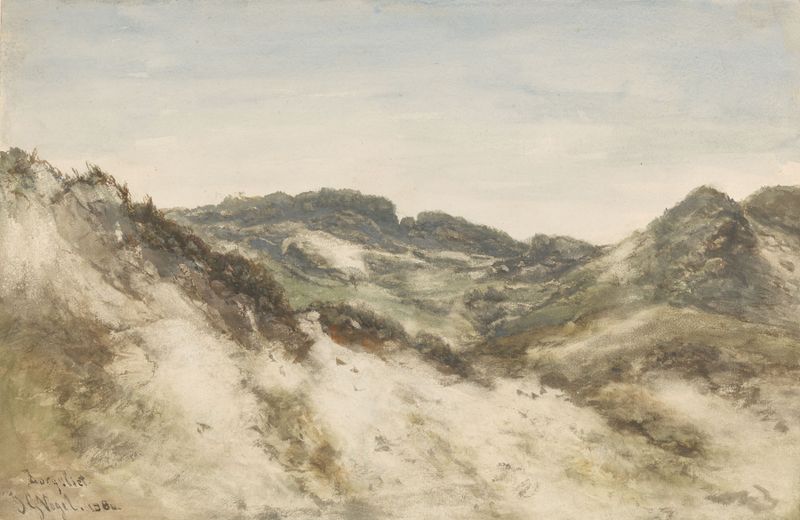
Duinlandschap bij Zorgvliet
Johannes Gijsbert Vogel
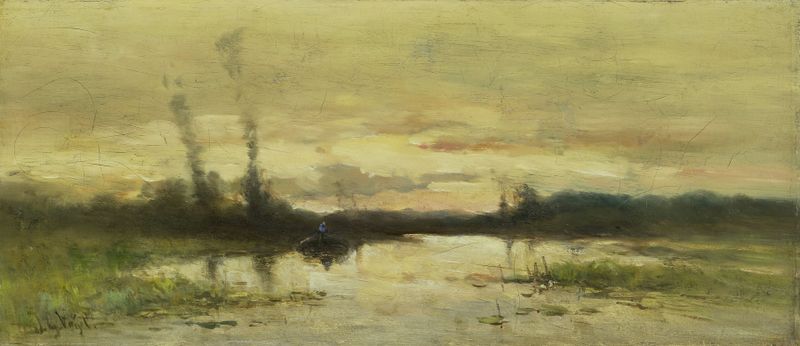
Landschap aan de vaart bij Hilversum
Johannes Gijsbert Vogel
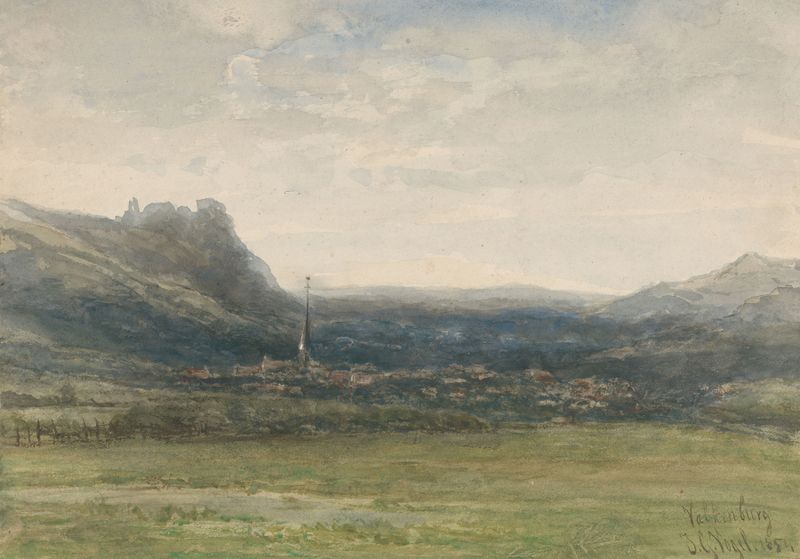
Gezicht op Valkenburg, Limburg
Johannes Gijsbert Vogel

Riviergezicht bij Sliedrecht met zeilschip
Johannes Gijsbert Vogel
Travellers at the Foot of a Glacier
Johannes Gijsbert Vogel





