
Travellers at the Foot of a Glacier — History & Facts
Can beauty exist without sorrow? The untouched landscape of a glacier, majestic yet foreboding, prompts a quiet contemplation of solitude and isolation. Look to the left of the canvas, where the towering ice formations rise, their crystalline structures catching the fleeting sunlight. Notice how the icy blue hues contrast sharply with the dark, shadowy crevices below, emphasizing the cold detachment of nature. In the foreground, two figures stand — small yet resilient against the overwhelming vastness, their posture suggesting a blend of wonder and trepidation.
The brushwork here delicately captures the texture of the ice, providing a tactile sense of the imposing environment. As you observe further, the emotional tensions unfold. The travelers, seemingly dwarfed by the glacier, evoke feelings of loneliness within the grandeur of nature. Their distant gazes suggest an introspective journey, highlighting the contrast between human vulnerability and the immutable power of the landscape.
Each stroke brings forth an underlying message of existential solitude, as the beauty of the scene is laced with a quiet melancholy. Created during an uncertain period in the artist’s life, this artwork reflects a time when Vogel was navigating the shifts of the Romantic movement in Europe. The work, painted in the 19th century, coincided with a growing fascination with nature's stark beauty, yet it also revealed the artist's own struggles with identity and belonging amid the changing art world.
More Artworks by Johannes Gijsbert Vogel
Browse all →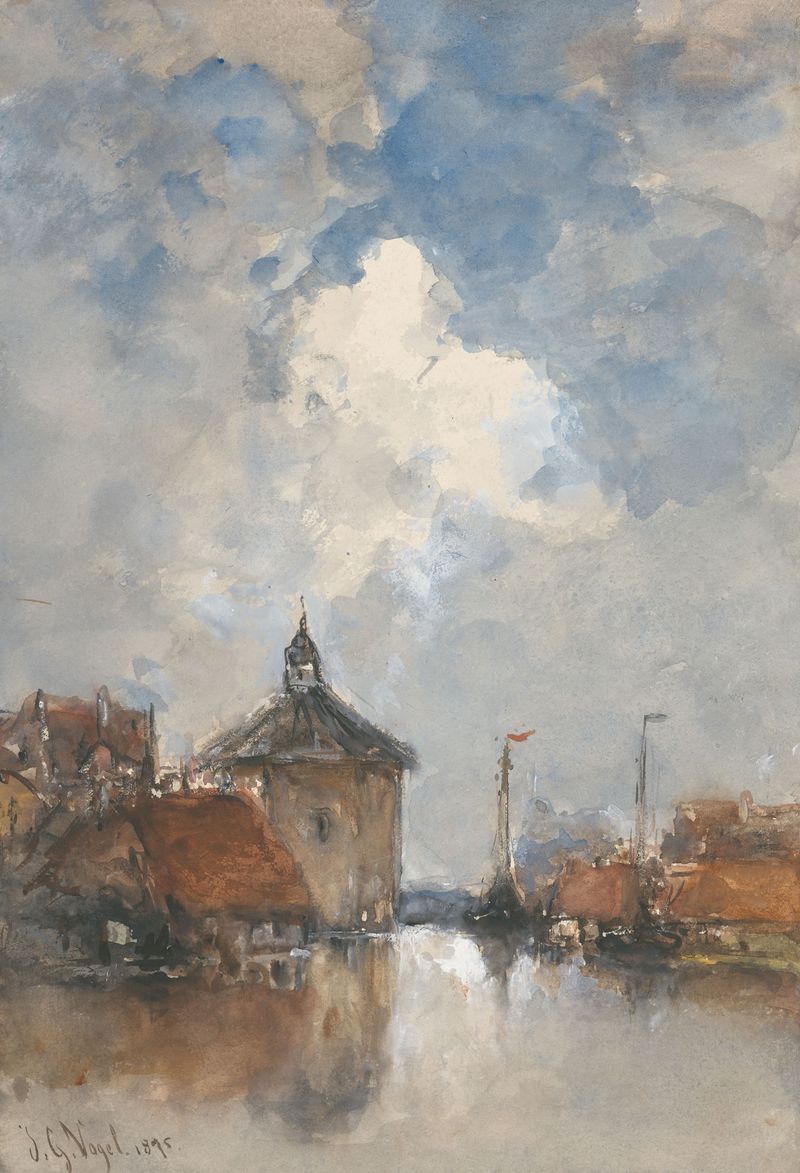
Havengezicht met schepen en een ronde toren
Johannes Gijsbert Vogel
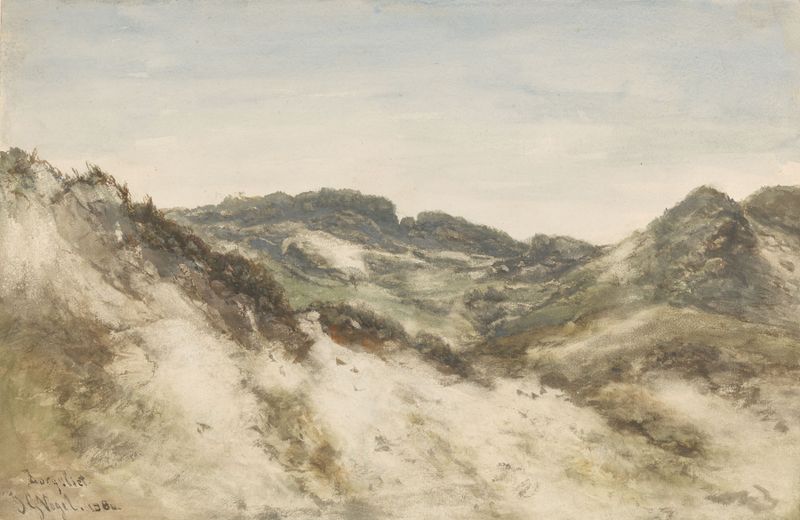
Duinlandschap bij Zorgvliet
Johannes Gijsbert Vogel
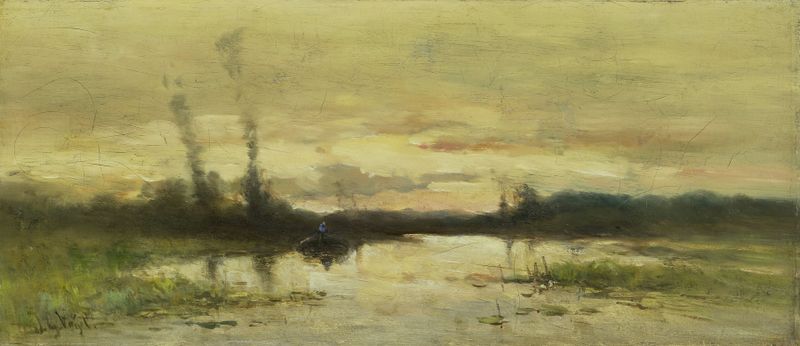
Landschap aan de vaart bij Hilversum
Johannes Gijsbert Vogel
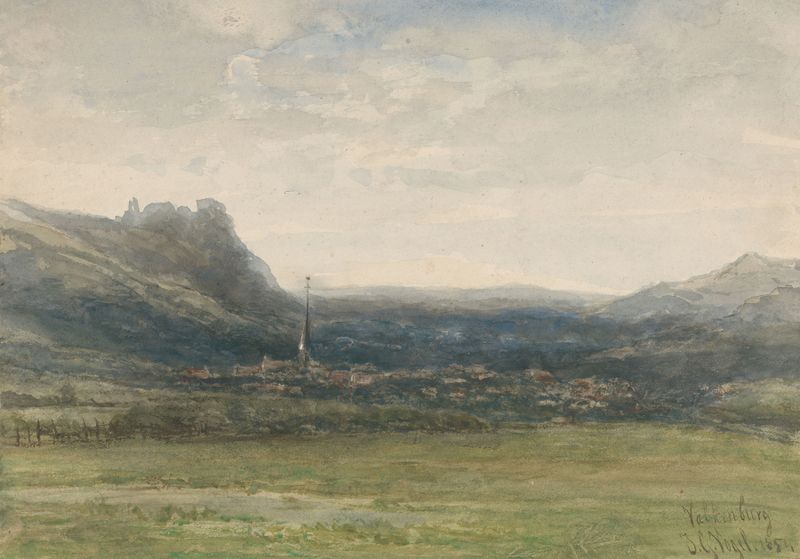
Gezicht op Valkenburg, Limburg
Johannes Gijsbert Vogel

Riviergezicht bij Sliedrecht met zeilschip
Johannes Gijsbert Vogel

Rotsachtig landschap met bomen
Johannes Gijsbert Vogel





