
Landschap aan de vaart bij Hilversum — History & Facts
In the stillness of nature, every brushstroke captures the essence of transformation, a moment suspended between the known and the unknown. Focus on the shimmering water that sprawls across the lower half of the piece, reflecting the muted colors of the sky above. Look closely at the gentle strokes that define the trees, their branches swaying in a breeze that seems almost palpable. Notice how the warm hues of sunlight mingle with the cool tones of the water, creating a dialogue between elements that feels both serene and dynamic.
The harmony of greens and browns evokes the lushness of the landscape, while the careful placement of the horizon invites the viewer to journey into the depth of the scene. Within the tranquil setting lies a deeper narrative of change and continuity. The juxtaposition of the still water and the rustling leaves signifies the constant passage of time, an invitation to reflect on the cycles of nature. The soft light that filters through the clouds carries a sense of fleeting beauty, suggesting that even in stillness, transformation is ever-present.
Each element tells the story of an ecosystem in flux, where moments of clarity illuminate the transitory nature of life itself. During the years between 1880 and 1915, Vogel created Landschap aan de vaart bij Hilversum while immersed in the Dutch impressionist movement. Living in a time when artists sought to capture the essence of light and atmosphere, Vogel was part of a broader artistic dialogue that embraced a new way of seeing the world. This period marked significant shifts in artistic technique and perception, reflecting both personal and cultural transformations that shaped the nature of landscape painting.
More Artworks by Johannes Gijsbert Vogel
Browse all →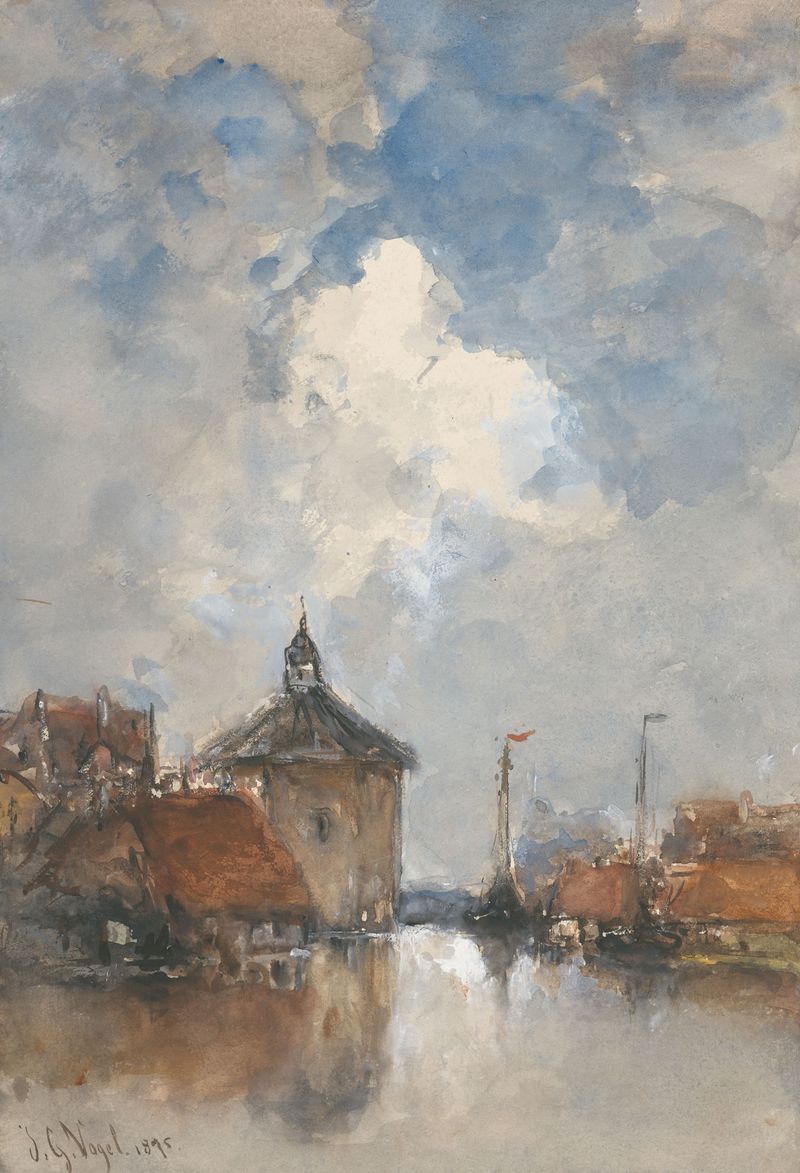
Havengezicht met schepen en een ronde toren
Johannes Gijsbert Vogel
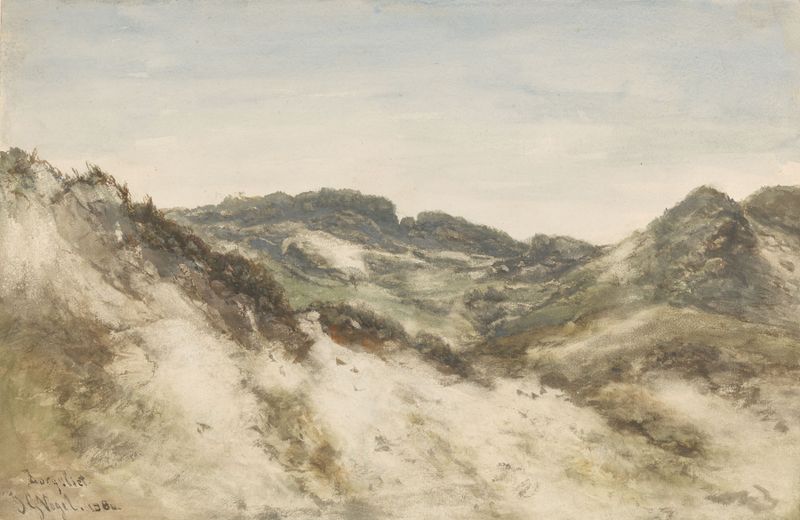
Duinlandschap bij Zorgvliet
Johannes Gijsbert Vogel
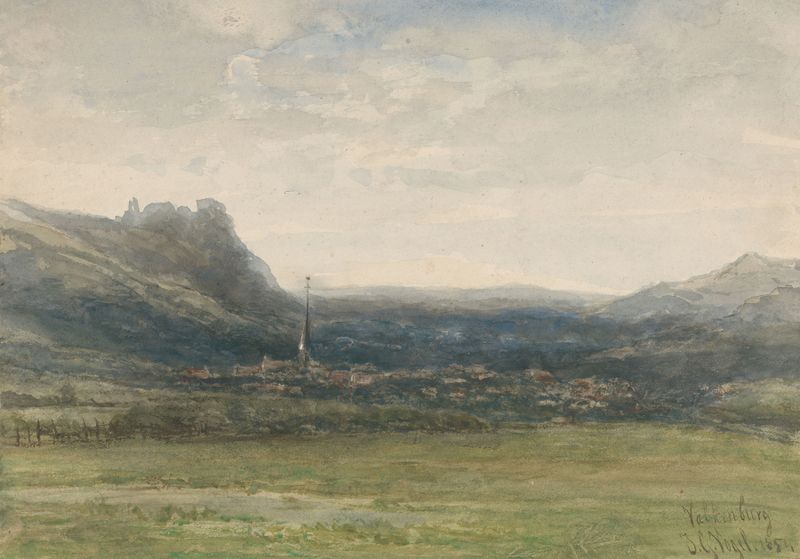
Gezicht op Valkenburg, Limburg
Johannes Gijsbert Vogel

Riviergezicht bij Sliedrecht met zeilschip
Johannes Gijsbert Vogel
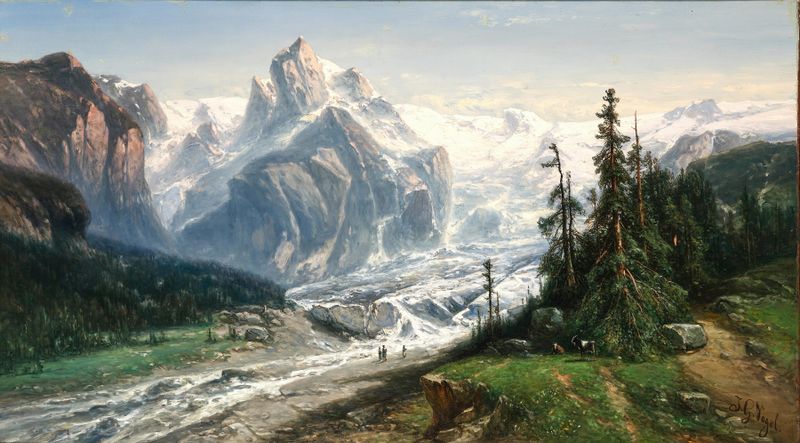
Travellers at the Foot of a Glacier
Johannes Gijsbert Vogel

Rotsachtig landschap met bomen
Johannes Gijsbert Vogel





