
Dutch Landscape — History & Facts
What if beauty was never meant to be finished? In Dutch Landscape, the interplay of light and shadow invites us to ponder the transient nature of existence, capturing an essence that surpasses mere completion. Look to the horizon, where the muted colors of dawn blend seamlessly into a tranquil sky. The soft blues and warm ochres dance together, revealing a delicate balance that grounds the viewer. Notice how the light falls upon the rolling fields and rippling waters, the brushstrokes whispering secrets of the Dutch countryside.
The composition draws your eye through the landscape, leading you to the quaint windmills standing silently against the vast expanse, embodying resilience and a connection to the land. Within this serene tableau lies a tension between the calmness of nature and the hints of human presence. The gentle ripples on the water hint at a recent disturbance, while the windmills serve as a reminder of industriousness intruding upon the tranquil beauty of the scene. Jongkind's technique of layering paint speaks to the nuances of light—how it can both illuminate and obscure, revealing the delicate imperfections of life. Painted in 1862, Jongkind crafted this piece during a crucial moment in his artistic journey in France.
Embracing the Impressionist movement, he sought to capture fleeting moments through his brush. At that time, he was influenced by the evolving art world, which was beginning to shift away from strict realism towards a more emotive and atmospheric expression. This painting reflects that transition, embodying both the beauty and impermanence of the natural world.
More Artworks by Johan Barthold Jongkind
Browse all →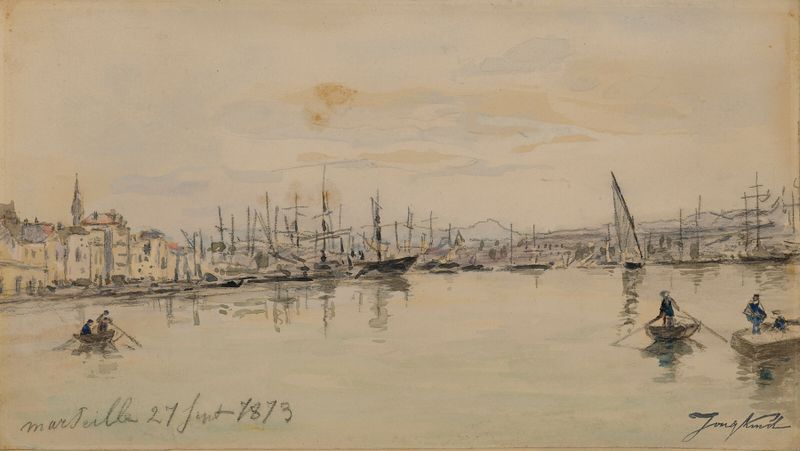
Le Port de Marseille
Johan Barthold Jongkind

Canal Saint-Martin
Johan Barthold Jongkind

Countryside near Brezins, between Grenoble and Vienne
Johan Barthold Jongkind

Notre-Dame vue du quai de la Tournelle
Johan Barthold Jongkind

Environs de Grenoble
Johan Barthold Jongkind

Clair de lune à Overschie (environs de Rotterdam)
Johan Barthold Jongkind

Port de Honfleur
Johan Barthold Jongkind
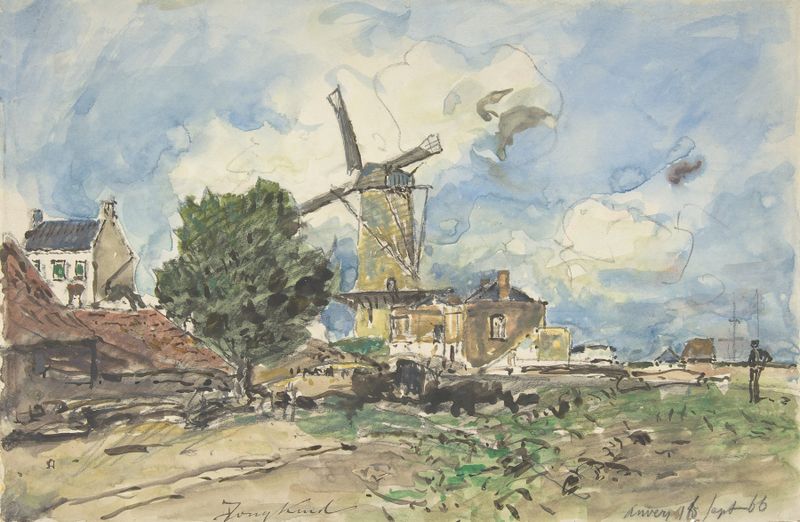
Wind Mill at Antwerp
Johan Barthold Jongkind

Le Havre
Johan Barthold Jongkind

The Church of Overschie
Johan Barthold Jongkind





