
Dwelling by the Shore — History & Facts
Where does light end, and longing begin? In the delicate interplay of hues and shadows, Tsubaki Chinzan captures the essence of human emotion against the vastness of nature. Look to the foreground, where gentle waves lap against the shore, their soft curves inviting contemplation. Notice how the light dances upon the water’s surface, creating a shimmering path that draws the eye towards the horizon. The muted tones of the sky, infused with pale blues and grays, evoke a sense of tranquility, while the solitary figure stands at the water's edge, cloaked in a deep contemplation that hints at both connection and isolation. In this composition, the contrast between the serene landscape and the figure’s solitude speaks to the duality of existence.
The gentle yet restless sea symbolizes both the beauty and the fear of the unknown, while the figure, framed against this vastness, embodies a longing for something beyond reach. The stillness of the scene belies an emotional depth, as the viewer senses the silent struggle between desire and fear — a universal tension that resonates deeply. Created in 1847, this piece reflects Chinzan’s exploration of natural landscapes infused with poignant human experience. Working in Edo period Japan, he was part of a time when artists sought to depict the profound relationships between humanity and nature, capturing the intricate emotions that this relationship evokes.
The artwork emerges as a testament to that era's introspective spirit, inviting viewers to confront their own fears and longing through the lens of beauty.
More Artworks by Tsubaki Chinzan
Browse all →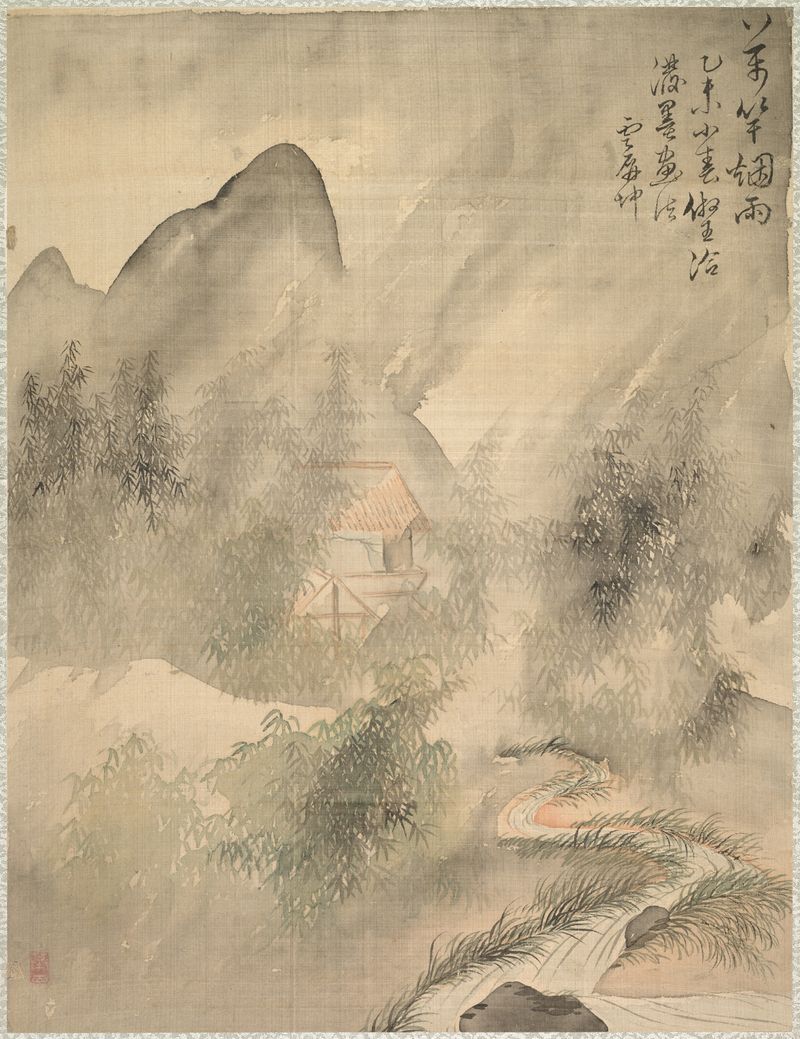
Ten Thousand Bamboos in the Mist and Rain
Tsubaki Chinzan
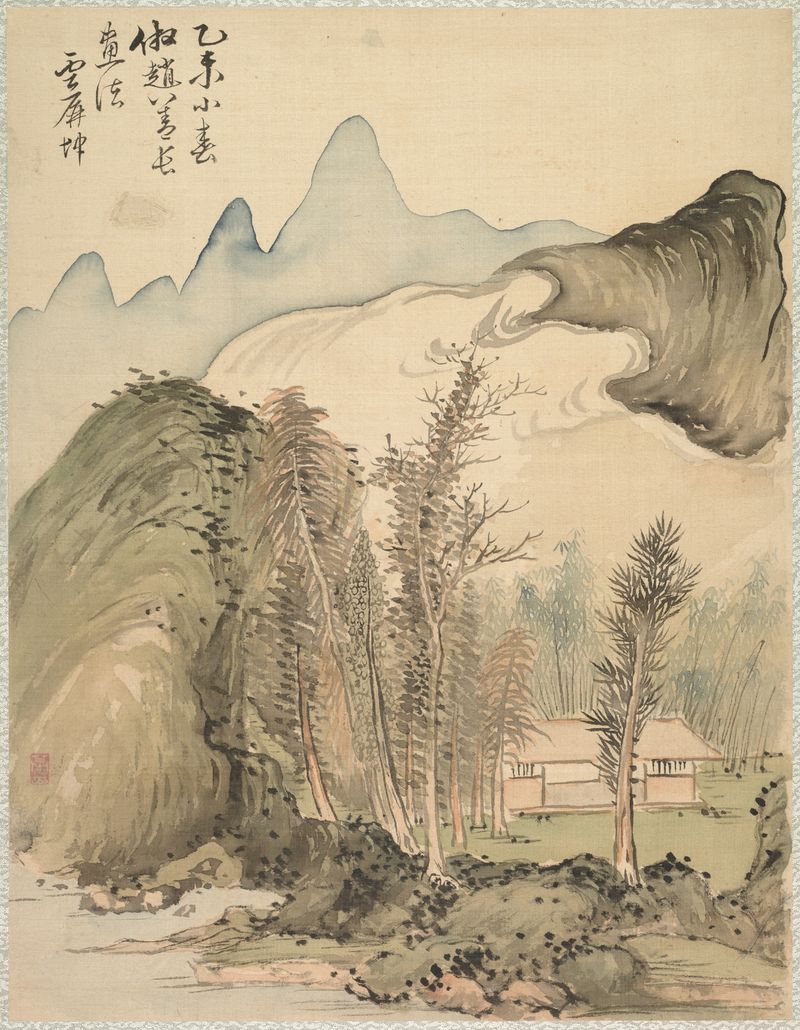
Hut Amidst the Trees
Tsubaki Chinzan
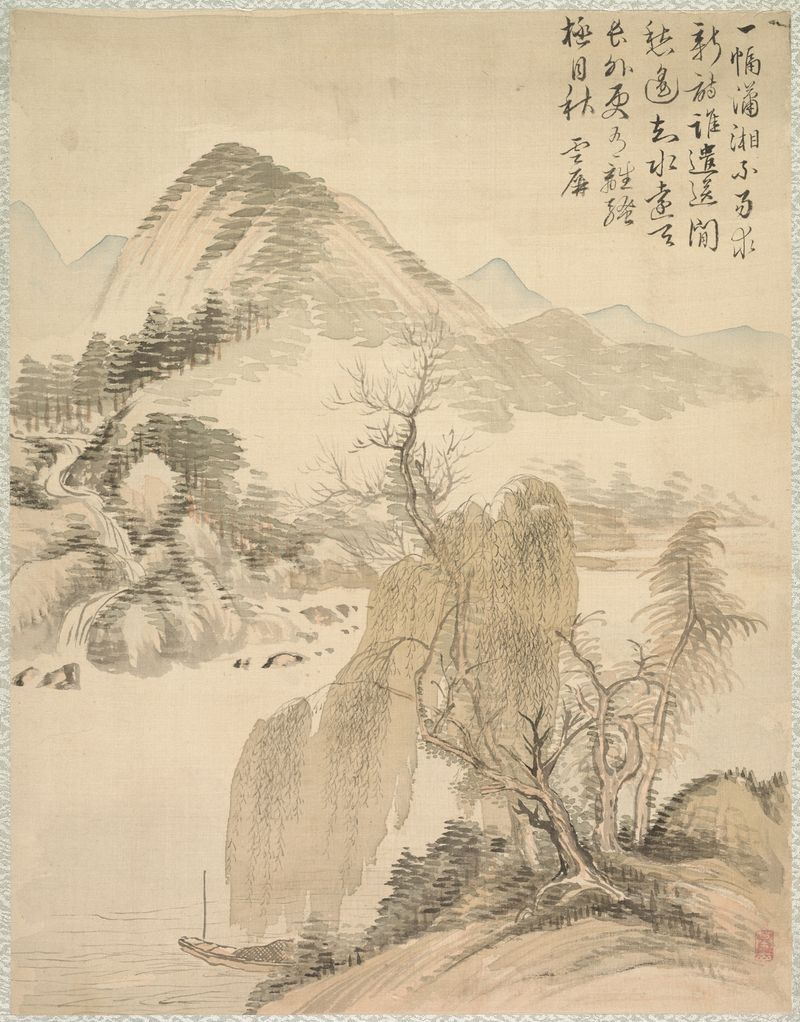
Willow and Waterfall
Tsubaki Chinzan

Waterfall and Rocks
Tsubaki Chinzan

Folded Hills and Layered Peaks
Tsubaki Chinzan
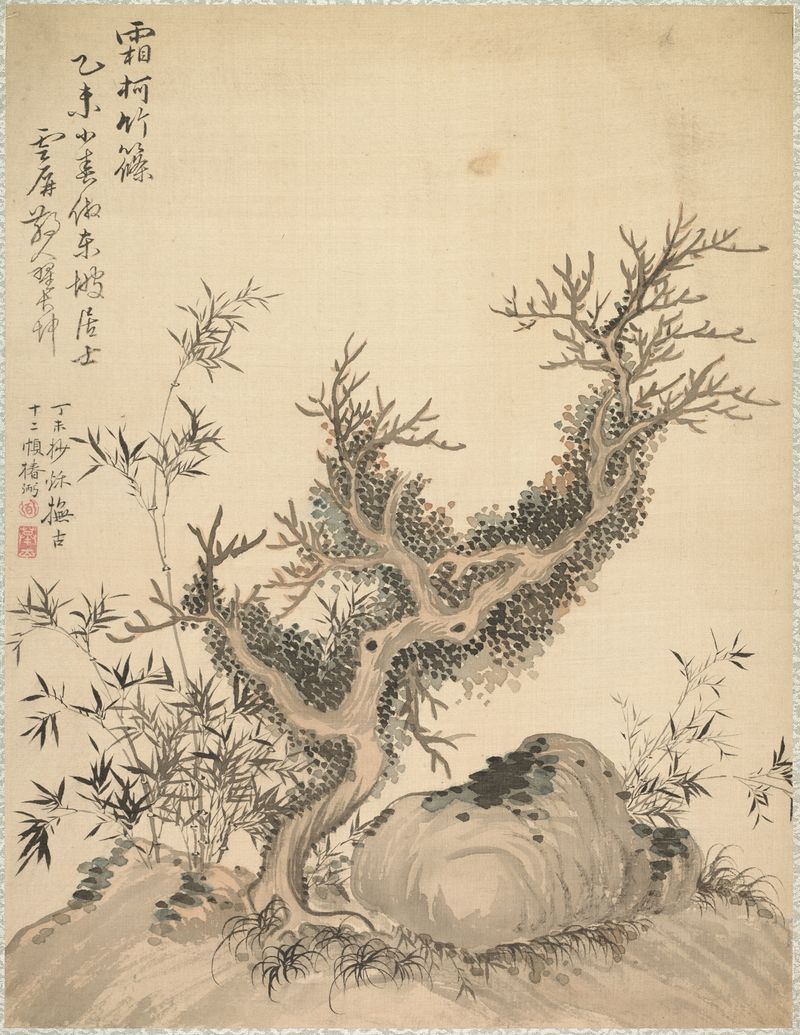
Frosted Branches and Dwarf Bamboo
Tsubaki Chinzan
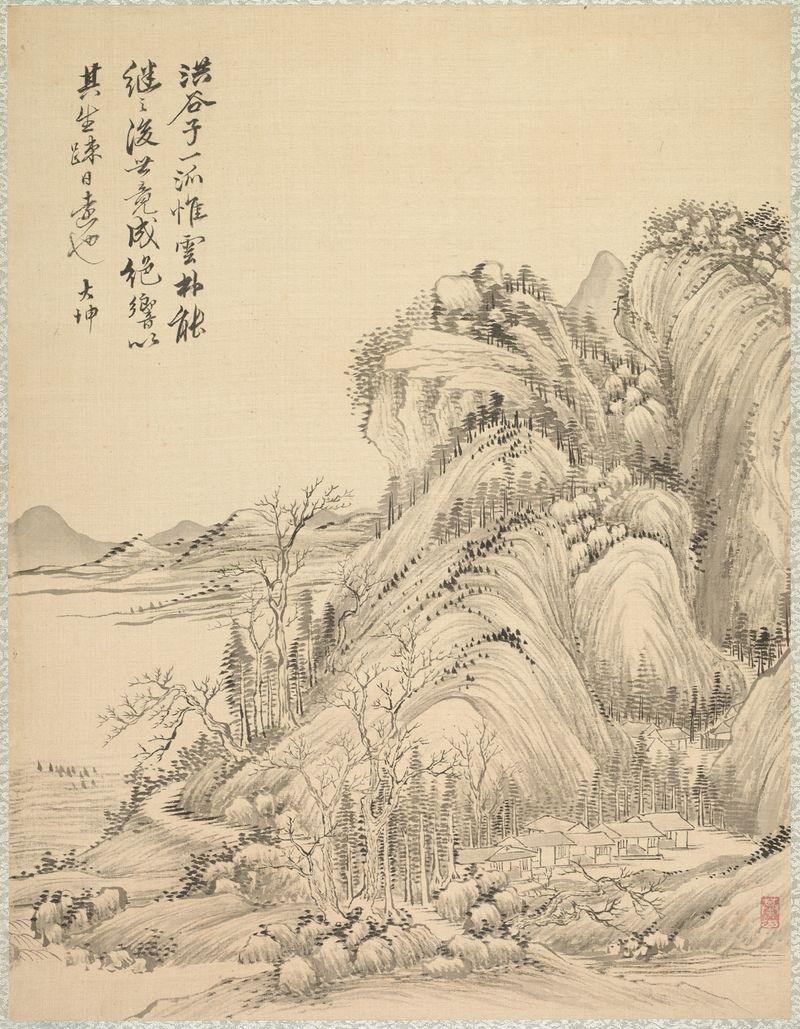
Dwellings beneath Folded Hills
Tsubaki Chinzan
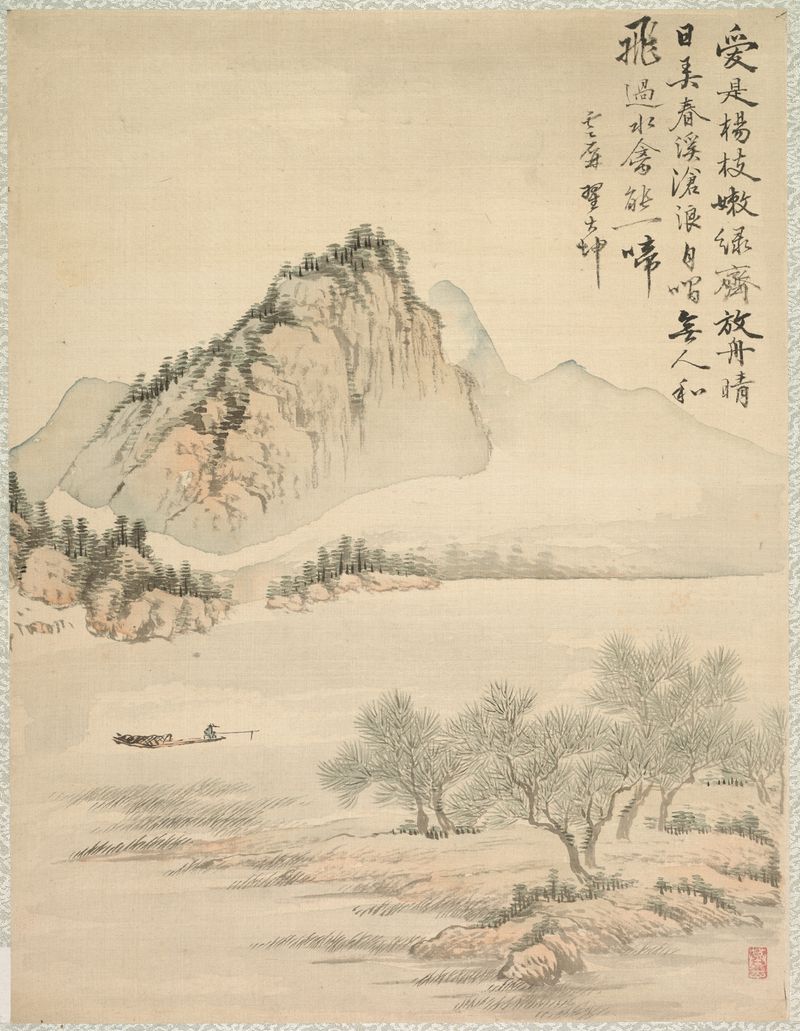
Drifting in a Boat
Tsubaki Chinzan
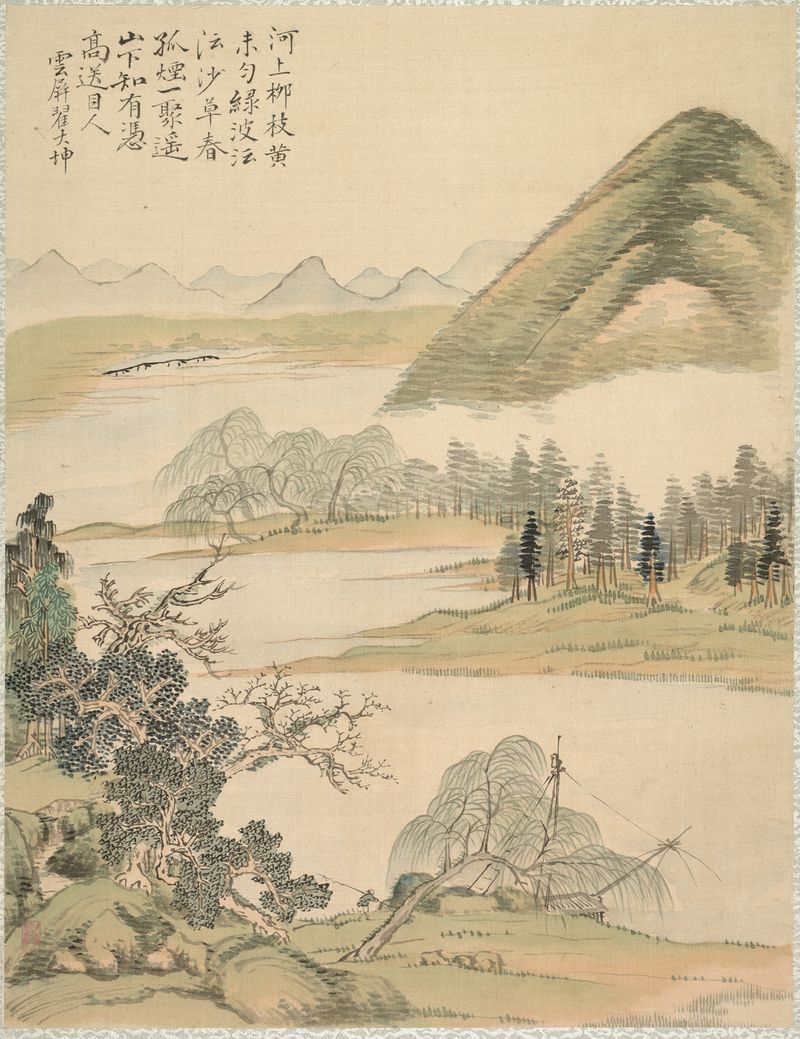
Willow Branches in Spring
Tsubaki Chinzan





