Early Morning Off the Coast — History & Facts
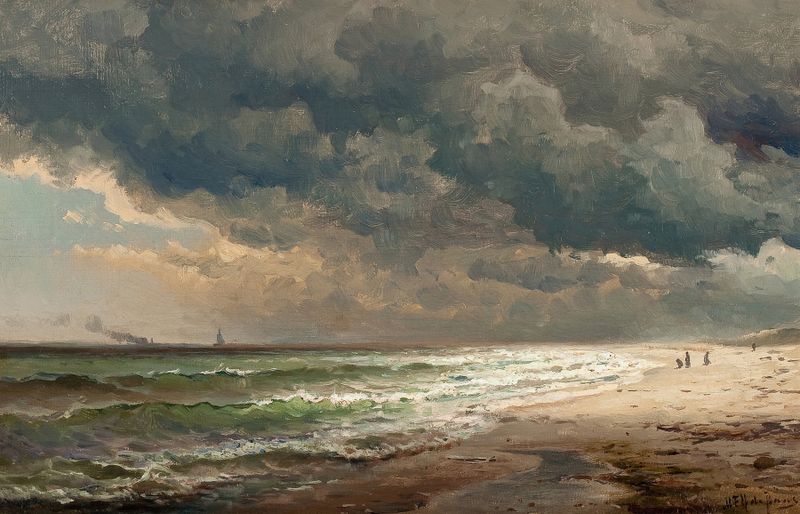
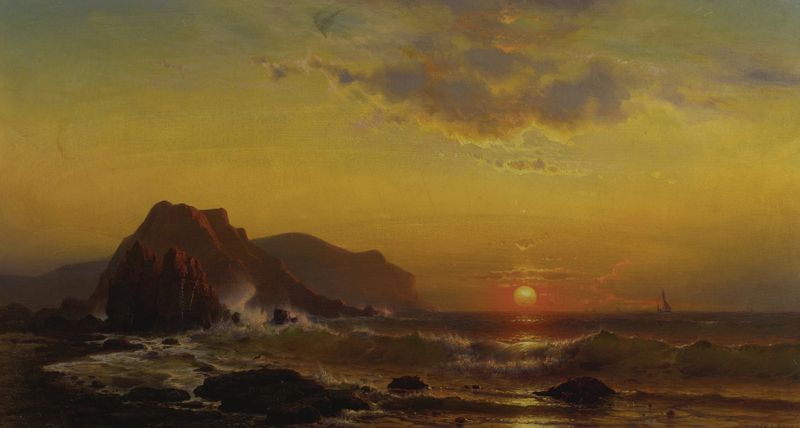
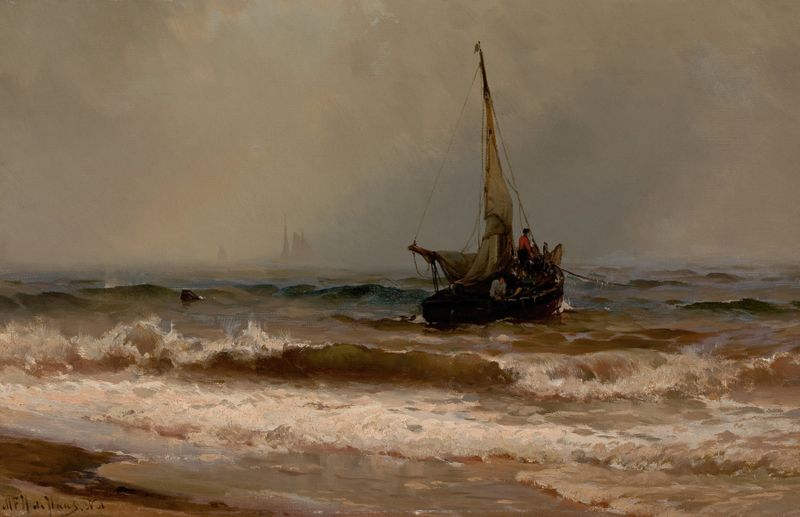
Could beauty survive in a century of chaos? In Early Morning Off the Coast, we find a serene moment delicately perched on the cusp of daybreak, embodying a fragile balance between tranquility and the tumultuous forces of nature. Look to the horizon, where gentle waves lap against a silent shore, painted in soft hues of lavender and blue. The sky, a gradient of pastel oranges and yellows, heralds the arrival of sunlight, casting a warm glow over the water. Notice how deft brushstrokes create a sense of movement in the waves, contrasting with the stillness of the boats anchored in the distance.
The careful composition evokes a harmony between the elements, inviting the viewer into a world where nature breathes and flourishes. Beneath this idyllic façade lies an interplay of light and shadow, reflecting the duality of existence. The boats, still and resolute, serve as symbols of human enterprise, set against the ephemeral beauty of dawn. Each wave whispers a story, a reminder of both the power and fragility of life.
In this moment, the artist captures not just a landscape but the emotional depth of balance — a fleeting, yet enduring, harmony amid the chaos of the world beyond. In 1891, while painting this work, the artist was residing in the United States, where maritime scenes were gaining popularity among collectors. The late 19th century was a time of artistic exploration and upheaval, as Impressionism began to challenge traditional academic standards. De Haas, influenced by both European and American styles, sought to express the beauty of nature while reflecting on the broader complexities of life during an era marked by rapid change.