Out to Sea — History & Facts
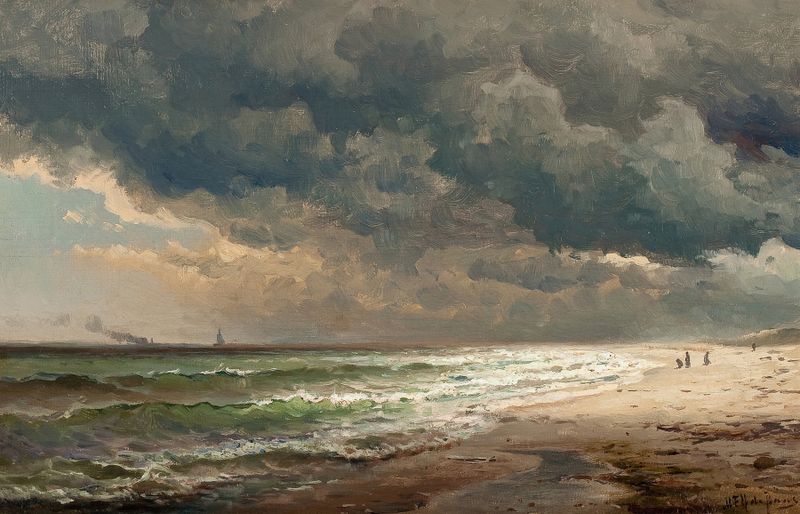
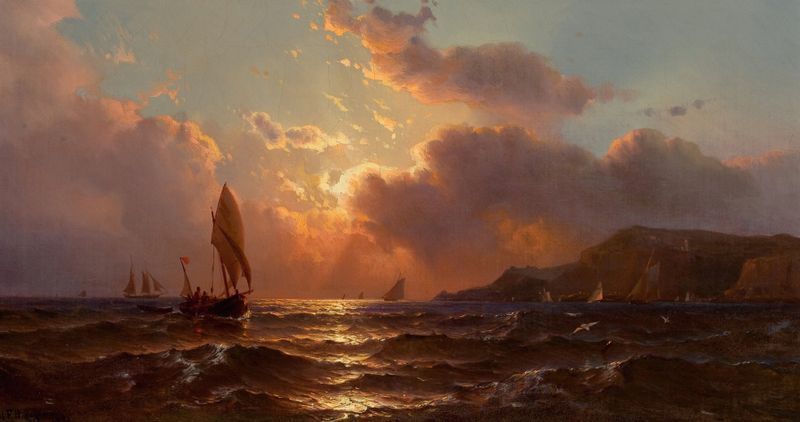
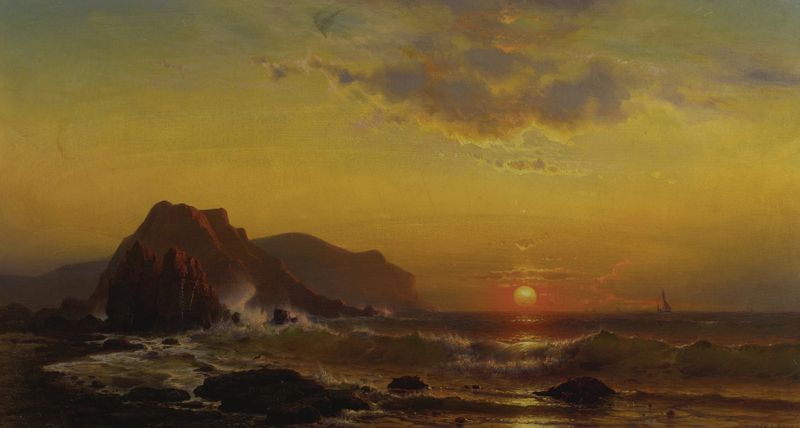
In the rippling embrace of the ocean, every brushstroke holds a whisper of movement, inviting the viewer to feel the pulse of the sea. Focus on the vibrant blues and greens swirling together in the lower half of the piece, where waves rise and fall in an unending dance. The artist’s deft hand captures the sunlight glistening on the water’s surface, drawing the eye toward the horizon where sky and sea meld into one infinite expanse. Notice how the sailboats, rendered in delicate whites and soft grays, navigate this shimmering world—a testament to both their grace and the power of nature that surrounds them. Yet, there is a deeper resonance beneath the surface.
The tension between the calm sky above and the churning waves below illustrates the duality of existence: peace and chaos are forever intertwined. Each vessel represents not just a mode of travel, but a bold venture into the unknown, echoing the human spirit's quest to conquer the vastness of life. This interplay of light and movement conveys a sense of freedom and inevitable change, as if the very breath of the ocean is urging us onward. Created during a time of artistic exploration and innovation, this piece emerged from the skilled hands of the artist in the late 19th century, likely while he was residing in the Netherlands or the United States.
The world around him was rapidly evolving, with marine painting flourishing as artists sought to capture the dynamic beauty of nature, reflecting the changing tides of both art and life.