Long Island Beach — History & Facts
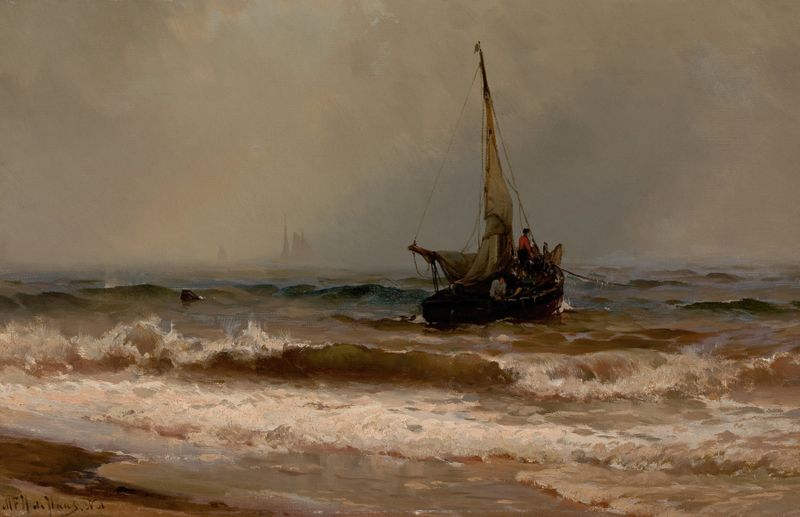
In this still moment of nature, the essence of rebirth pulses through the air like the whisper of waves kissing the shore. Look to the right at the gentle lapping of the tides, where soft whites and blues converge in a dance of rhythm and tranquility. Notice how the horizon stretches wide, an inviting expanse, hinting at the infinite possibilities of a new day. The artist employs a deft touch, blending subtle brushstrokes to capture the delicate play of light filtering through the clouds, illuminating the sandy beach with a warm, golden hue that beckons the viewer inward. Beneath this serene surface lies an emotional resonance steeped in contrasts: the crashing waves symbolize the relentless passage of time while the stillness of the beach signifies a moment of quiet reflection.
The scattered seashells serve as remnants of life’s fleeting beauty, evoking thoughts of what is lost and found. Together, these elements weave a narrative of renewal, urging the viewer to ponder their own cycles of change and growth. Mauritz Frederick Hendrick de Haas painted this work in 1875, during a period of exploration within the American art scene. Living in New York, he was influenced by the burgeoning Realism movement, which sought to capture everyday life and natural beauty authentically.
This artwork exemplifies his mastery in rendering landscapes, reflecting both personal and cultural transitions amidst a growing appreciation for the natural world.