Sunset Over the Waves — History & Facts
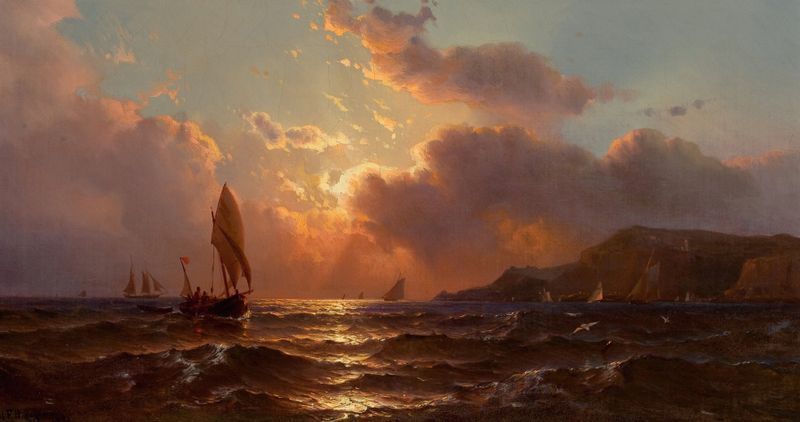
Who listens when art speaks of silence? In Sunset Over the Waves, the tranquil embrace of twilight invites contemplation, merging dream and reality in a harmonious dance of colors and forms. Look to the horizon where the sun, a molten orb, dips into the ocean's embrace, casting a golden glow that ripples across the water. The vibrant oranges and deep purples bleed into one another, creating a gradient that stirs the heart. Focus on the gentle waves, each stroke of paint capturing their fluid motion and the fleeting moment of day’s end.
The artist’s brushwork conveys both the texture of the sea and the delicate interplay of light, inviting the viewer to feel the cool breeze of evening. Beneath the surface, there’s a palpable tension between serenity and transience. The soft glow of sunset may evoke nostalgia, reminding us that every day concludes, yet within that fading light lies a promise of renewal. The contrast between the vivid warmth of the sun and the cool, darkening water reflects an emotional duality – a peaceful acceptance of life’s cycles.
This piece is not just a visual feast; it is an invitation to pause, breathe, and reflect on the beauty found in fleeting moments. Mauritz Frederick Hendrick de Haas painted Sunset Over the Waves in 1890 while residing in the United States, a time when he was deeply engaged with the American landscape. As a Dutch artist, he sought to bridge the techniques of European Romanticism with the more dynamic and spontaneous style emerging in America. This work exemplifies his ability to capture the sublime beauty of nature, resonating with an audience searching for connection amid the changing tides of modernity.