
East Course, Maidstone Club — History & Facts
Can paint confess what words never could? In East Course, Maidstone Club, the canvas breathes a palpable sense of melancholy, capturing a fleeting moment where nature and human endeavor intertwine. The scene evokes introspection, as the soft hues of greens and blues call forth whispers of nostalgia and longing. Focus on the center where the rolling fairway unfurls, framed by delicate trees that sway gently under a muted sky. Notice how the artist employs a harmonious blend of colors; muted greens echo the serenity of the landscape, while touches of light illuminate the inviting pathway.
The brushstrokes reflect both precision and an impressionistic quality, suggesting movement and the passage of time, inviting the viewer to step into this tranquil world. There exists an emotional tension within the composition—the juxtaposition of the vibrant, lush greenery against the lingering shadows hints at a deeper story. The absence of players on the course amplifies a sense of isolation; it's as if the golf course, usually bustling with life, now stands in quietude, reminiscent of moments lost. Each stroke carries the weight of memories, possibly evoking feelings of longing for connection or the ephemeral nature of joy. In 1926, Childe Hassam was immersed in the rich tapestry of American Impressionism, having transitioned from his earlier works influenced by French artists.
He created this piece during a time of personal reflection, seeking solace in familiar landscapes. The art world was shifting, teetering between the old and the new, while Hassam's mastery of color and light remained a testament to his enduring legacy.
More Artworks by Childe Hassam
Browse all →
Beach at Newport
Childe Hassam

Washington Arch, Spring
Childe Hassam

Thaxter’s Garden
Childe Hassam

New England Headlands
Childe Hassam

Rocks At Appledore, Morning
Childe Hassam
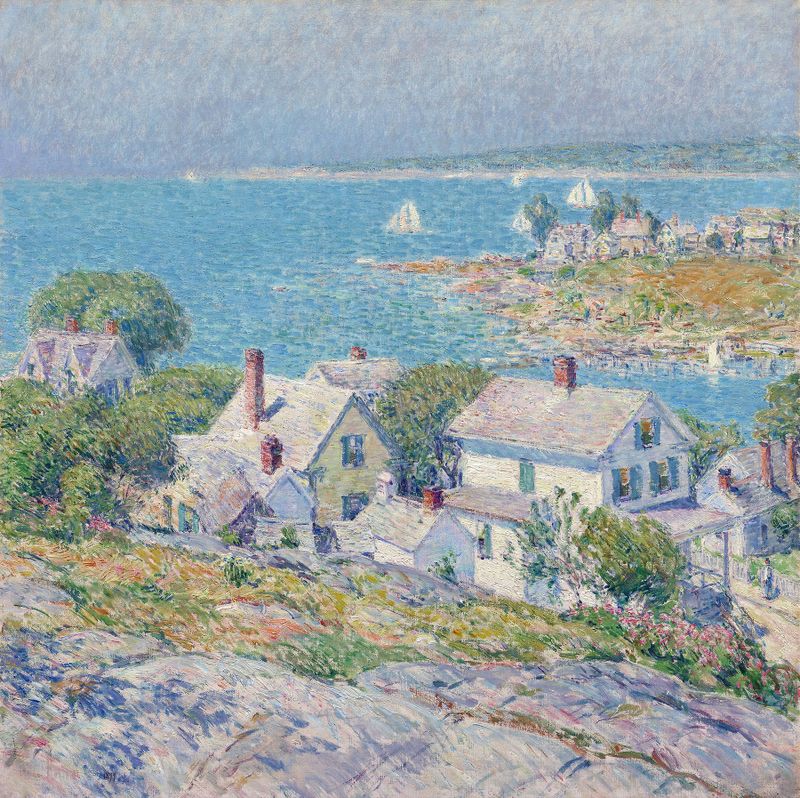
New England Headlands
Childe Hassam
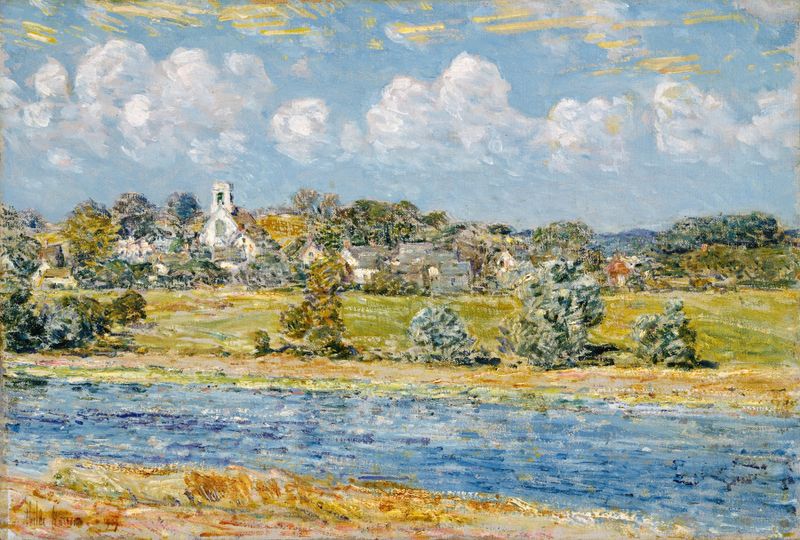
Landscape at Newfields, New Hampshire
Childe Hassam

Piazza di Spagna, Rome
Childe Hassam

The Harbor
Childe Hassam

Late Afternoon, New York, Winter
Childe Hassam





