
Edge of the Forest — History & Facts
A shaft of sunlight draws you to the threshold where shadow and open land meet, as if inviting you to step from the dense, sheltering woods into a world of rolling hills and distant fields. In Edge of the Forest, Asher Brown Durand orchestrates a quiet drama between the sturdy, timeworn trunks in the foreground and the luminous valley beyond. The eye lingers on the intricate bark, the careful dappling of light on leaves, and the gentle sweep of the branches, each detail a deliberate invitation to linger at nature’s border.
The composition leads you in stages: from the cool, shaded roots, up the vertical thrust of the trees, and outward to the sunlit promise of the countryside. There is a sense of pause—of standing on the verge of something both familiar and unknown. Painted in 1867, this work belongs to an era when American artists, especially those associated with the Hudson River School, sought to capture the grandeur and intimacy of the natural world. Such landscapes were often intended for urban patrons hungry for reminders of a vanishing wilderness, their walls hung with visions of unspoiled land.
Durand was celebrated for his ability to render both the majesty and the minute textures of the American forest, and here he balances both impulses: the monumental trees anchor the scene, while the receding fields and distant blue hills suggest a wider world just beyond reach. History has kept few traces of this particular painting’s early journey, but its presence in the collection of the Museum of Fine Arts, Boston, ensures that viewers can still stand at the edge, looking out.
More Artworks by Asher Brown Durand

A Sycamore Tree, Plaaterkill Clove (The Sycamore, Kaaterskill Clove)
Asher Brown Durand
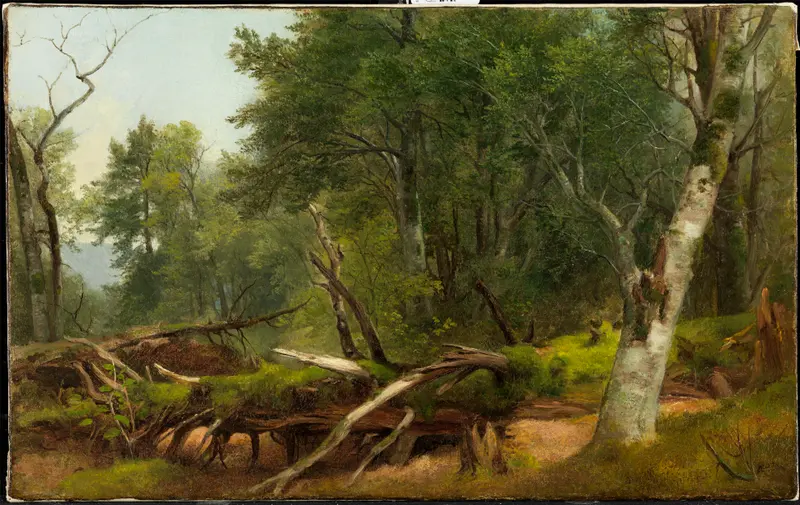
Forest Scene in the Catskills
Asher Brown Durand
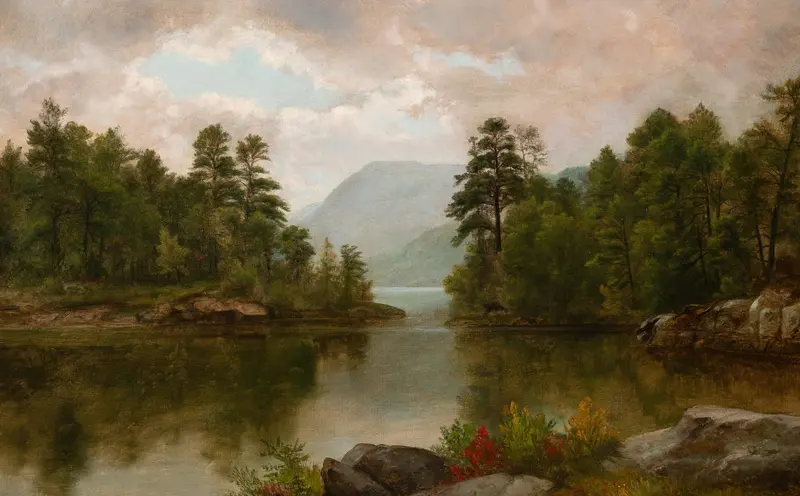
The Narrows, Lake George
Asher Brown Durand
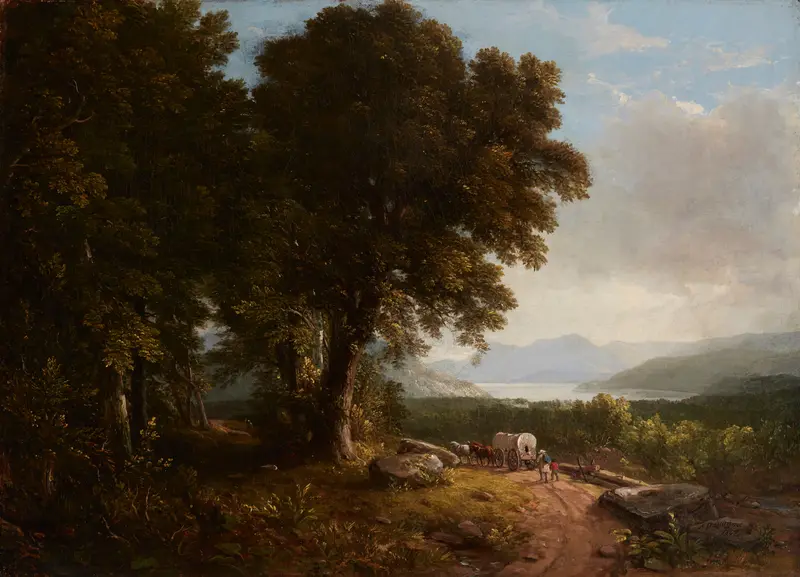
Landscape with Covered Wagon
Asher Brown Durand
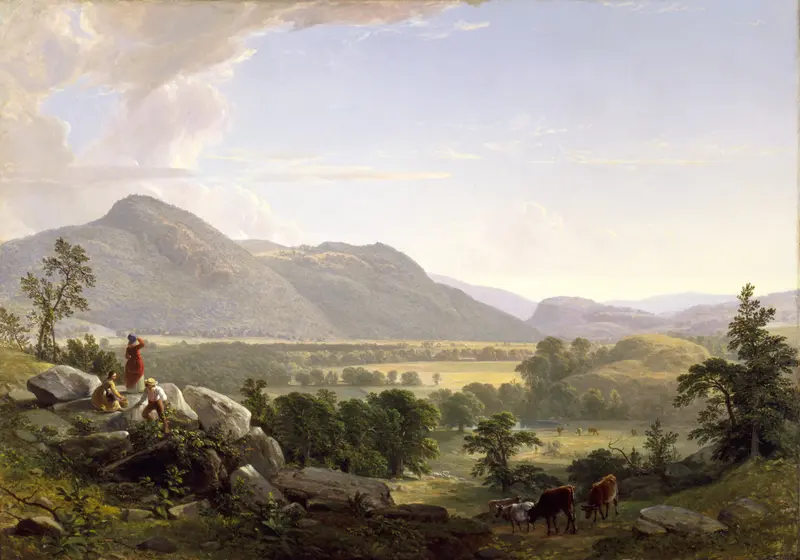
Dover Plains, Dutchess County, New York
Asher Brown Durand
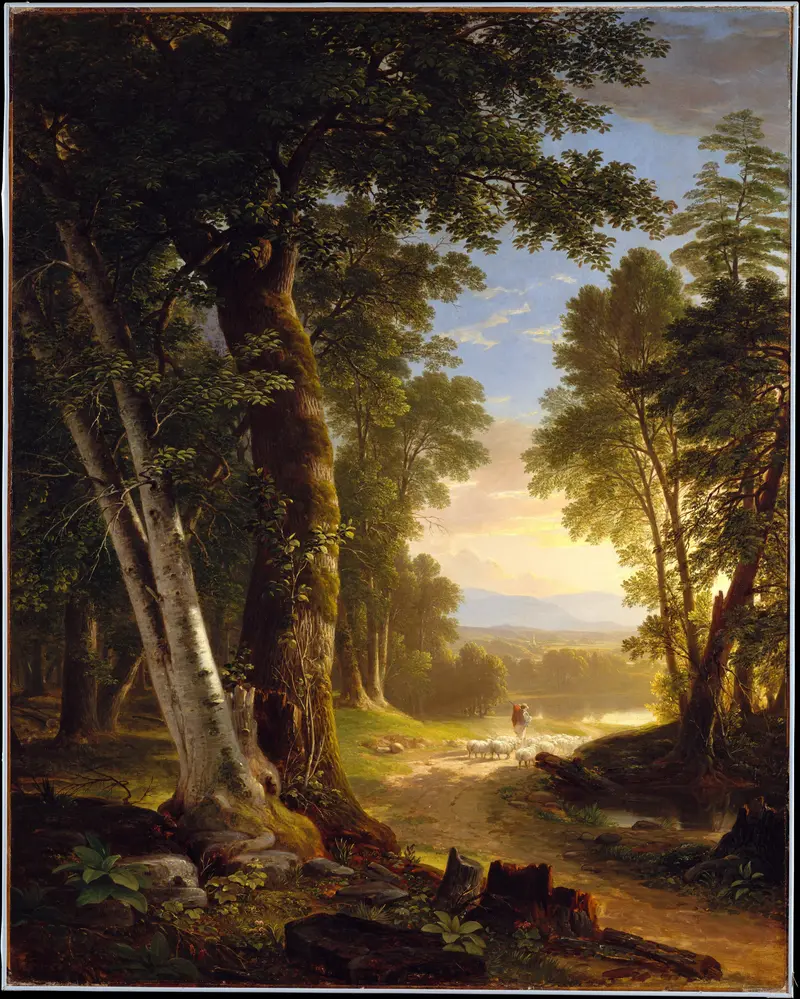
The Beeches
Asher Brown Durand

Kaaterskill Landscape
Asher Brown Durand
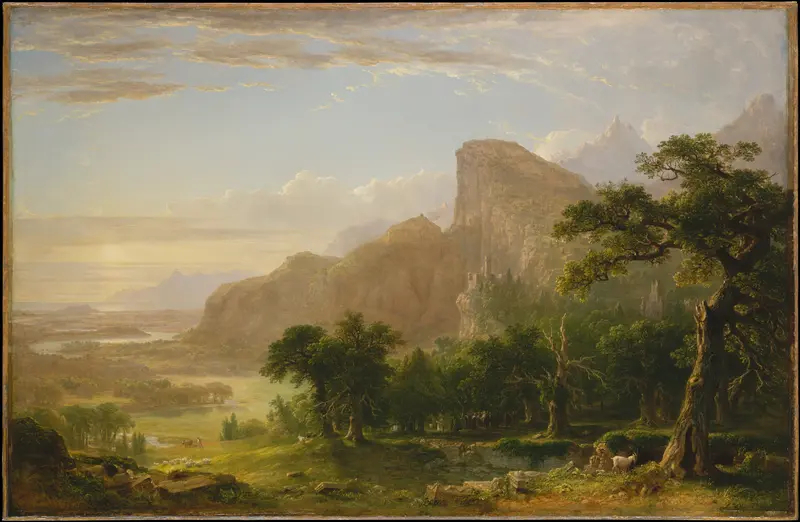
Landscape—Scene from ‘Thanatopsis’
Asher Brown Durand
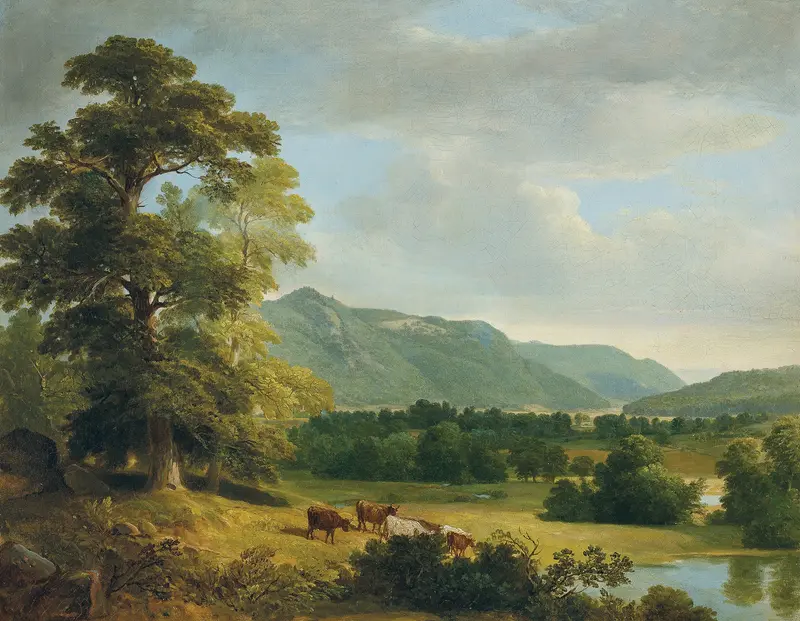
Landscape Study, Dover Plains, New York
Asher Brown Durand
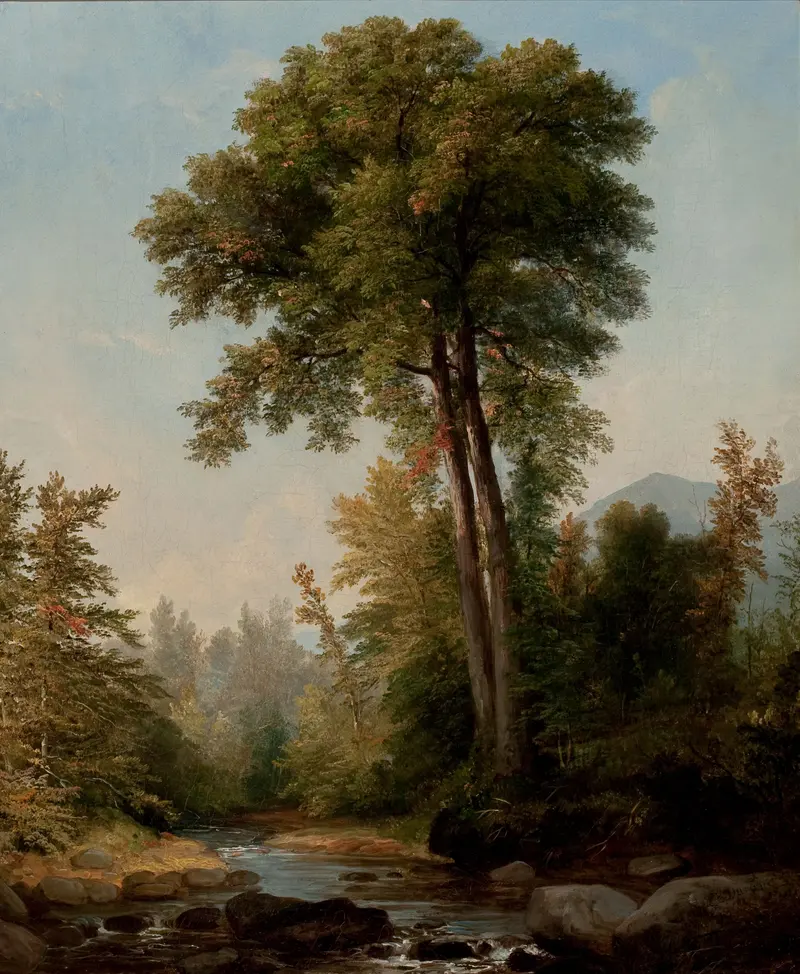
A Natural Monarch
Asher Brown Durand
More Landscape Art

The Starry Night
Vincent van Gogh

View of Delft
Johannes Vermeer

Water Lilies
Claude Monet

The Grand Canal, Venice, looking north-west from the Ca' Corner to the Ca' Contarini degli Scrigni, with the campanile of Santa Maria della Carità
Canaletto

Windsor Castle
Canaletto

The Grand Canal looking North-East from the Palazzo Dolfin-Manin to the Rialto Bridge
Canaletto