
Edge of the Little Wood, Ostend — History & Facts
In the interplay of light and shadow, ecstasy emerges from the mundane, beckoning the viewer into a world suspended between reality and memory. Look to the left at the vibrant greens of the foliage, where dappled sunlight dances through the leaves, casting a mosaic of patterns on the ground. The painting’s composition draws your gaze along a winding path that invites exploration, leading toward the unknown depths of the woods. The palette, rich with earthy tones, vibrates with emotional resonance, while the dynamic brushstrokes create a sense of movement, as if the scene itself is alive and breathing. Beneath the surface, a tension unfolds between nature’s serenity and the chaos of the human condition.
The juxtaposition of the quiet woodland setting against hints of vibrancy suggests an underlying joy, perhaps a moment of fleeting happiness amid life's uncertainties. Subtle details, such as the almost whimsical shapes of the trees, reveal a contrasting interplay of stability and whimsy, embodying the essence of ecstasy as both elusive and attainable. James Ensor painted this piece during a time of personal introspection in his life, surrounded by the artistic innovations of late 19th-century Belgium. In 1888, he was grappling with the complexities of modernity and his own identity as an artist.
His work during this period reflects a deep engagement with the themes of pleasure and pain, as the world around him underwent rapid change, capturing the emotional landscape of an era in flux.
More Artworks by James Ensor
Browse all →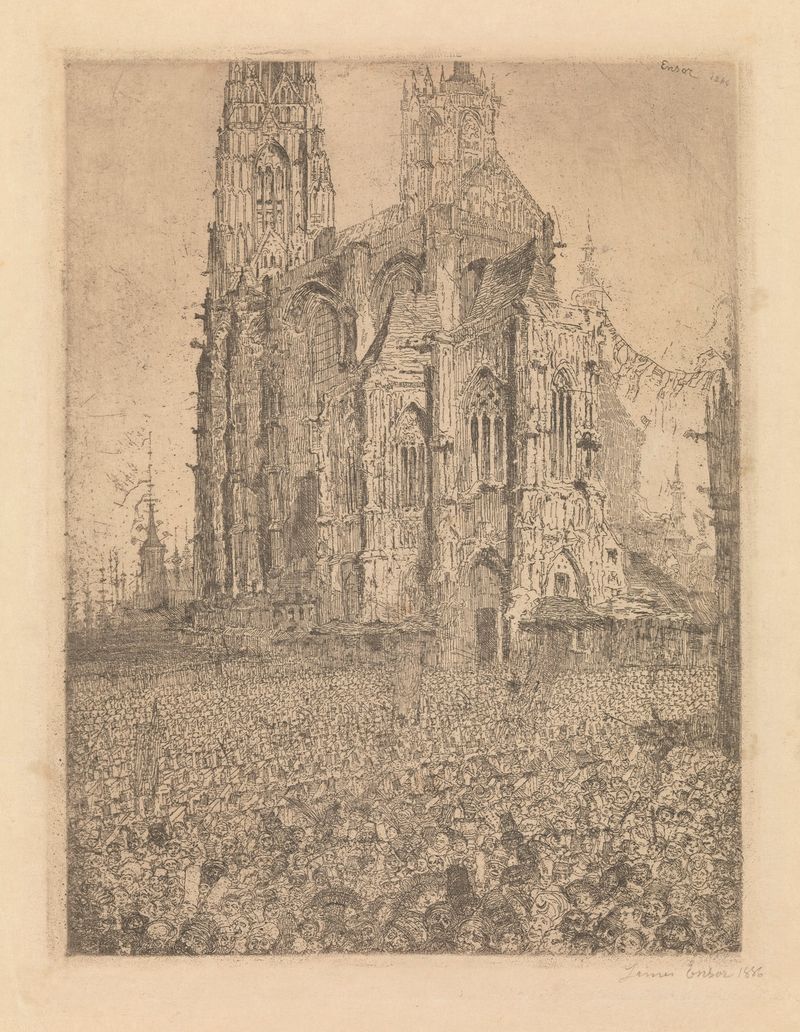
The Cathedral
James Ensor
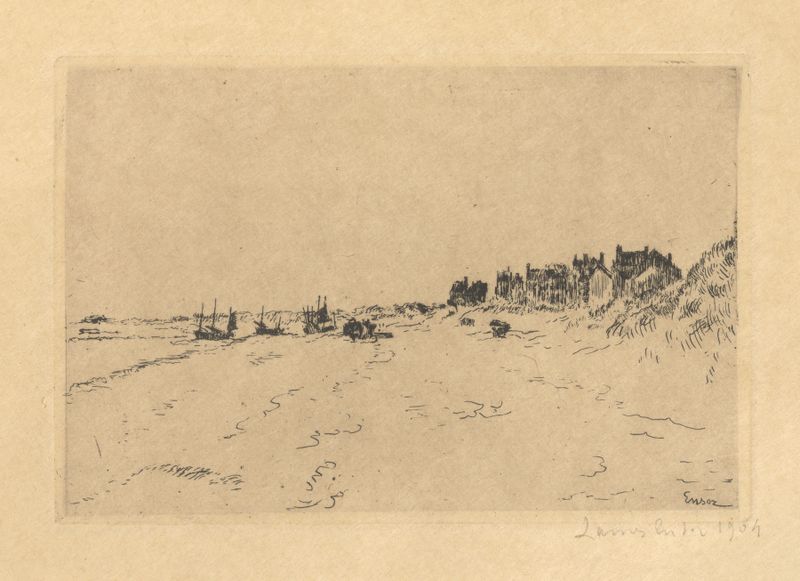
Het strand van De Panne
James Ensor
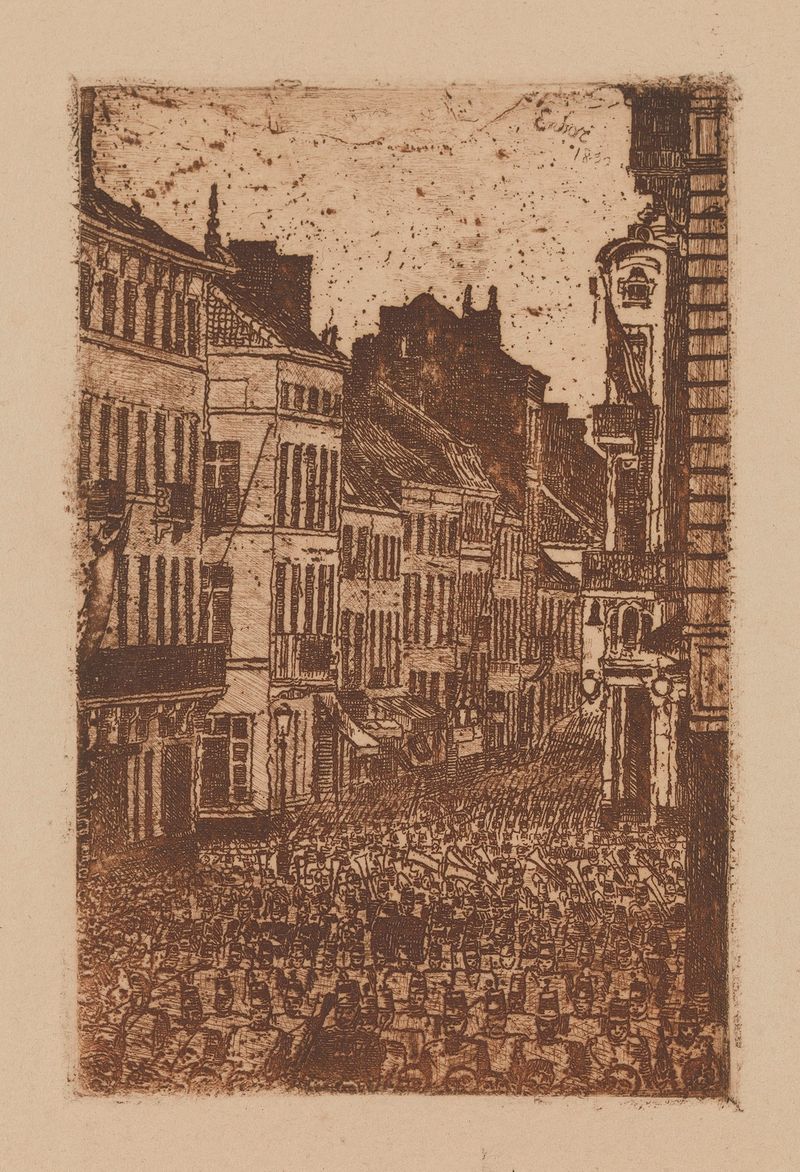
The Music in the rue de Flandre, Ostend
James Ensor
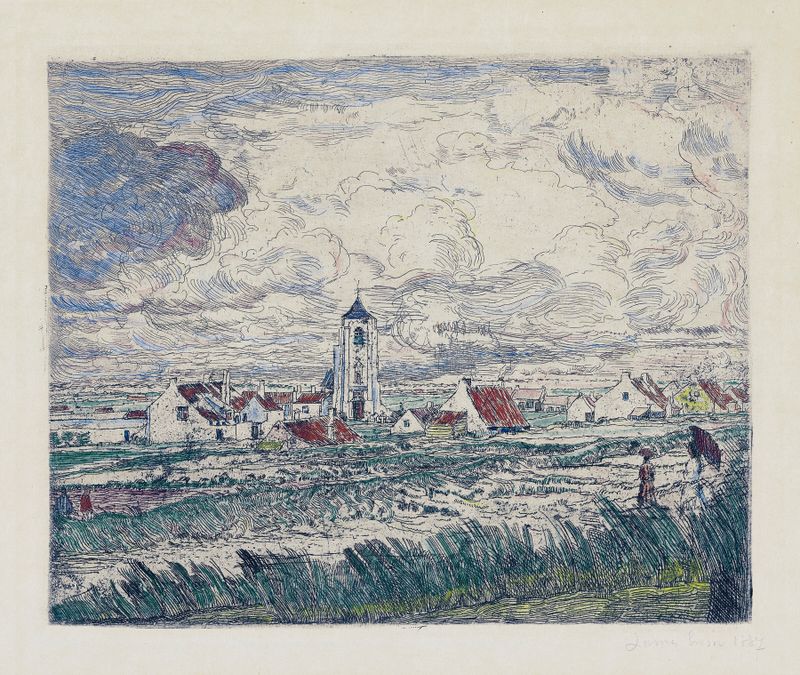
Grande vue de Mariakerke
James Ensor
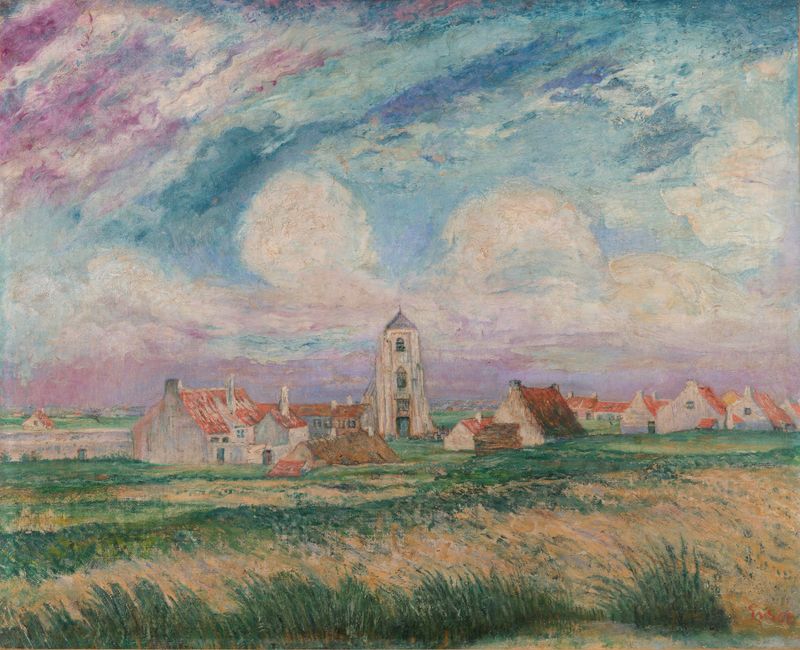
View of Mariakerke
James Ensor
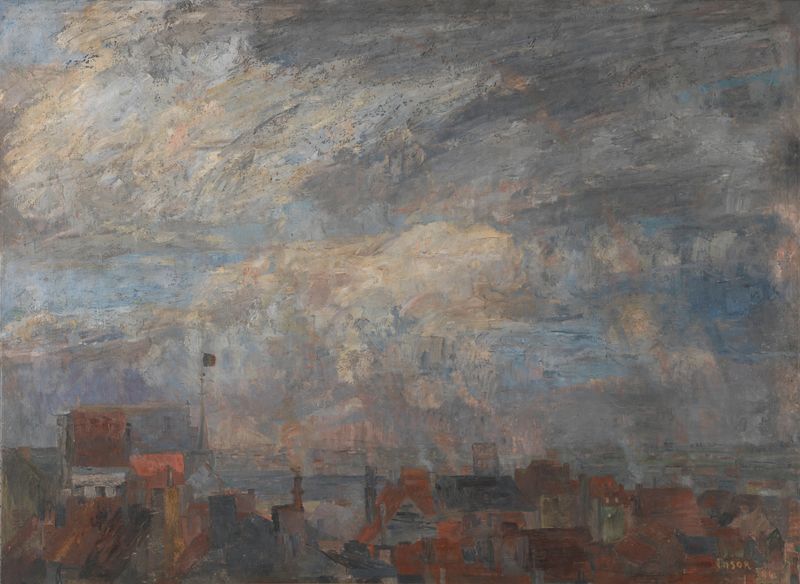
The Rooftops of Ostend
James Ensor
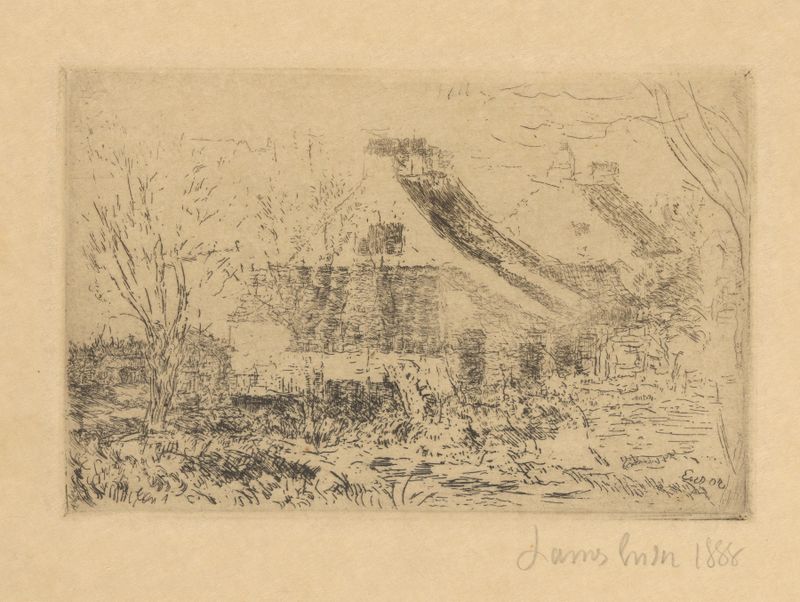
Huisjes in Mariakerke
James Ensor
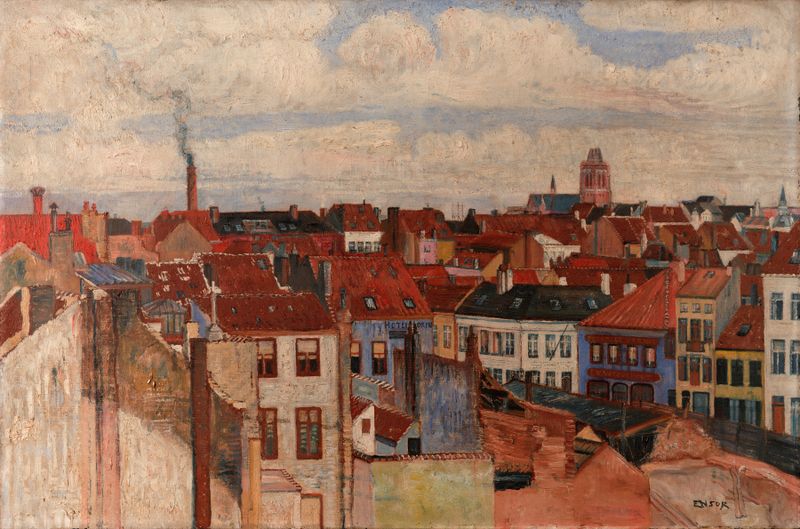
The rooftops of Ostend
James Ensor
The Music in the rue de Flandre, Ostend
James Ensor
Verovering van een vreemde stad
James Ensor





