
Een leraar en een geestelijke; de Eeuwige Voorzienigheid — History & Facts
What if beauty was never meant to be finished? In this moment of profound reflection, Albrecht Dürer delves into the depths of existence, capturing the tension between knowledge and mortality. Each figure, portrayed with meticulous detail, echoes a truth lost in the passage of time. Focus first on the two central figures: the teacher and the cleric. Observe how Dürer employs a rich palette of earthy tones, drawing the eye to their contemplative expressions.
The gestures between them are subtle yet charged—a hand poised gently on a book, a gaze cast towards the unseen. Notice how the light dances across their features, illuminating wisdom while casting shadows that hint at their vulnerabilities. Hidden within this artwork lies a poignant exploration of loss—the teacher’s wisdom is fleeting, the cleric’s faith a fragile solace. The book serves as a bridge between knowledge and the divine, yet its closed pages symbolize the unfulfilled potential of understanding.
Each detail, from the folds of their garments to the delicate interplay of light and shadow, reflects not only their immediate dialogue but also the eternal questions of life and death that linger in the air. Dürer created this work between 1521 and 1528, a period marked by significant personal and artistic evolution. By then, he had already gained recognition throughout Europe, grappling with the tensions of religious reform and artistic expression. This piece encapsulates both his mastery in rendering human emotion and the cultural shifts of his time, as he navigated the complex relationship between faith and reason in an era on the brink of monumental change.
More Artworks by Albrecht Dürer
Browse all →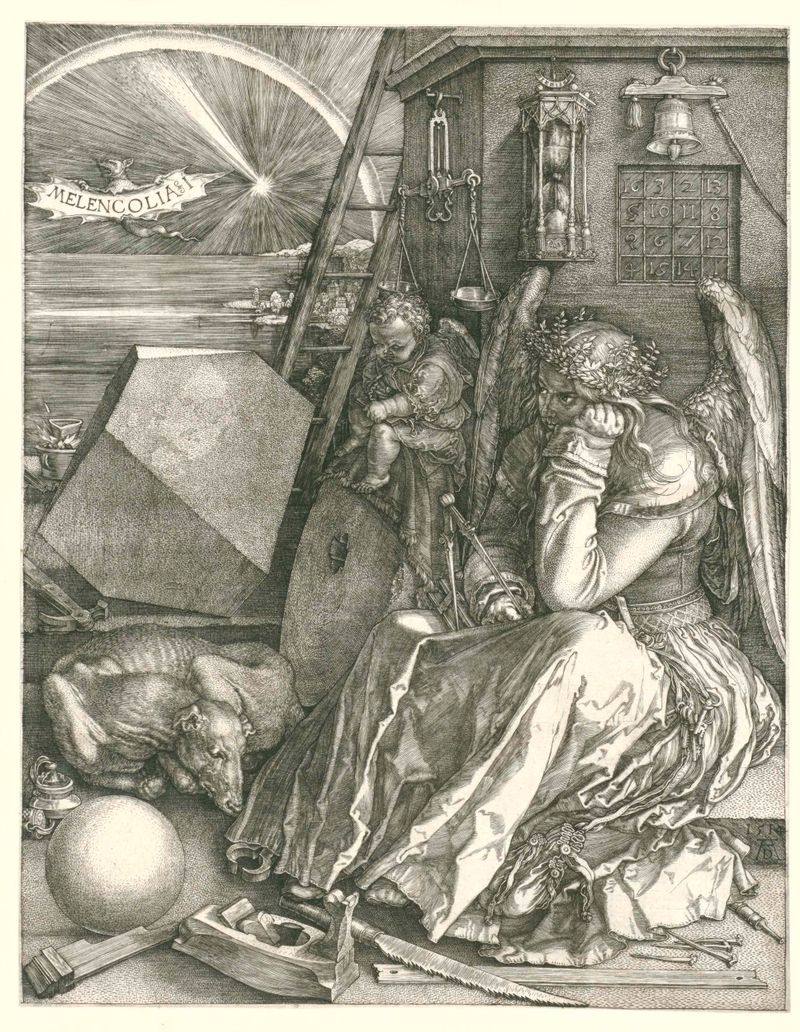
Melancholia
Albrecht Dürer
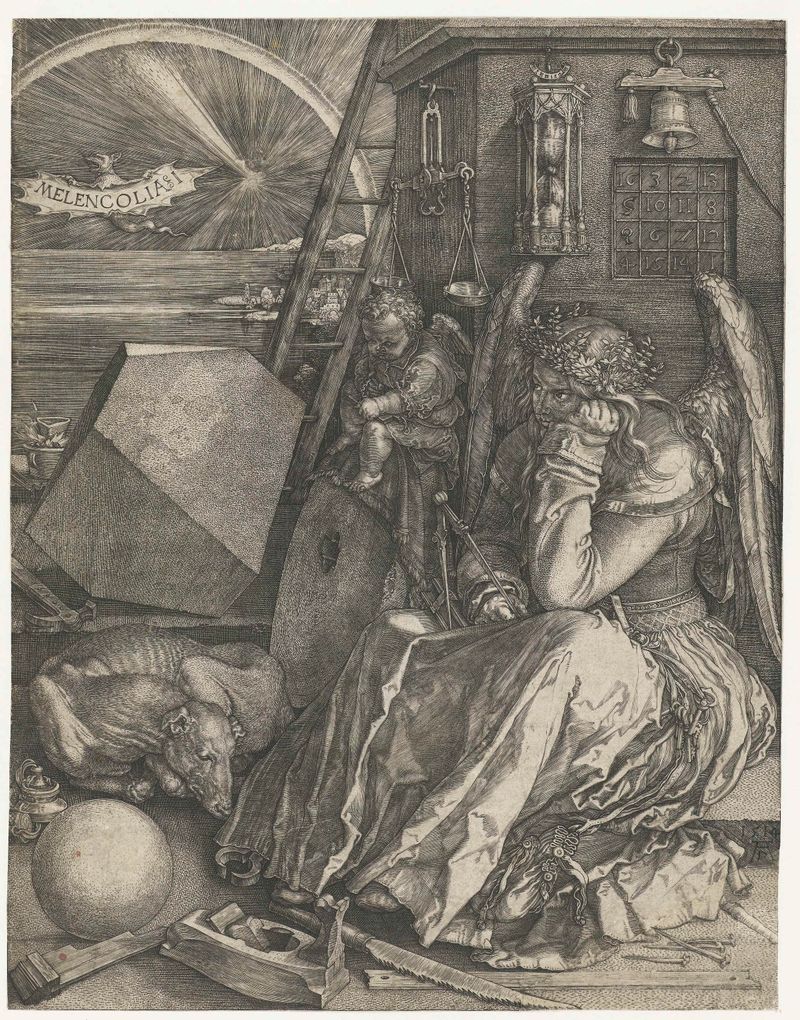
Melancholie
Albrecht Dürer
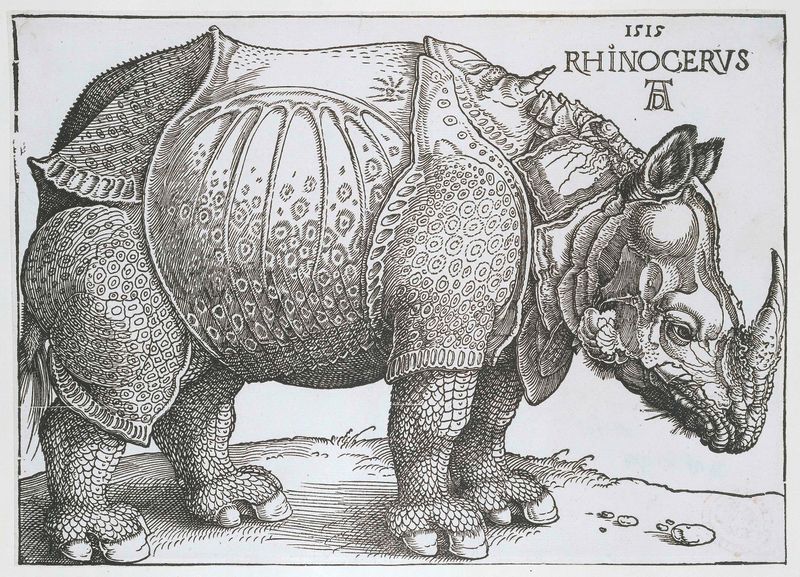
Neushoorn
Albrecht Dürer
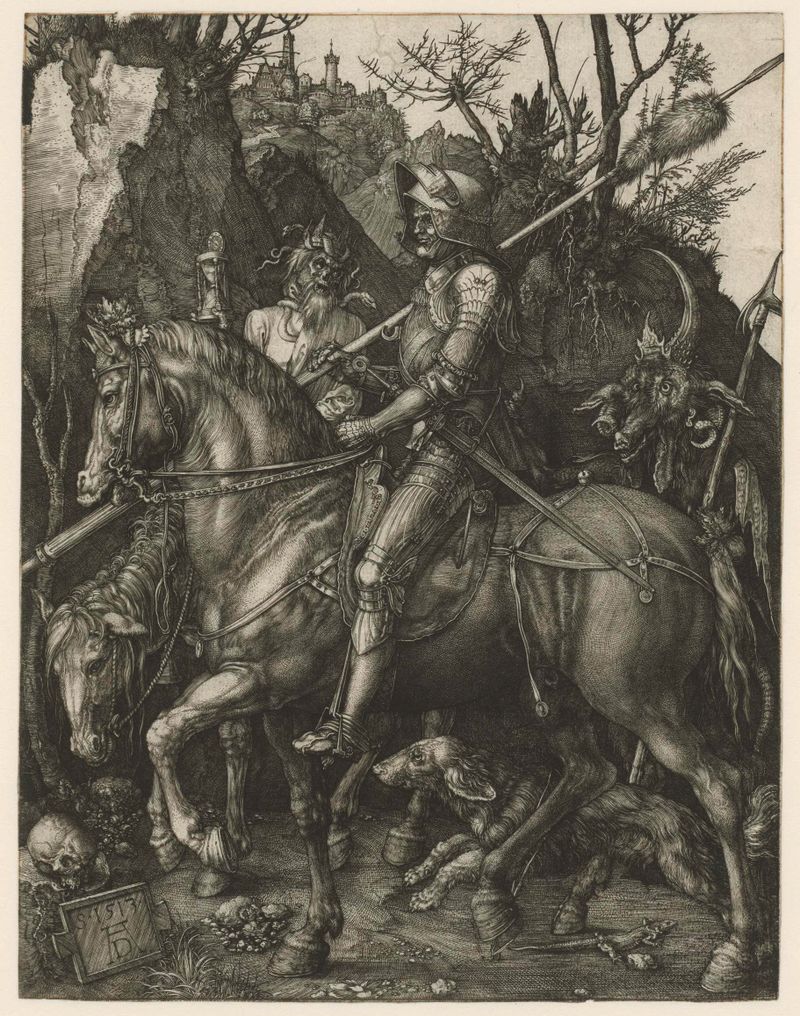
Knight, Death, and the Devil
Albrecht Dürer

De vier ruiters van de apocalyps
Albrecht Dürer

De vier ruiters van de apocalyps
Albrecht Dürer
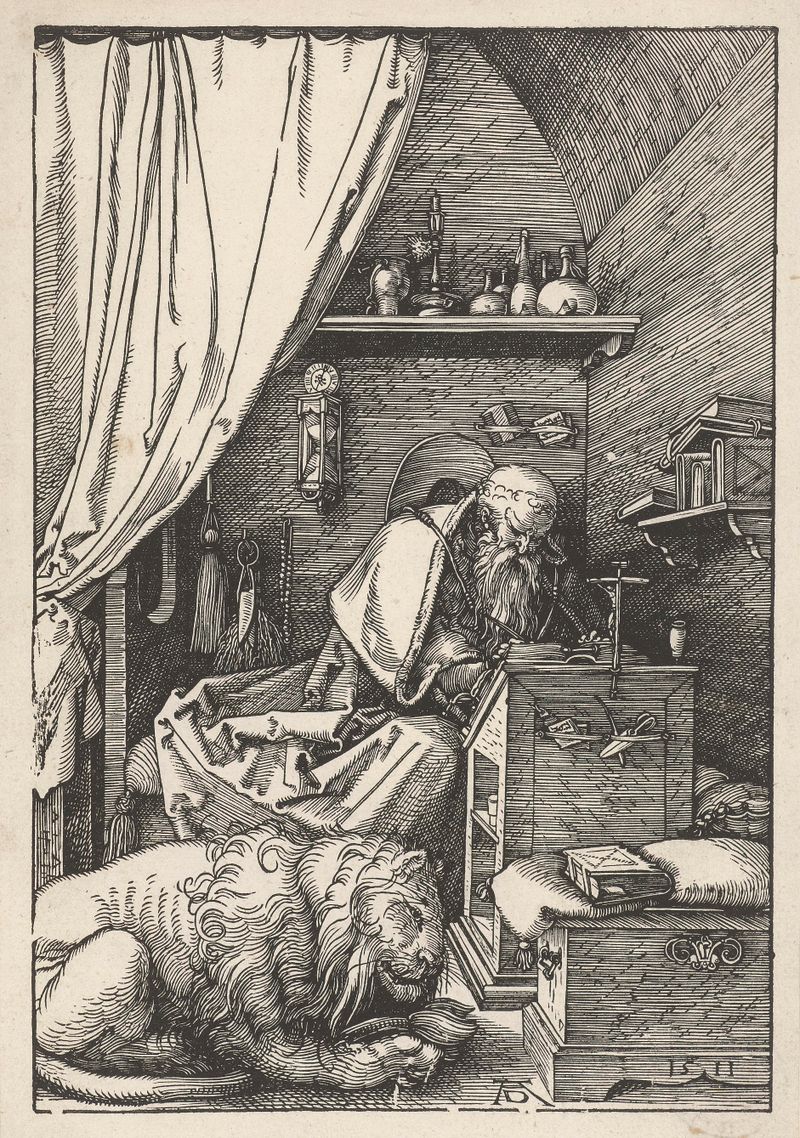
De Heilige Hiëronymus in zijn studeervertrek
Albrecht Dürer
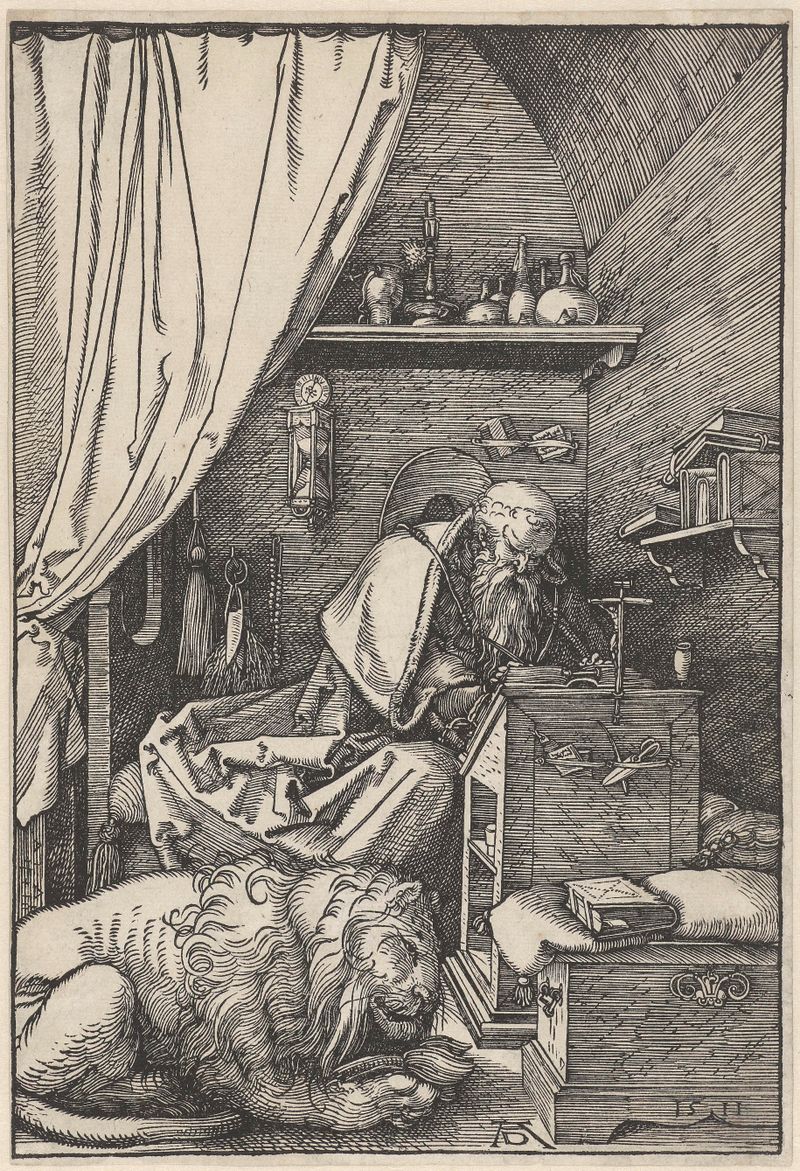
De Heilige Hiëronymus in zijn studeervertrek
Albrecht Dürer
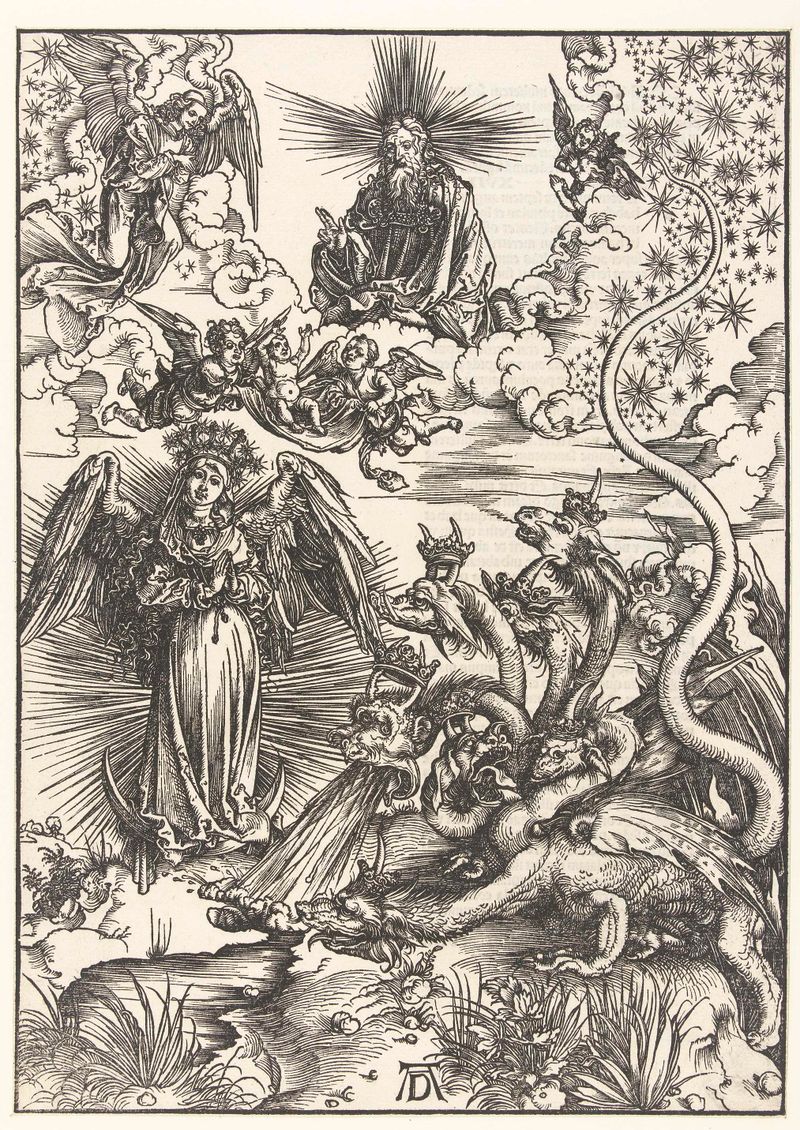
De apocalyptische vrouw en de zevenkoppige draak
Albrecht Dürer
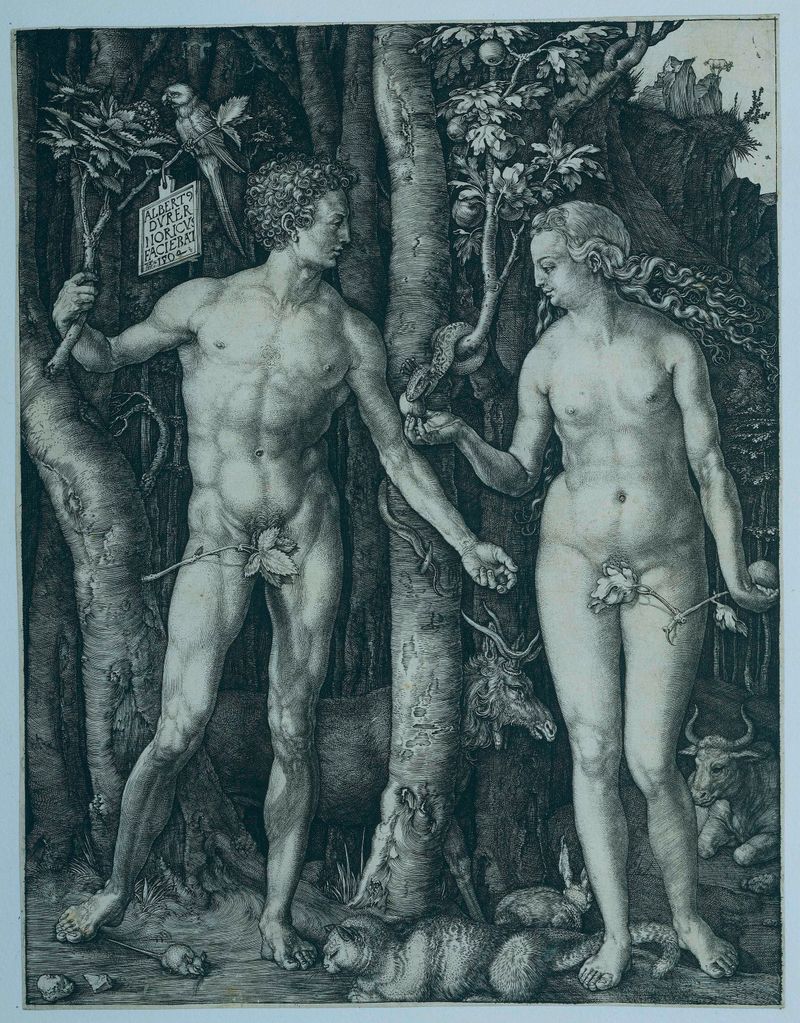
Adam en Eva
Albrecht Dürer
More Religious Art
Browse all →
The Return of the Prodigal Son
Rembrandt van Rijn

The Garden of Earthly Delights
El Bosco

Count Orgaz’ funeral
El Greco

The Hundred Guilder Print: the central piece with Christ preaching, the plate arched
Rembrandt van Rijn

The Descent from the Cross
Rogier van der Weyden

The return of the prodigal son
Rembrandt van Rijn