
Een takje kruisbessen op een stenen plint SK A 5100 Rijksmuseum — History & Facts
A single sprig of gooseberries, arranged with deliberate care on a stone ledge, commands attention through its quiet restraint. The eye is drawn first to the luminous skins of the fruit: some flushed with deep red, others pale and almost translucent, each one rendered with such clarity that their veins and subtle imperfections become a kind of intimate map. The play of light is precise and controlled, falling from the left and catching the curve of each berry, while the leaves arch above, casting gentle shadows that anchor the composition.
The stone plinth, cool and severe, is inscribed with the artist’s name and the date—an act of signature as much as a claim of authorship. The overall mood is one of stillness, as if time itself has paused to allow us to contemplate the ordinary miracle of ripening fruit. Painted in 1699, Een takje kruisbessen op een stenen plint by Adriaen Coorte belongs to a world in which small, meticulously observed still lifes were prized for their quiet beauty and their invitation to close looking. In the Dutch Republic, such works were often collected by the prosperous middle class—merchants, doctors, and burghers—who delighted in the close study of nature and the pleasures of domestic abundance.
Coorte’s paintings, now in the Rijksmuseum, are celebrated for their simplicity and focus, standing apart from the more lavish still lifes of his contemporaries. History has kept few traces of Coorte’s own life, but his paintings speak in their own language: one of patience, humility, and a reverence for the overlooked. Look again, and the humble gooseberry becomes a world in itself.
More Artworks by Adriaen Coorte
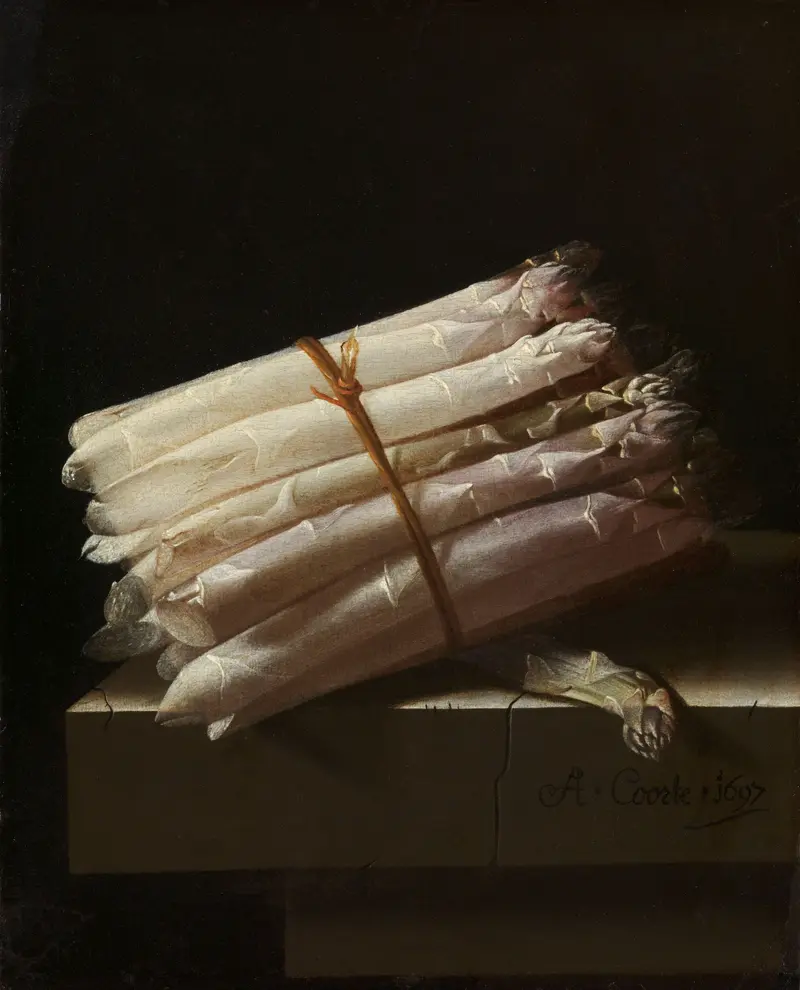
Still Life with Asparagus
Adriaen Coorte
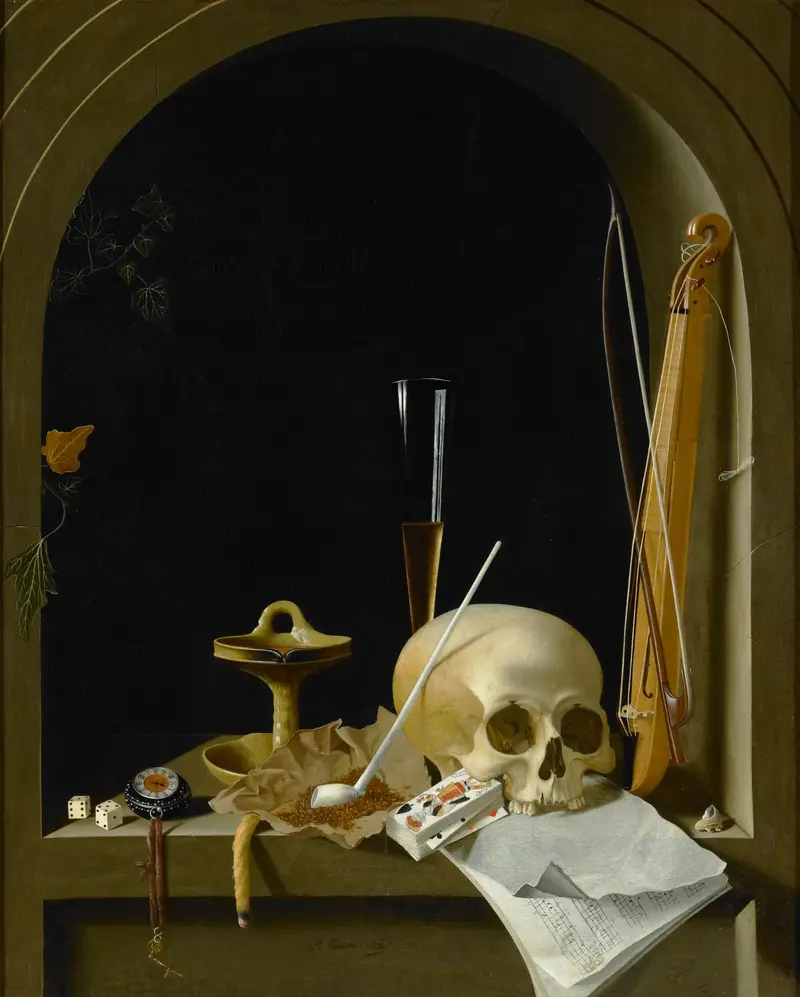
Vanitas still life in a niche
Adriaen Coorte
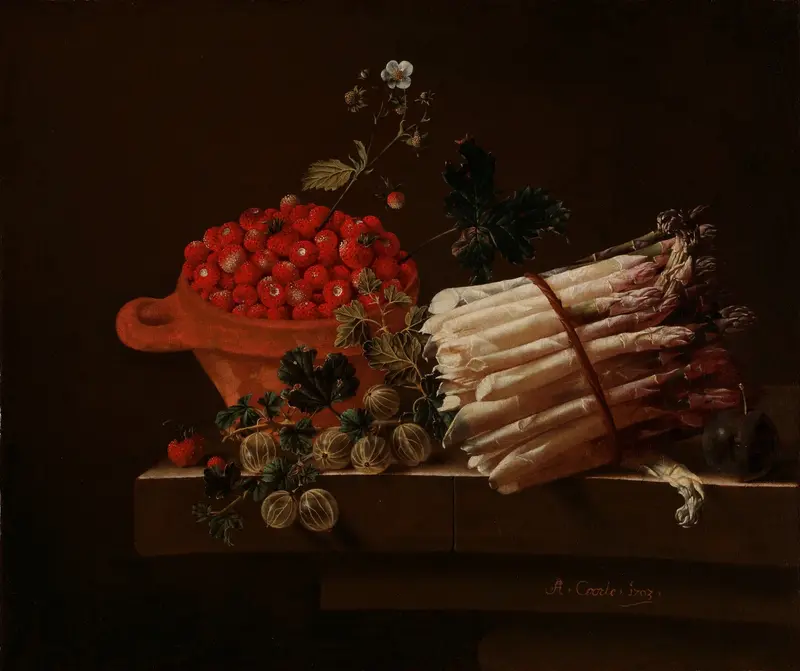
A Pot of Strawberries, Gooseberries, and a Bundle of Asparagus on a Stone Plinth
Adriaen Coorte
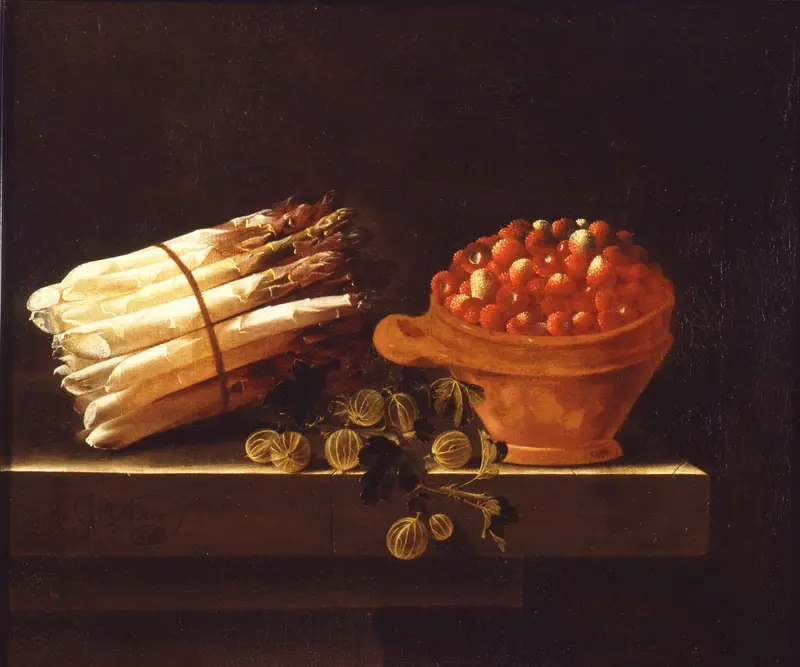
Asparagus, Gooseberries and Strawberries on a Stone Ledge
Adriaen Coorte
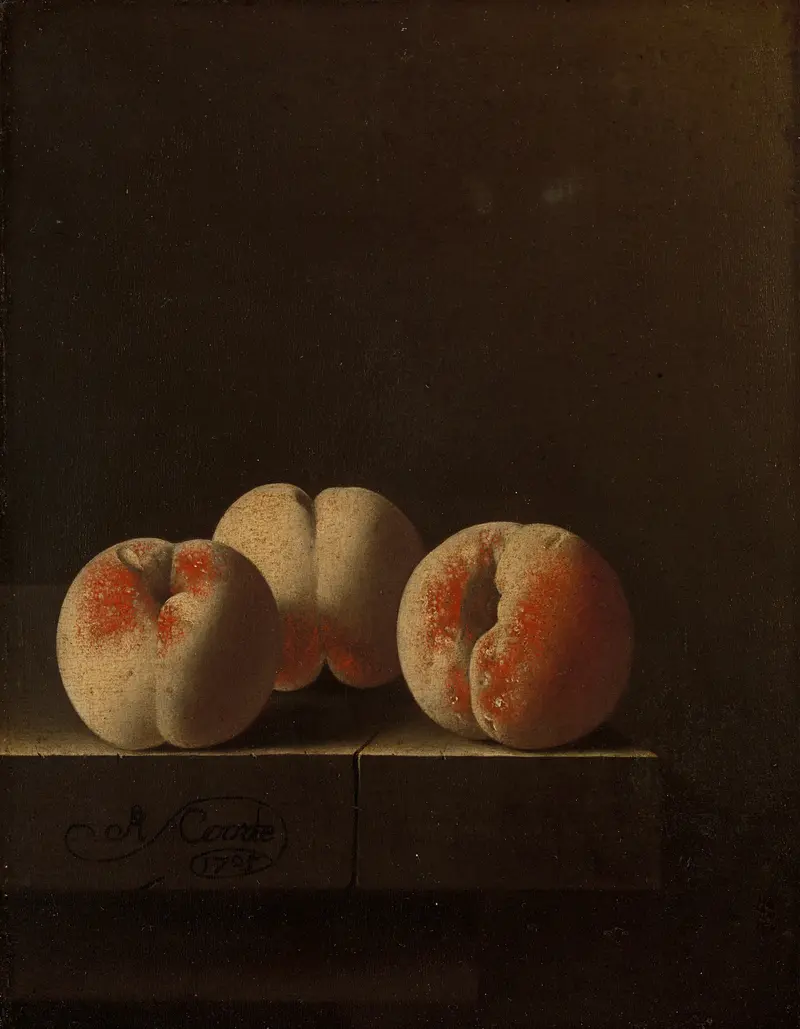
Drie perziken op een stenen plint SK A 5101 Rijksmuseum
Adriaen Coorte
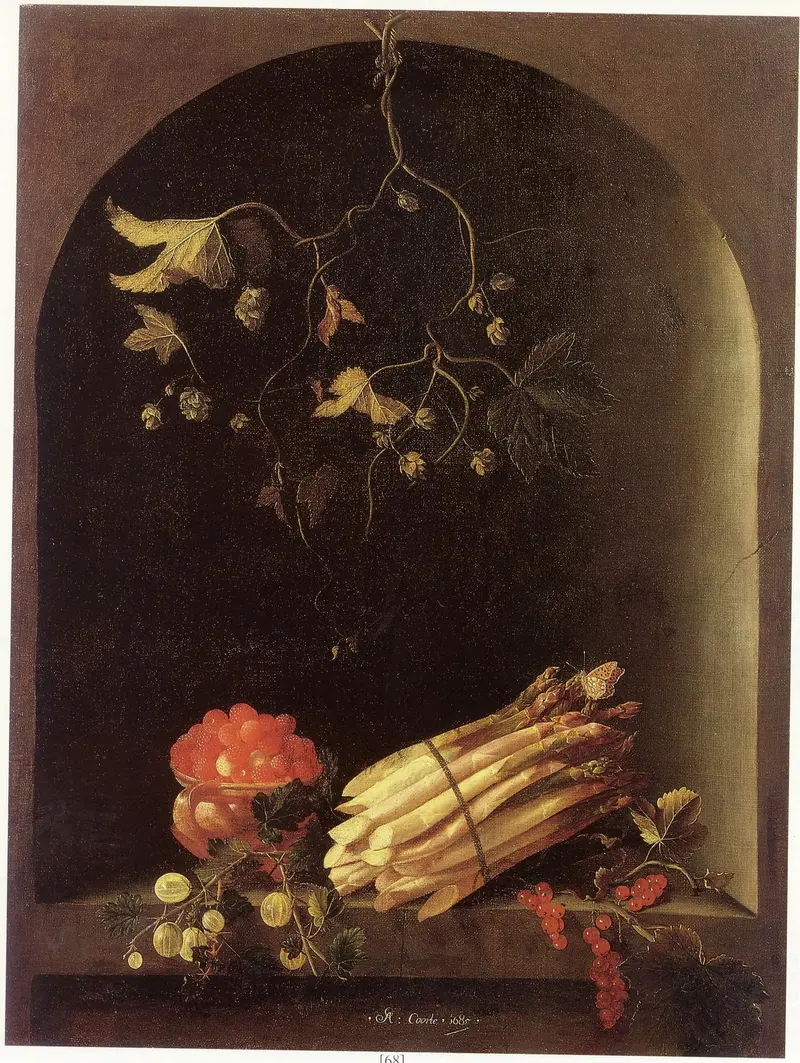
Strawberries, Asparagus, and Gooseberries in a Niche
Adriaen Coorte
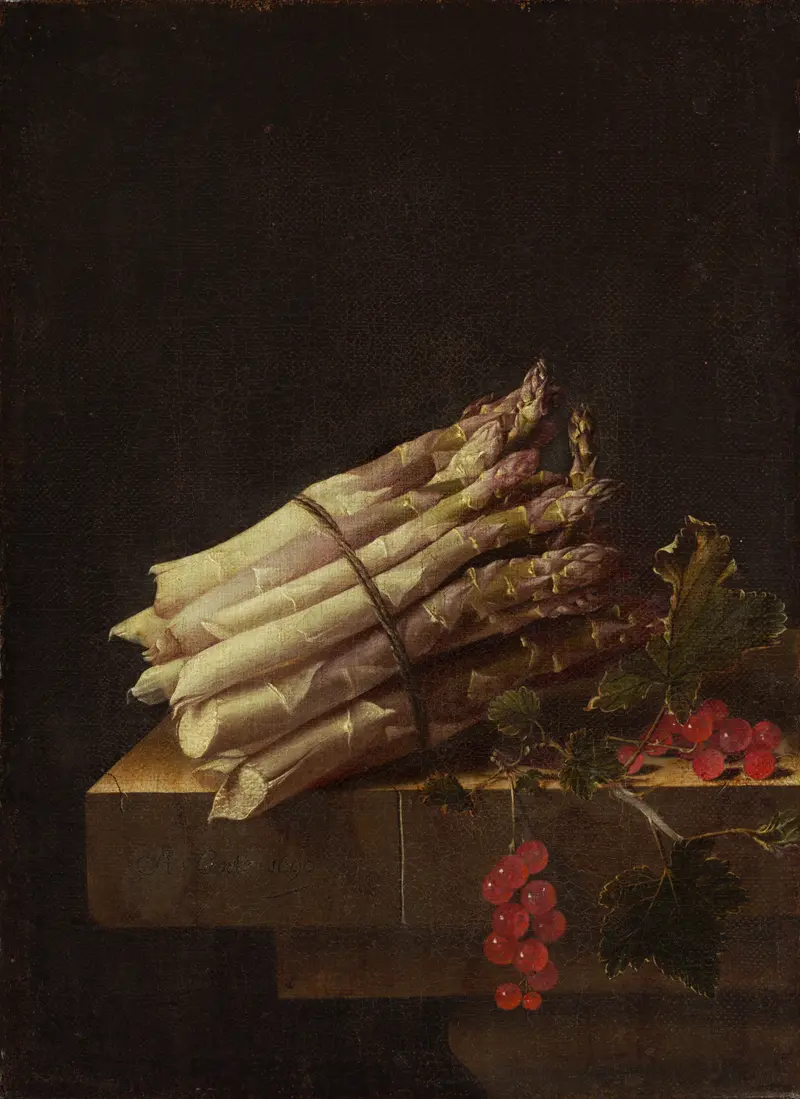
Still Life with Asparagus and Red Currants
Adriaen Coorte
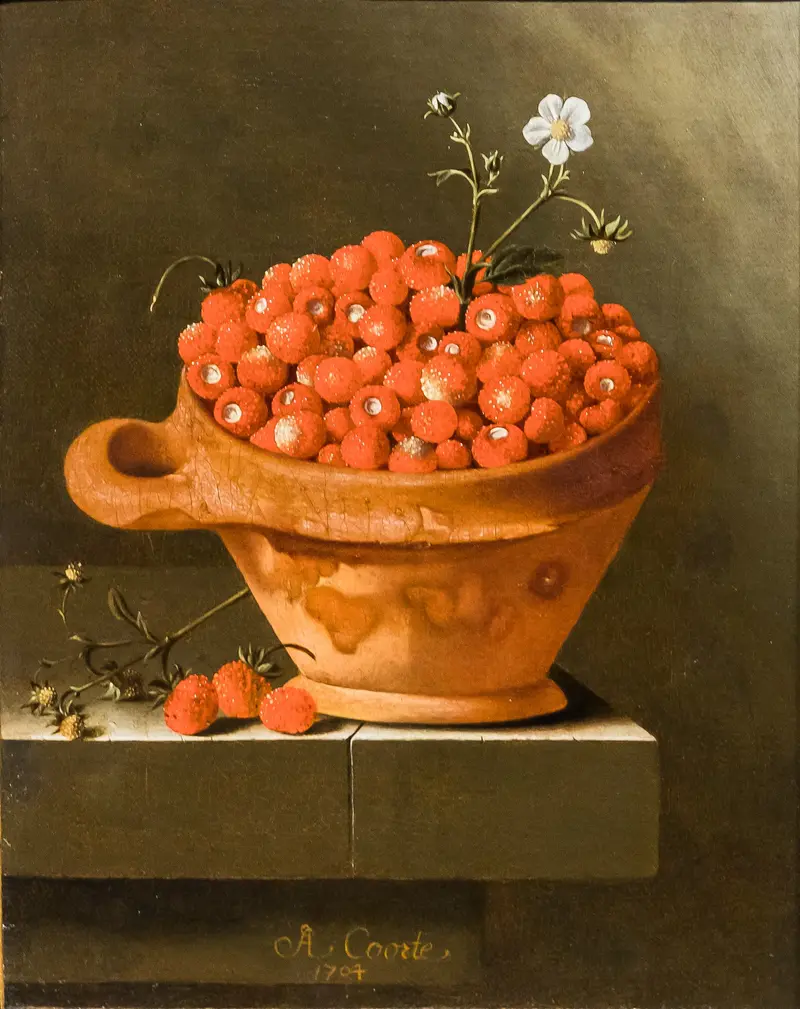
Still life with strawberries in a terracotta pot
Adriaen Coorte
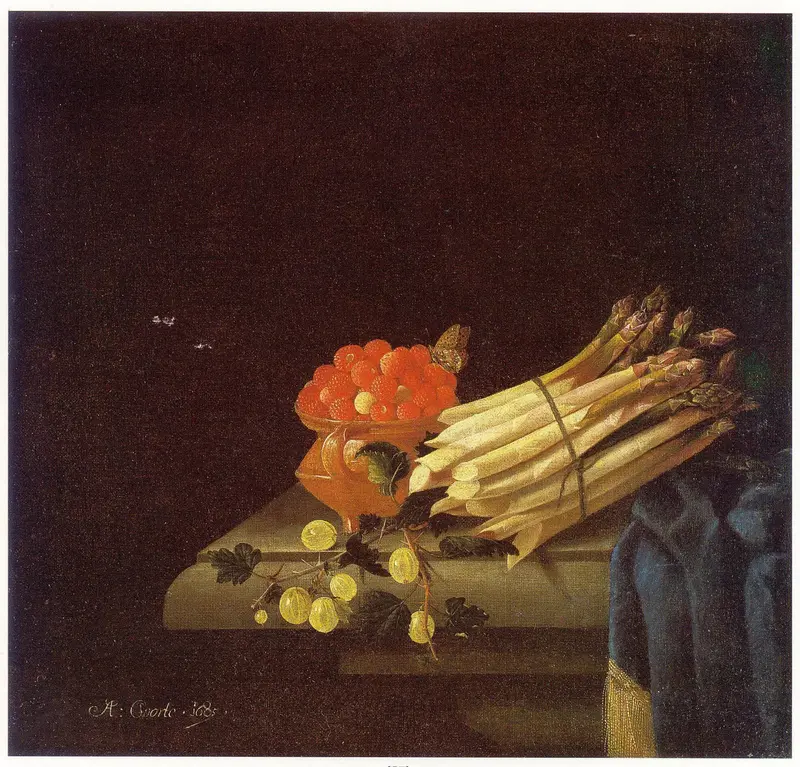
Strawberries, Asparagus, and Gooseberries with a Tablecloth
Adriaen Coorte
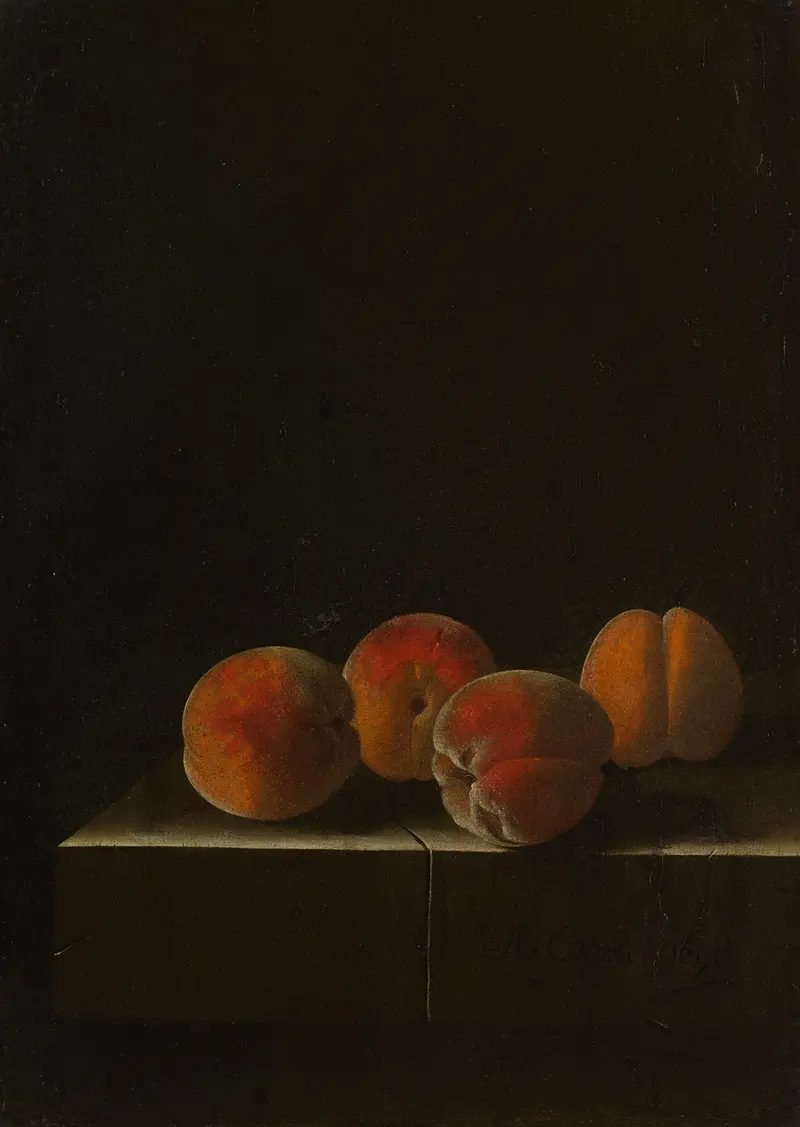
Four Apricots on a Stone Plinth
Adriaen Coorte





