
Eichhorn Castle at Evening — History & Facts
In the quiet decay of time, we find the essence of beauty lingering just beneath the surface, waiting to be discovered. Look closely at the foreground, where lush, overgrown foliage juxtaposes the crumbling stones of Eichhorn Castle. The vibrant greens contrast sharply with the muted grays and browns of the castle, inviting both wonder and melancholy. The fading light of evening bathes the scene in a soft, golden glow, highlighting the intricate textures of decay and hinting at forgotten histories.
This interplay of light and shadow captivates the eye, drawing it toward the castle’s weathered facade, which seems to whisper secrets of the past. In the distance, the soft outlines of the castle evoke a sense of nostalgia and loss. The encroaching wilderness symbolizes nature's reclamation, a reminder that time, relentless and indifferent, wraps all in its embrace. The composition speaks to contrasts—the strength of the castle against its frailty, the vibrancy of nature against the stillness of stone.
This tension serves as a poignant reflection on the transient nature of beauty and the inevitability of decay. Josef Höger painted this work around 1838, during a period of romanticism that celebrated nature's power and the ruins of human achievement. At the time, Europe was experiencing significant sociopolitical changes, leading artists like him to explore themes of nostalgia and the passage of time. This piece reflects both personal and collective histories, encapsulating a moment when art was a vessel for deeper introspection amid the upheaval of the world.
More Artworks by Josef Höger
Browse all →
The Lauterbrunnen valley with Jungfrau
Josef Höger

A view of Bad Aussee
Josef Höger

Ländliche Idylle
Josef Höger

Blick auf Gmunden
Josef Höger
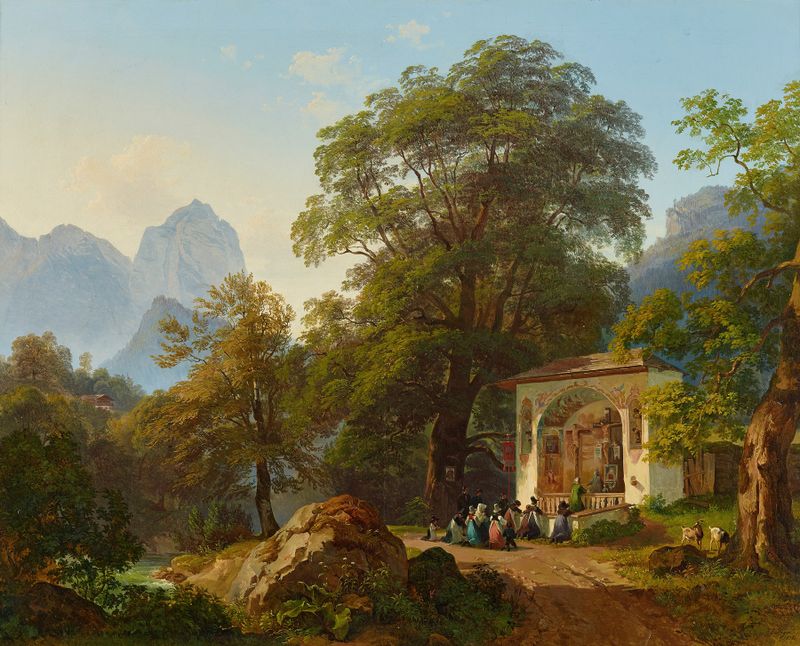
Waldkapelle
Josef Höger

Venice
Josef Höger

Waldinneres bei Lundenburg
Josef Höger

Landscape with Thatched Farmhouses and decorative figures
Josef Höger
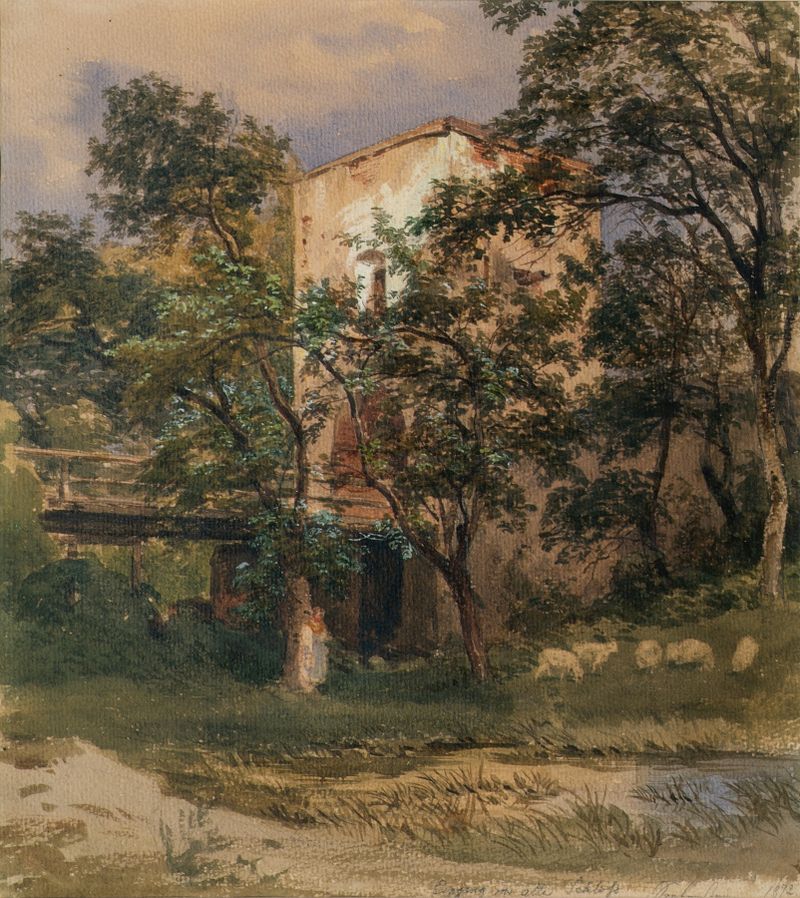
Eingang zum Schloss Seebenstein
Josef Höger

Gardasee
Josef Höger





