
Ländliche Idylle — History & Facts
What if beauty was never meant to be finished? In Ländliche Idylle, Josef Höger captures a moment where nature and humanity exist in perfect harmony, not as a conclusion, but as an ongoing dialogue. Look to the center, where a verdant meadow embraces a small, rustic farmhouse, bathed in the gentle warmth of afternoon light. The lush green of the grass contrasts with the rich browns of the cottage, skillfully painted with soft brushstrokes that lend a sense of tranquility. Notice how the light cascades through the branches of nearby trees, casting playful shadows that dance across the landscape, inviting the viewer to linger in this serene atmosphere. Hidden within this idyllic scene are subtle tensions—the juxtaposition of human habitation against the wildness of nature suggests a delicate balance.
The bright colors of blooming flowers stand in stark contrast to the muted tones of the farmhouse, hinting at nature's resilience amid human presence. The gentle curves of the hills evoke a sense of continuity, reminding us that beauty is not static but a dynamic interplay of elements, always in flux. In 1852, Höger created this work during a period of burgeoning artistic exploration in rural landscapes, as artists sought to capture the essence of everyday life and the beauty of the natural world. Living in a time when Romanticism was giving way to Realism, he embraced the tranquility of country life, reflecting both the simplicity of rural existence and the broader artistic movement that sought to reconnect with nature.
More Artworks by Josef Höger
Browse all →
The Lauterbrunnen valley with Jungfrau
Josef Höger

A view of Bad Aussee
Josef Höger
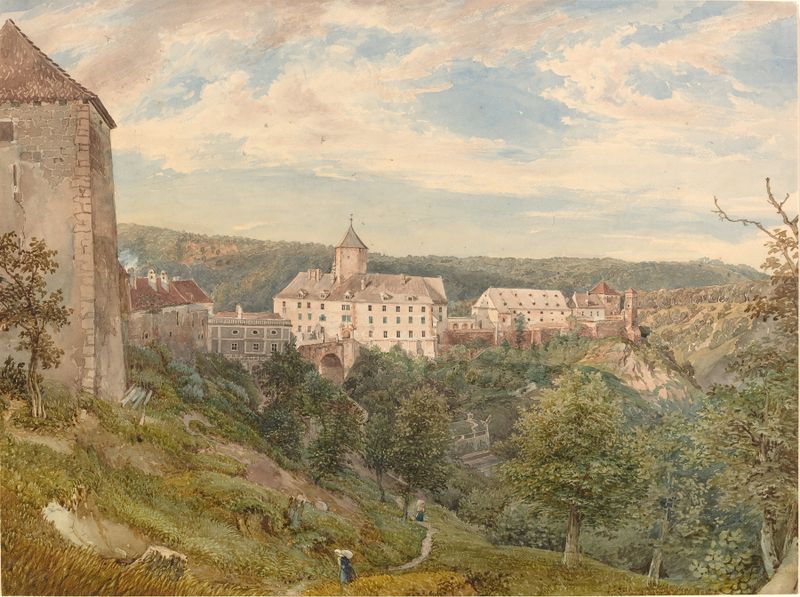
Eichhorn Castle at Evening
Josef Höger

Blick auf Gmunden
Josef Höger
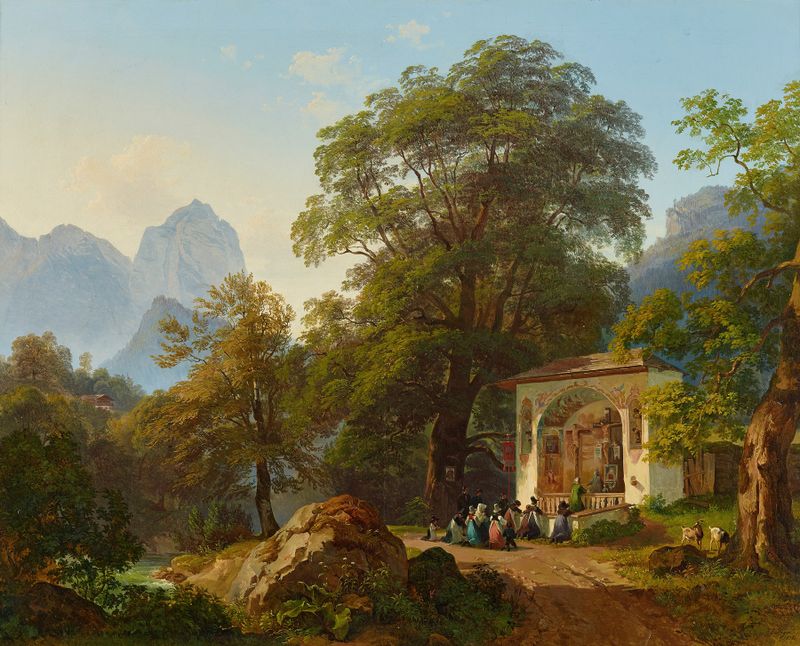
Waldkapelle
Josef Höger

Venice
Josef Höger

Waldinneres bei Lundenburg
Josef Höger

Landscape with Thatched Farmhouses and decorative figures
Josef Höger
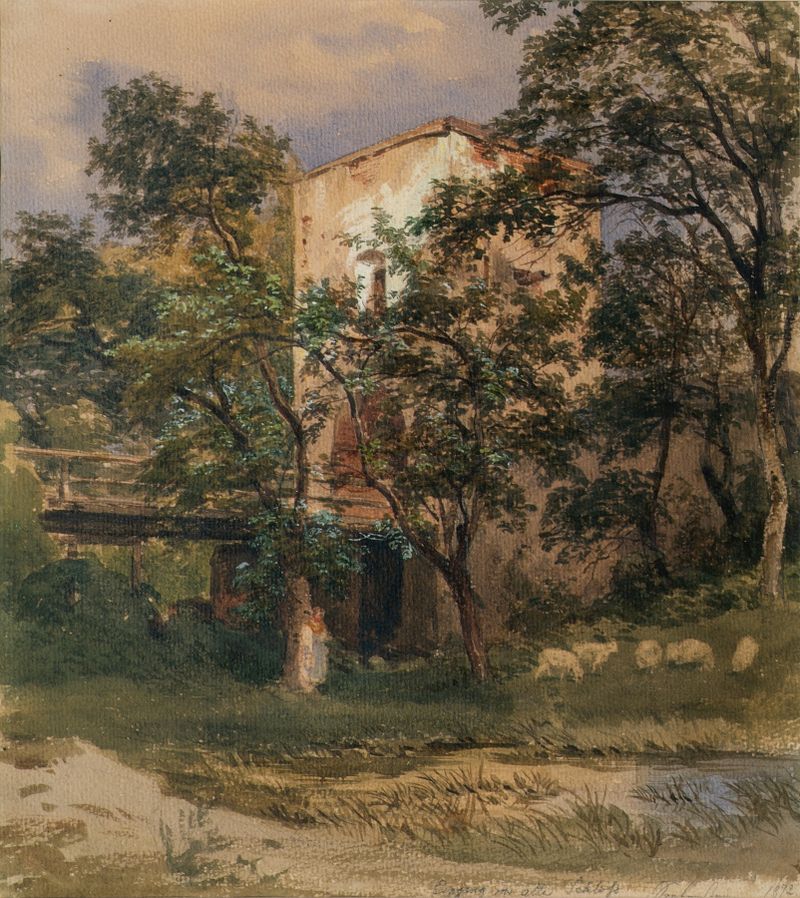
Eingang zum Schloss Seebenstein
Josef Höger

Gardasee
Josef Höger





