
Eingang zum Schloss Seebenstein — History & Facts
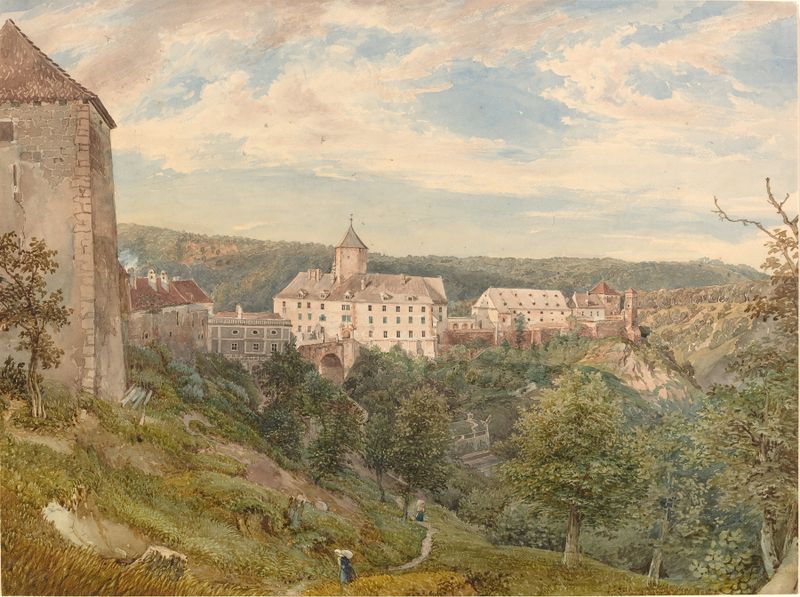
Could beauty survive in a century of chaos? This question resonates through the delicate brushstrokes and serene composition of the artwork, inviting viewers to ponder the nature of illusion and reality. Look to the foreground, where the soft hues of grass and cobblestones lead your gaze towards the grand entrance of the castle. The play of light dances across the scene, illuminating the intricate details of the structure—its arched doorway framed by lush greenery. Notice how the warm tones contrast with the cool shadows, creating a sense of depth and inviting you to step into this moment frozen in time. As you explore further, consider the juxtaposition of the natural and the manmade.
The flourishing trees seem to whisper secrets of resilience, while the castle, a testament to human craftsmanship, stands stoically against the passage of time. This harmony hints at the fragility of beauty, suggesting that even amidst the chaos of the era, a sanctuary of peace exists, albeit momentarily. The serene landscape stands in stark contrast to the tumultuous world outside, evoking an emotional tension between stability and uncertainty. In 1872, Josef Höger painted this piece during a period of significant change in Austria and the broader European landscape.
The post-revolutionary era was marked by both political upheaval and burgeoning artistic movements. As an emerging artist, he sought to capture not just the physical world, but also a deeper essence of beauty, rooted in a time when illusions of tranquility had become increasingly precious.
More Artworks by Josef Höger
Browse all →
The Lauterbrunnen valley with Jungfrau
Josef Höger

A view of Bad Aussee
Josef Höger

Ländliche Idylle
Josef Höger
Eichhorn Castle at Evening
Josef Höger

Blick auf Gmunden
Josef Höger
Waldkapelle
Josef Höger

Venice
Josef Höger

Waldinneres bei Lundenburg
Josef Höger

Landscape with Thatched Farmhouses and decorative figures
Josef Höger

Gardasee
Josef Höger





