Eine Allee in Monets Garten in Giverny — History & Facts
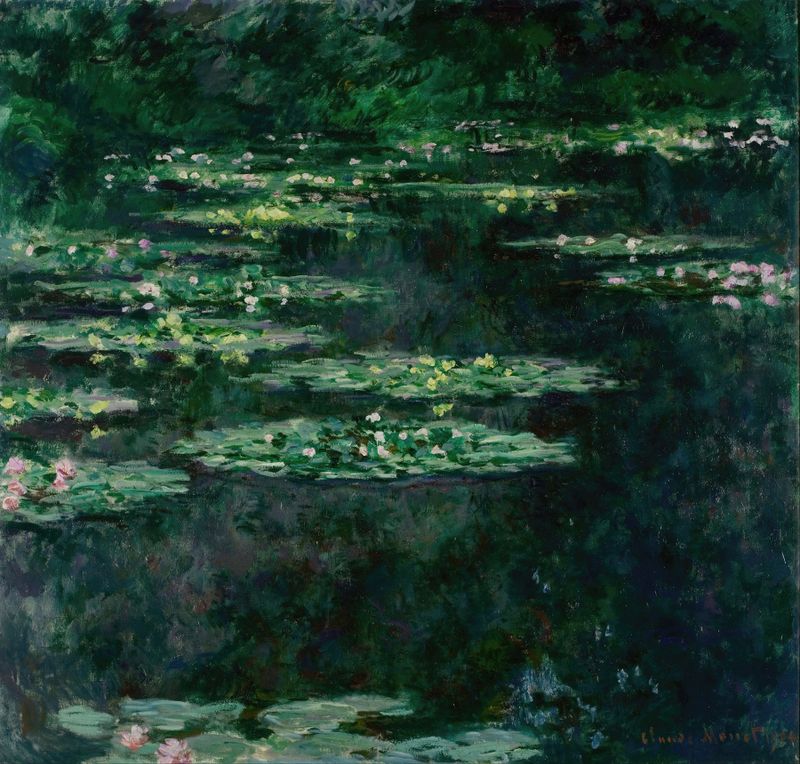
Can beauty exist without sorrow? In Claude Monet’s Eine Allee in Monets Garten in Giverny, the answer unfolds in vibrant strokes of color and serenity, inviting contemplation on innocence and the complexities that accompany it. Look to the left at the lush greenery that frames the path, where dappled sunlight spills through the leaves, creating a mosaic of light and shadow. The meticulous brushwork captures the intricate play of colors—emerald greens, soft yellows, and deep blues—that breathe life into the scene. Notice how the composition draws your eye down the winding alley, a journey both inviting and elusive, as if beckoning you to walk among the blossoms and feel their ephemeral beauty. Beneath this idyllic surface, a subtle tension lingers.
The vibrant flora represents the fleeting nature of joy, while the serene path suggests a journey that one must eventually leave behind. Each petal and leaf embodies a moment of innocence, yet the shadows hint at the inevitability of time’s passage, reminding us that beauty and sorrow are inextricably linked. This duality evokes a poignant reflection on the transient nature of life, encapsulating the essence of nostalgia. In 1902, Monet was deeply immersed in his creation of a series inspired by his beloved garden in Giverny, a sanctuary reflecting his emotional state.
The world was witnessing rapid change, yet here, Monet sought solace in nature's beauty, pushing the boundaries of Impressionism. His art during this period illustrates a profound connection to the personal and the universal, crafting landscapes that resonate with both joy and an undercurrent of longing.