
Einsamer Kahn — History & Facts
Could beauty survive in a century of chaos? The interplay of solitude and nostalgia lingers in the heart as one gazes upon the canvas. Begin by directing your gaze to the serene waters where a solitary boat gracefully floats. Notice the gentle ripples that break the stillness, capturing fleeting moments of light, while the surrounding landscape is swathed in a soft, muted palette of greens and browns. The brushstrokes weave a delicate veil of tranquility, inviting the viewer to step into this world of quiet reflection. As you delve deeper, observe the way the trees arch protectively over the scene, their branches forming a natural frame that emphasizes the boat’s isolation.
The juxtaposition of the ephemeral beauty of nature against the stark, lonely vessel evokes a profound sense of melancholy. Each element contributes to the narrative: the fading light of dusk hints at the passage of time, while the stillness of the water reflects both inner peace and profound yearning. In 1880, while creating this work, the artist was immersed in the German Romantic movement, reflecting a society grappling with industrial change and cultural shifts. Wrapped in the embrace of nature, Einsamer Kahn embodies Thoma's fascination with the emotional depth of landscapes, a response to an era where the beauty of the natural world stood in stark contrast to the encroaching chaos of modernity.
More Artworks by Hans Thoma

Fable – Knight
Hans Thoma

Self-Portrait from Munich
Hans Thoma

Landscape in the Black Forest
Hans Thoma
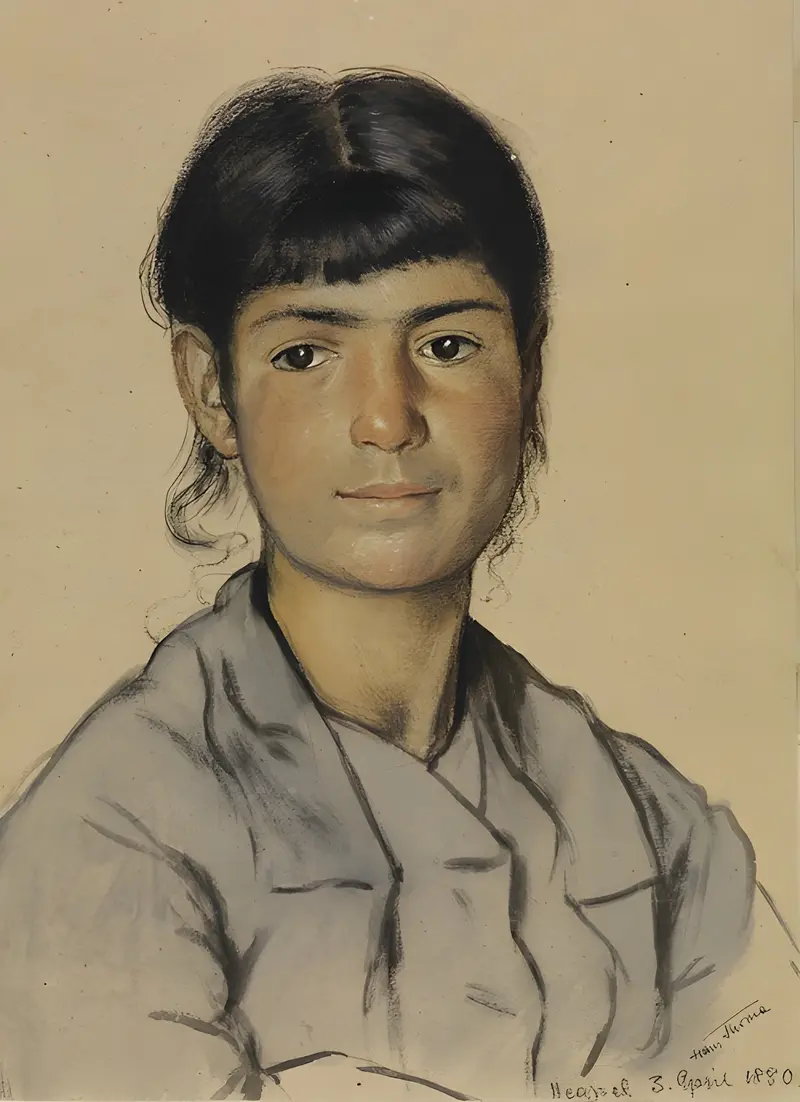
Portrait of a young Neapolitan woman
Hans Thoma
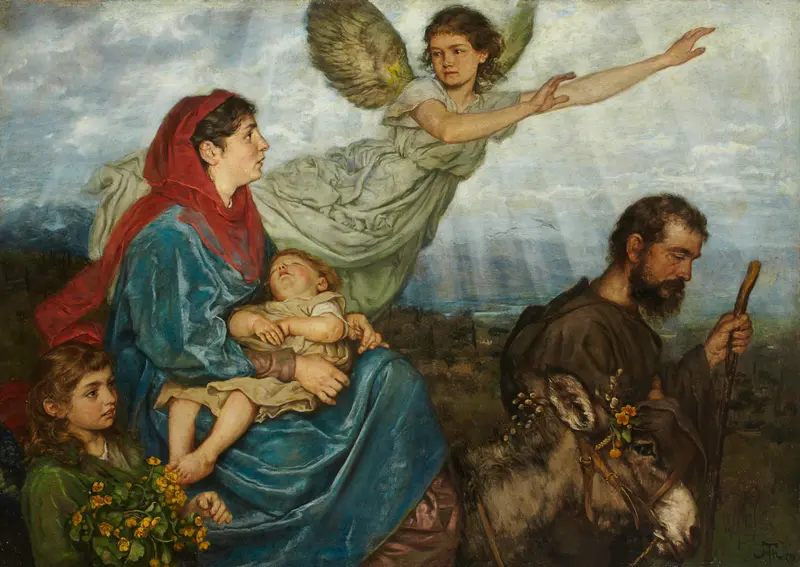
The Flight into Egypt
Hans Thoma
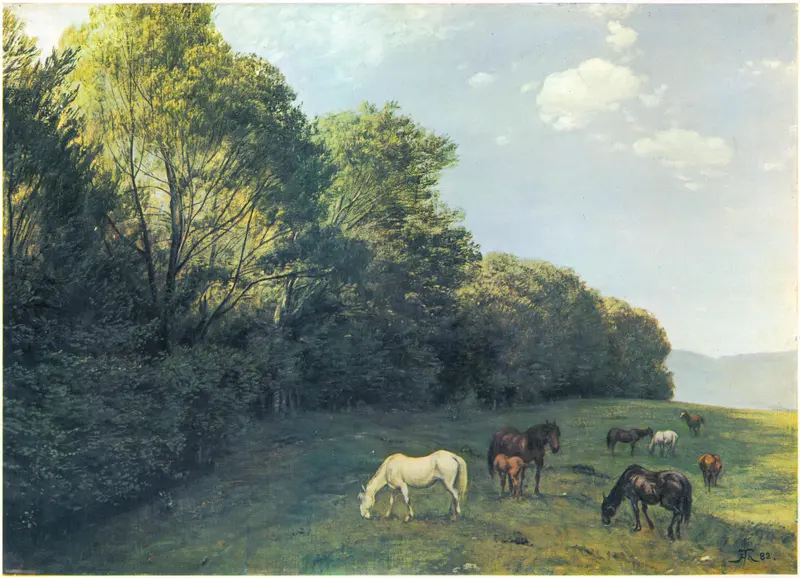
Landschaft mit weidenden Pferden
Hans Thoma
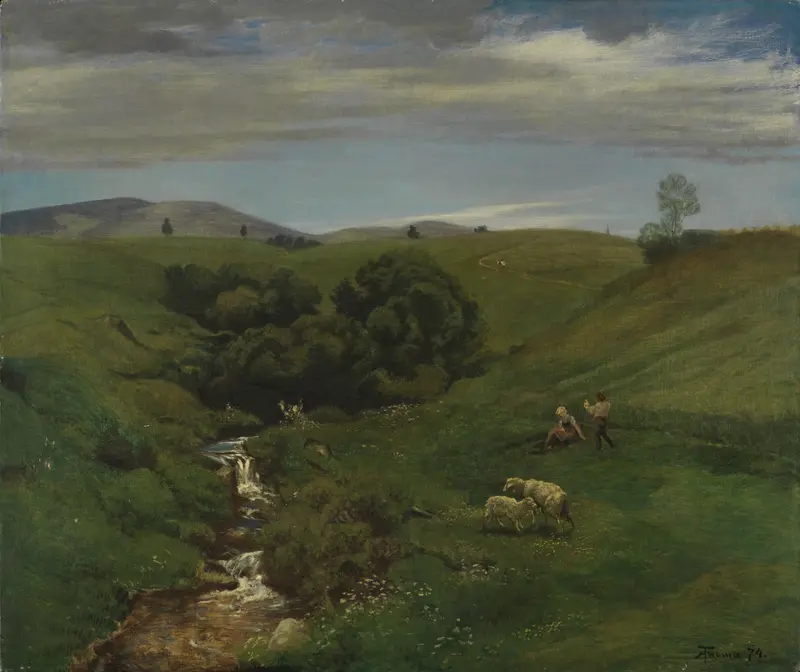
Black Forest Meadow near Bernau
Hans Thoma
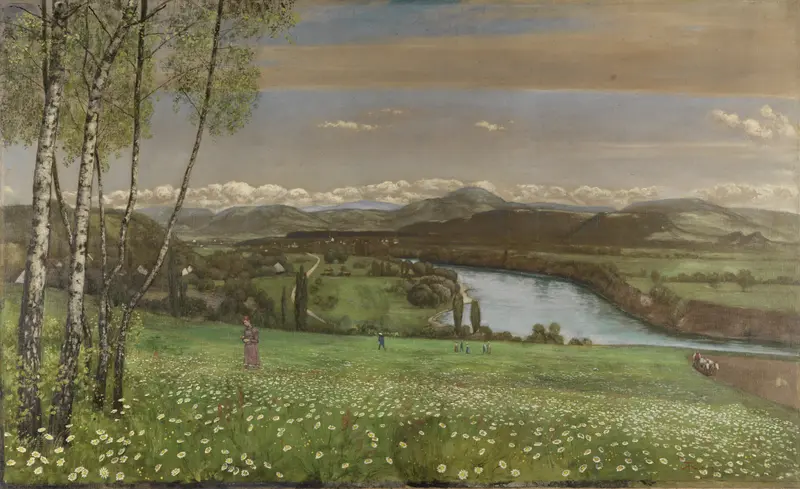
Das Rheintal bei Säckingen
Hans Thoma
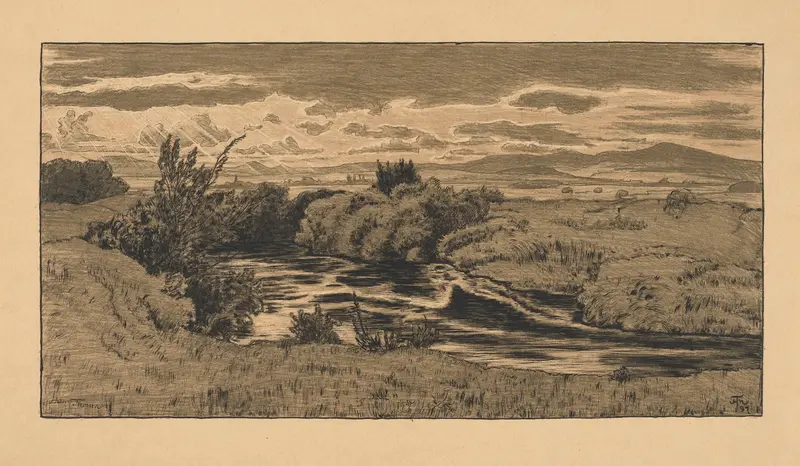
Evening by the Nidda River
Hans Thoma
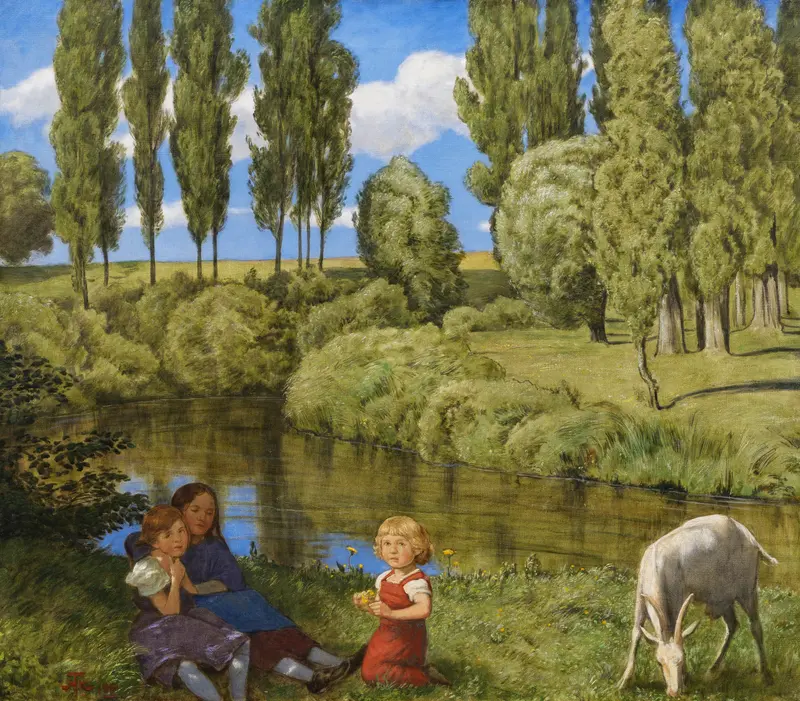
Am Stillen Bach
Hans Thoma





