
Das Rheintal bei Säckingen — History & Facts
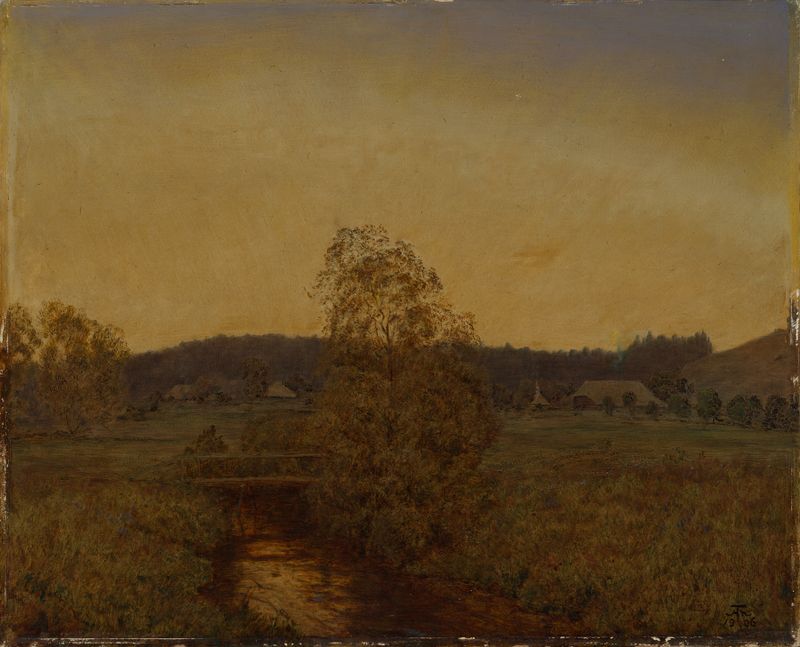
In the quiet expanse of a valley, the weight of emptiness hangs heavily, inviting contemplation and an unsettling stillness. Look to the center of the canvas where the gentle curve of the Rhine River beckons, its surface an interplay of shimmering blues and greens. Surrounding the water, lush verdant hills rise, their soft undulations captured with a masterful technique that blends realism and impressionism. Notice how the light dances across the landscape, illuminating patches of grass and revealing the textured strokes that give life to the scene, inviting the viewer’s gaze deeper into the tranquil embrace of nature. Yet, the vastness of the space evokes a sense of solitude that contrasts with the vivid beauty surrounding it.
The meandering river, while a connector, also signifies distance and separation, symbolizing the duality of life—a serene beauty enveloping an underlying emptiness. Small details, like the solitary figure painting at the riverside, amplify this tension, suggesting a yearning for connection amidst the expansive silence. Painted in 1899, the artist was amid a period of profound exploration and reflection in his career. Working in Germany, he was influenced by the burgeoning movement towards naturalism and a return to the essence of landscape painting.
This work comes at a time when artists sought to encapsulate not just beauty, but also the complex emotions that nature could evoke, marking a significant moment in the evolution of modern art.
More Artworks by Hans Thoma
Browse all →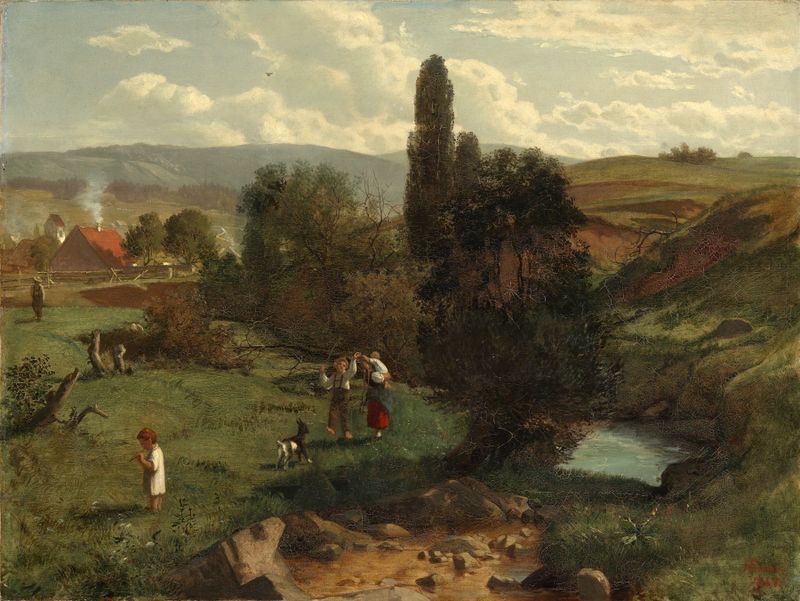
Schwarzwaldlandschaft
Hans Thoma
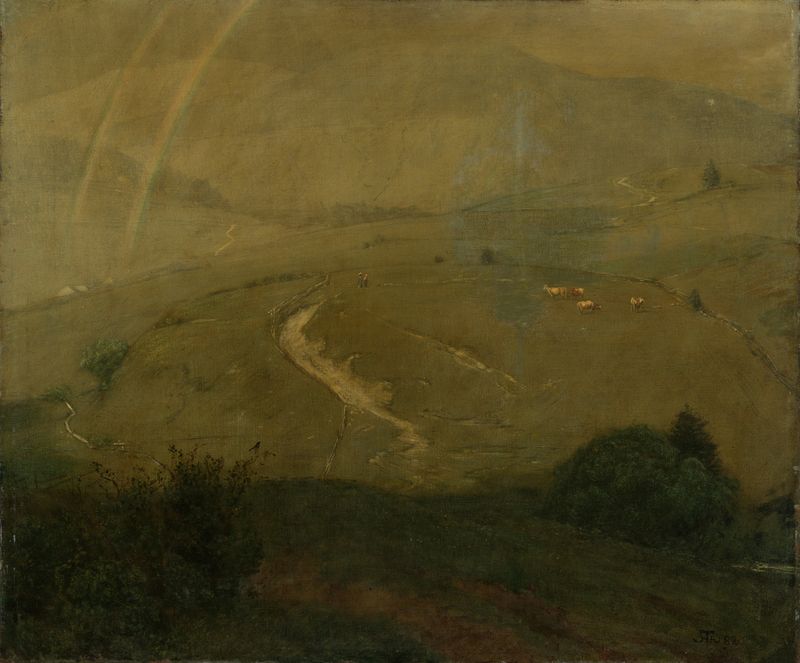
Regen im Schwarzwald
Hans Thoma
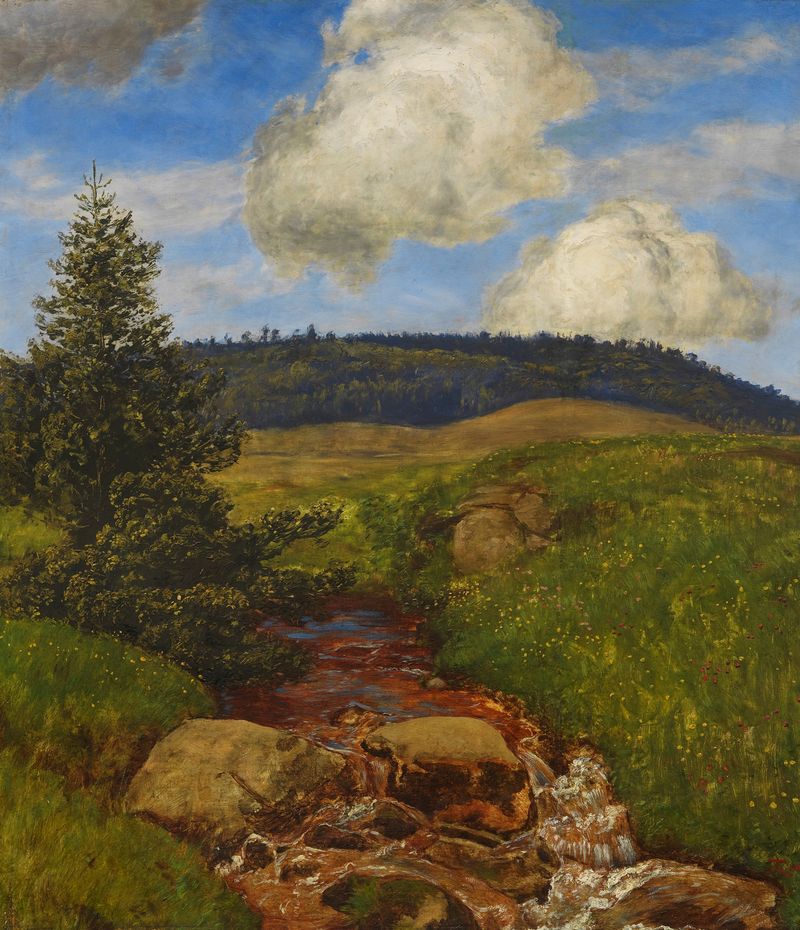
Schwarzwaldbach
Hans Thoma
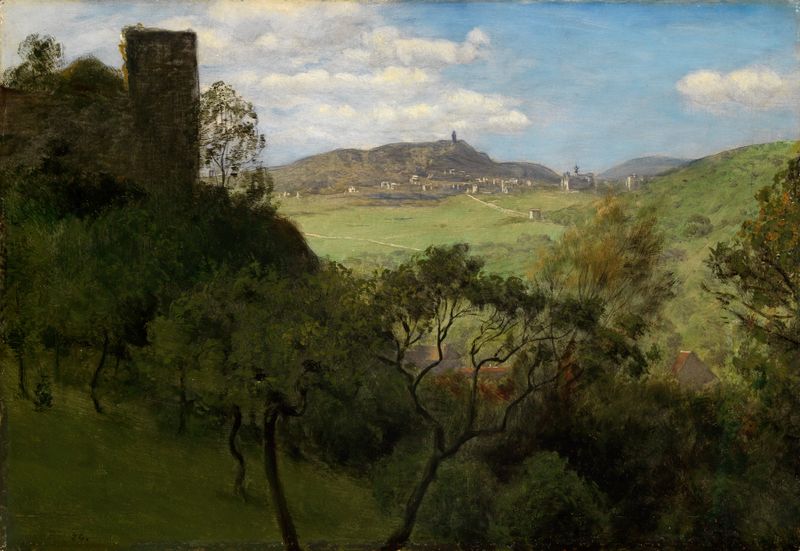
Blick auf Falkenstein im Taunus
Hans Thoma
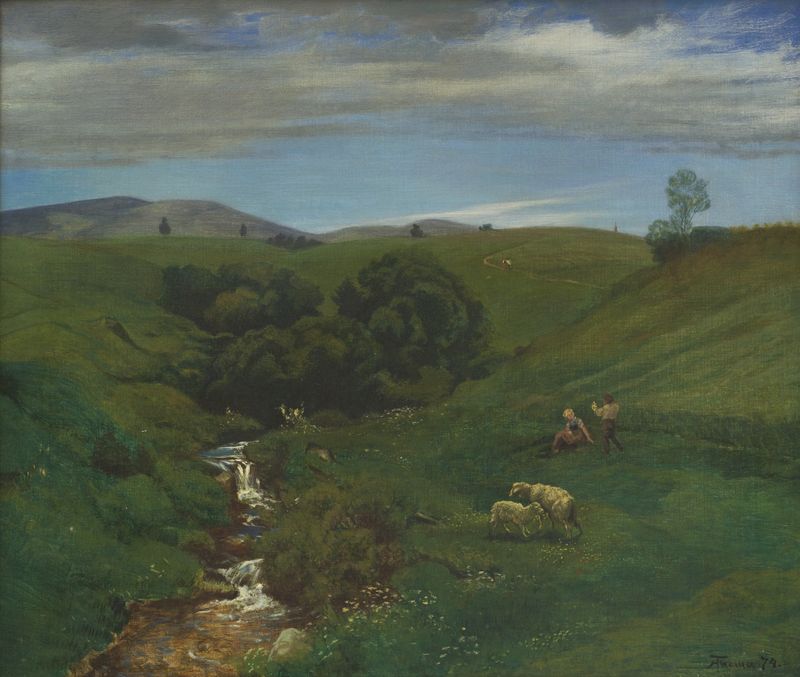
Black Forest Meadow near Bernau
Hans Thoma
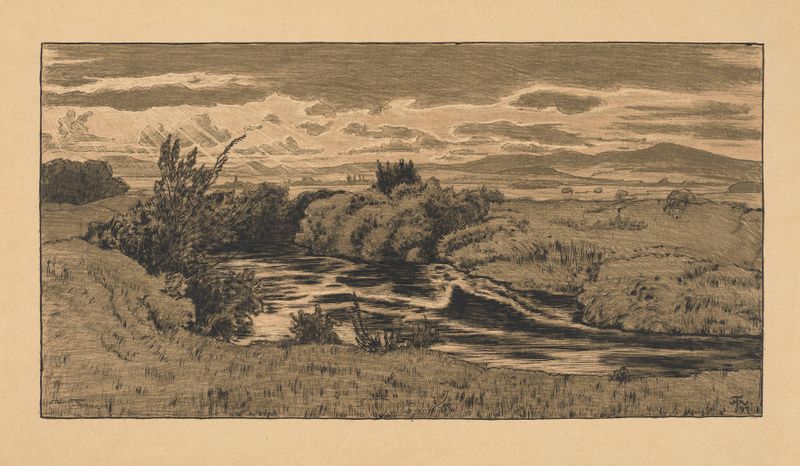
Evening by the Nidda River
Hans Thoma
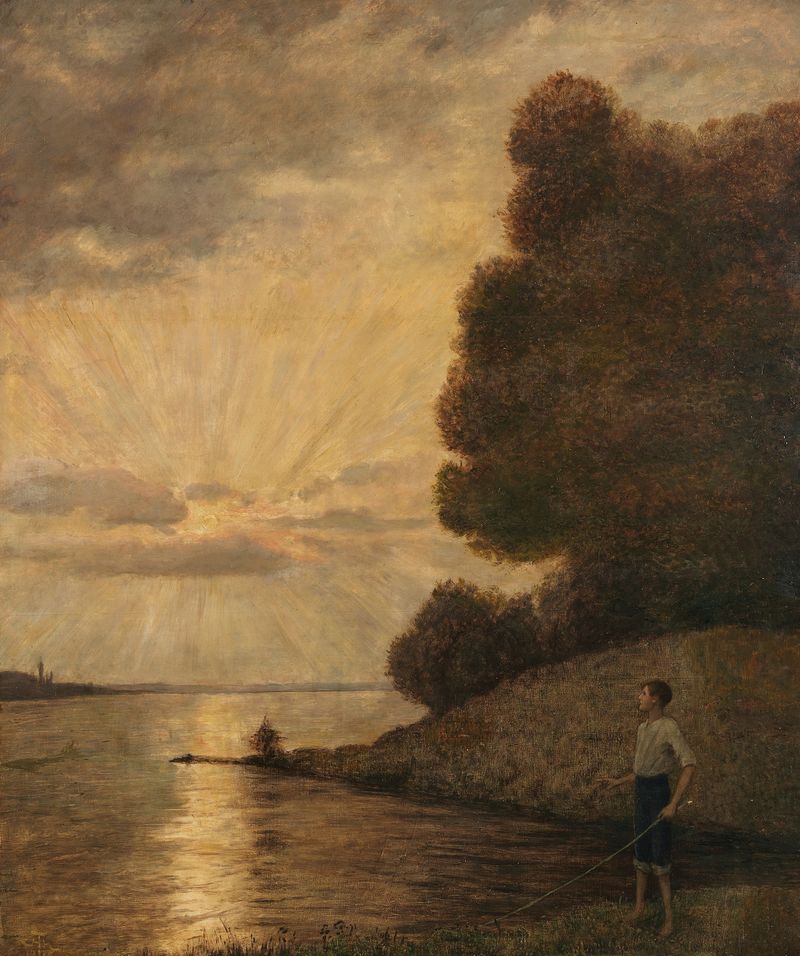
Sonnenuntergang am Oberrhein
Hans Thoma
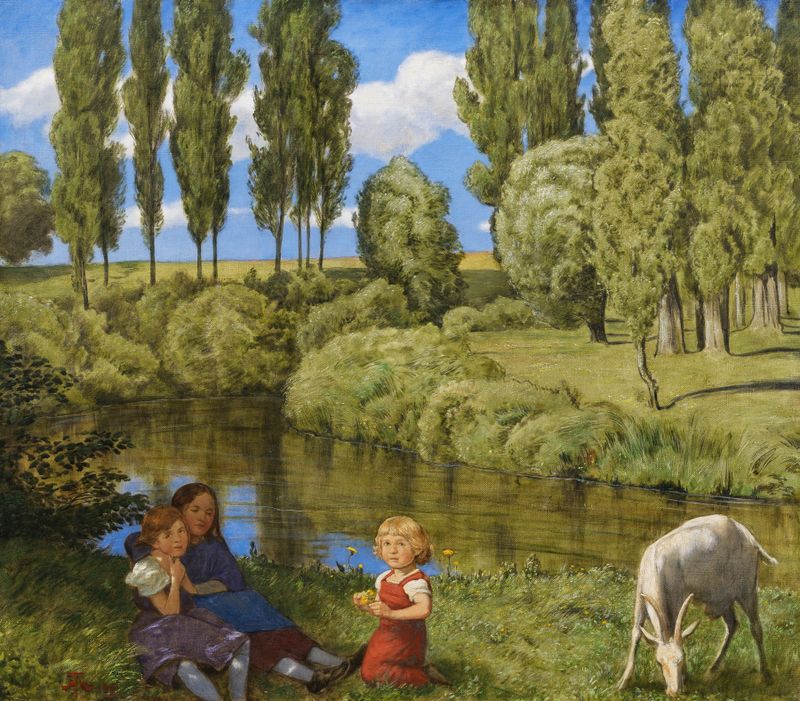
Am Stillen Bach
Hans Thoma
Der Abendstern
Hans Thoma
Steiniger Weg am Waldrand
Hans Thoma





