
El Pascol. Caldes De Montbui — History & Facts
In the delicate interplay of hues and brush strokes, a quiet hope emerges, inviting contemplation and reverie. Look to the center of the canvas, where a vibrant array of greens and blues intertwines, evoking the essence of a serene landscape. Notice how the light dances across the surface, casting shadows that suggest movement and growth. The composition guides the eye, with gentle curves leading toward a distant horizon, creating a sense of both depth and tranquility.
The artist’s technique, blending impasto with smooth washes, lends texture and life to the scene, allowing the colors to resonate with one another. Yet, beneath this picturesque surface lies a deeper narrative. The contrasting shades hint at the struggles that often accompany hope—darkness mingling with light represents the duality of existence. Flecks of brighter color emerge, symbolizing moments of joy amid the uncertainty, while the surrounding stillness fosters a sense of anticipation.
This dialogue between contrasting elements mirrors the human experience, suggesting that hope is often forged in the quiet spaces of life. In 1922, while living in Caldes de Montbui, the artist created this work during a period marked by personal reflection and exploration. The post-World War I era was a time of searching for meaning amidst chaos in the art world, influencing many creators to seek solace in nature and emotional depth. This piece stands as a testament to the resilience and beauty found in the interplay of color and silence.
More Artworks by Joaquin Mir Trinxet
Browse all →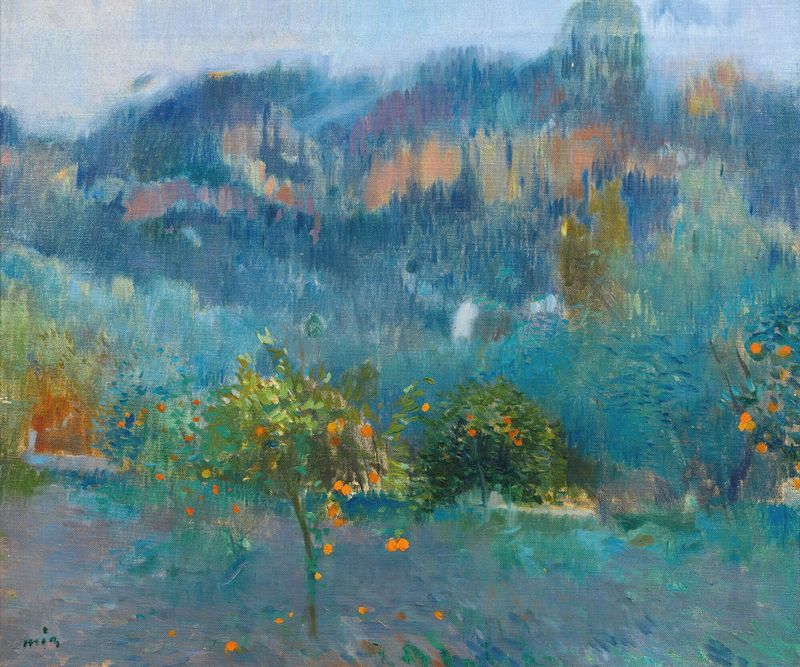
Paisaje Mallorquín Con Naranjos
Joaquin Mir Trinxet
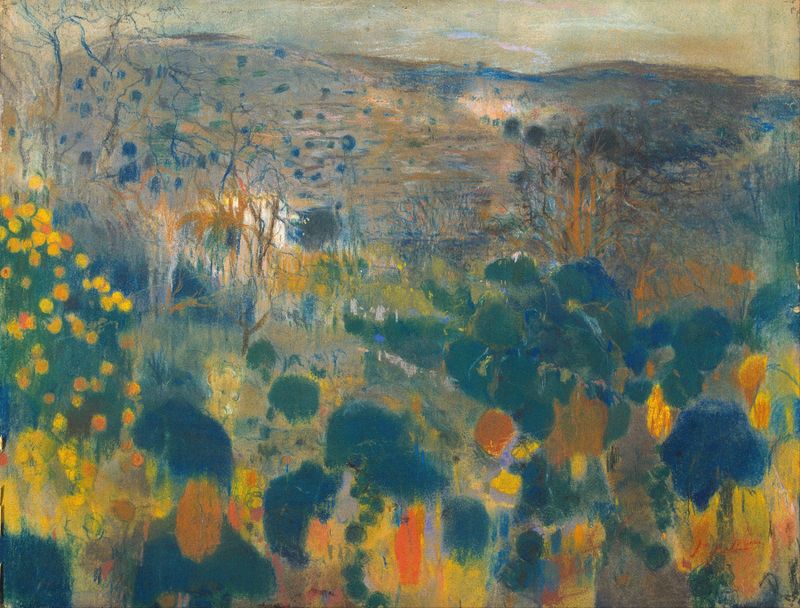
Landscape
Joaquin Mir Trinxet

Spanish Jardin
Joaquin Mir Trinxet
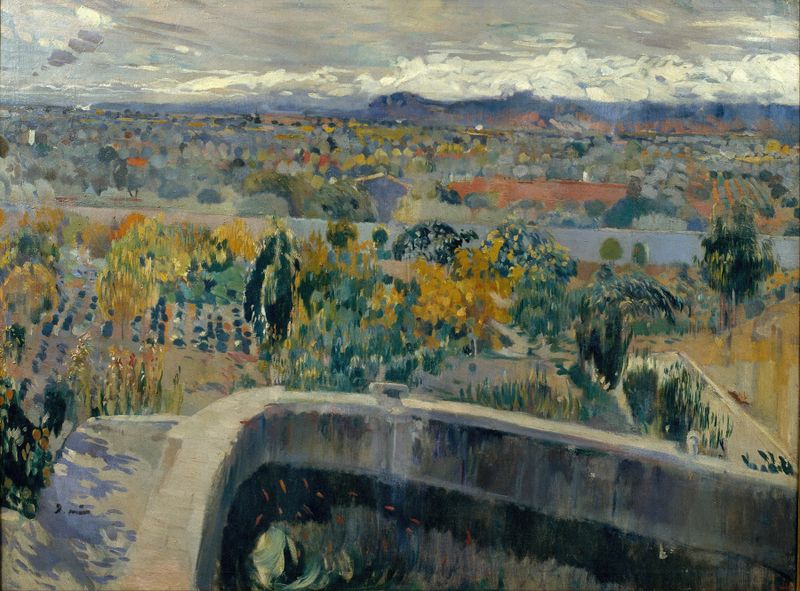
The New Pond
Joaquin Mir Trinxet

View of L’Aleixar
Joaquin Mir Trinxet
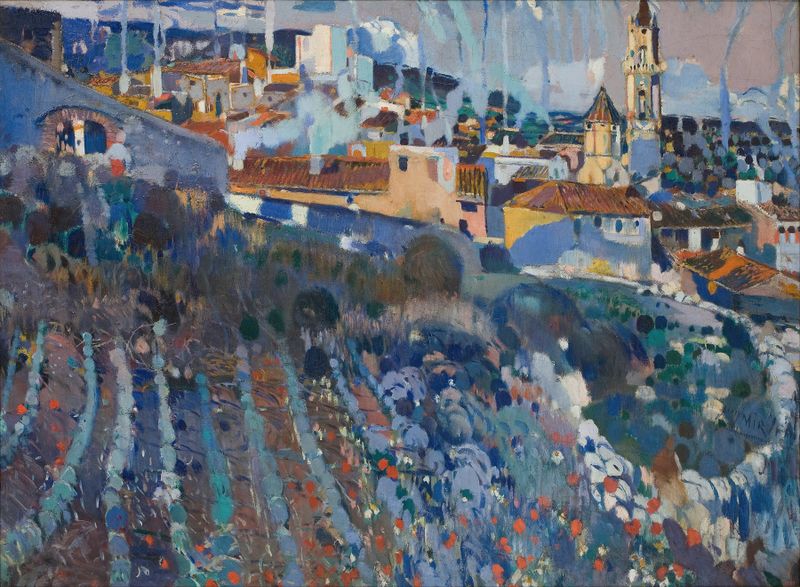
Terraced Village
Joaquin Mir Trinxet
Riverbank In The Forest
Joaquin Mir Trinxet
El Mas Blau
Joaquin Mir Trinxet
Atardecer (Twilight)
Joaquin Mir Trinxet
Paisaje Enmarcado Por Grandes Árboles
Joaquin Mir Trinxet





