El Puerlie del Cano — History & Facts
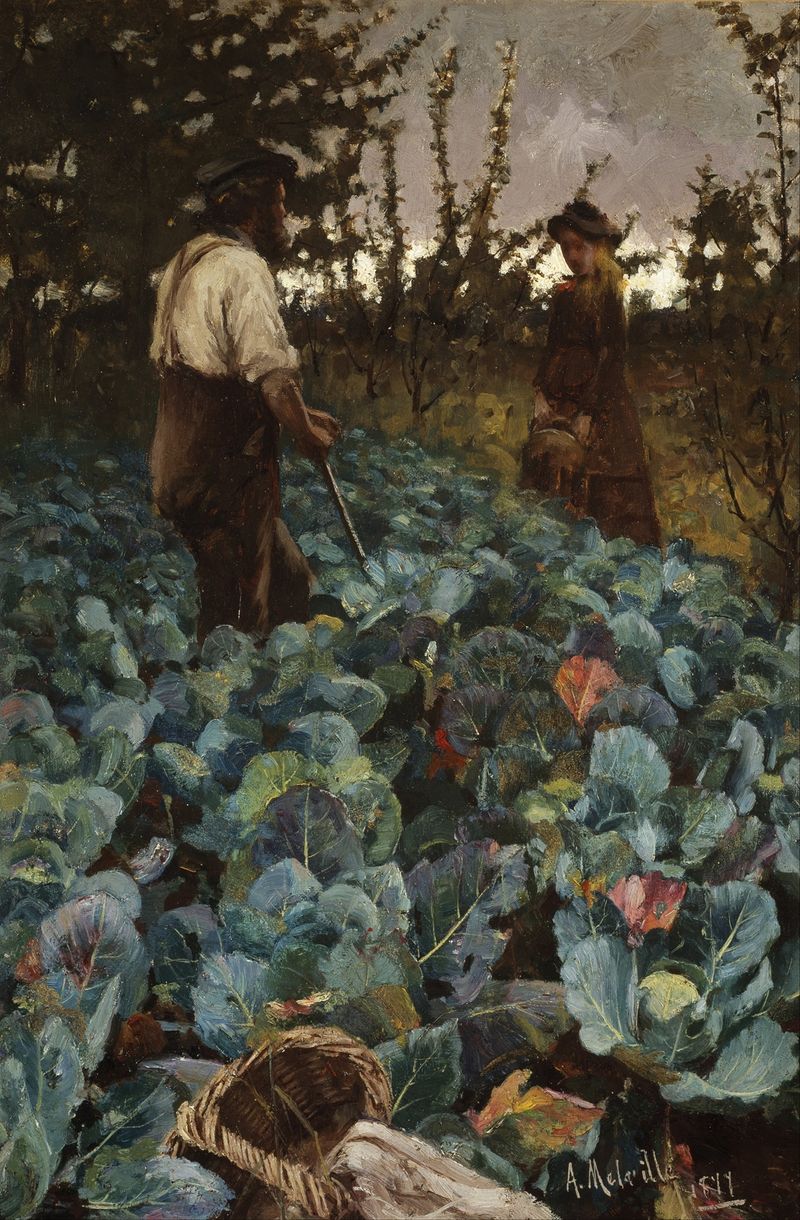
Where does light end, and longing begin? In the tender strokes of color, there lies an unspoken tension that veils a deeper violence beneath the surface. Look to the vibrant hues cascading across the canvas, particularly the bold reds and deep blues that pull the eye into a whirlpool of emotion. Notice how the light dances upon the characters, illuminating their faces yet casting shadows that suggest hidden narratives. The brushwork is fluid and flowing, creating an ethereal quality that captures not just the scene but the very essence of longing intermingled with desperation. As you delve deeper, consider the contrasting elements at play: the warm, inviting light against the cool, melancholic shadows.
The figures' expressions, caught between hope and despair, serve as a mirror reflecting the complexities of human emotion. Small details, such as the stillness in their posture and the tension in their hands, imply a volatile inner conflict, urging the viewer to question the source of their unfulfilled desires and the violence that so often accompanies them. Arthur Melville created this piece during a time of personal exploration and artistic experimentation, likely in the late 19th to early 20th century. Working primarily in Scotland and influenced by the Impressionist movement, he was grappling with the balance between light and shadow, creating a visual language that spoke to both beauty and turmoil.
As society faced rapid changes, his art mirrored the emotional landscape of a world caught in transition, embodying the struggle between tranquility and chaos.