Elegant figures strolling in a renaissance town — History & Facts
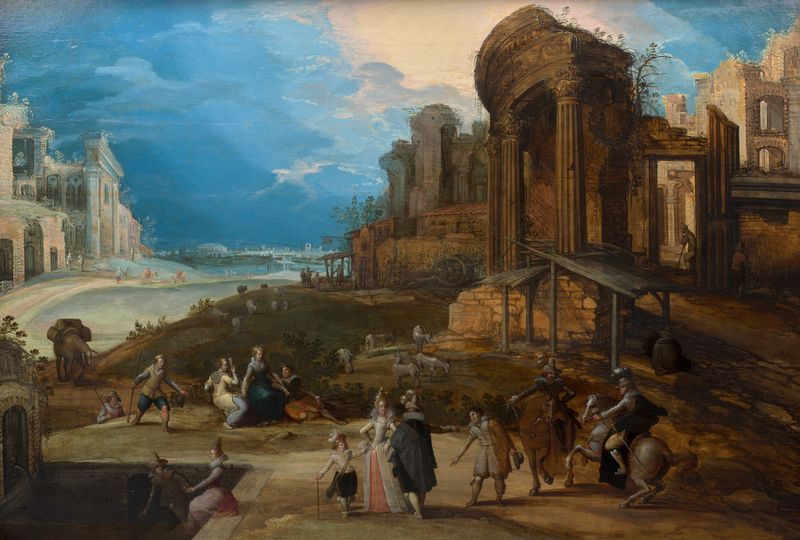
What if beauty was never meant to be finished? In the delicate interplay of poise and motion, we find an eternal dance of elegance. Focus on the figures that gracefully traverse the cobblestone streets, their postures taut with a sense of purpose. The artist employs soft pastels and contrasting shadows to create a serene atmosphere, inviting the viewer to step into the scene. Notice how the warm golden hues of the sunset embrace the town, casting long shadows that stretch and blend with the lively colors of their garments, hinting at the fleeting nature of time and beauty itself. In the background, the architecture stands as a silent witness to this moment, its classical lines providing a stark contrast to the fluidity of the figures.
The subtle gestures of the characters—an arm extended, a head turned—speak of unspoken connections and the stories that lie just beyond their visible expressions. Each person contributes to a complex tapestry of interactions, suggesting both the joy and isolation that can accompany beauty in motion. Painted during the early 17th century, this work emerged amid a flourishing era of artistic innovation in the Low Countries. At this time, Louis de Caullery was establishing his reputation in Antwerp, a hub of trade and culture.
His focus on the elegance of daily life reflects the shifting values of society, where beauty was celebrated not just in grand narratives, but also in the quiet moments of everyday existence.