Emil Zegadłowicz’s house in Gorzeń — History & Facts
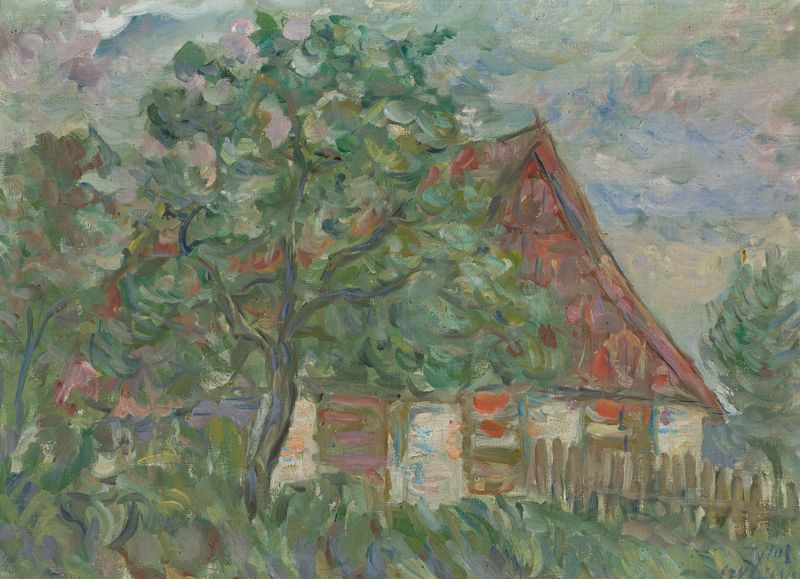
What secret hides in the quiet of the canvas? In Emil Zegadłowicz’s house in Gorzeń, shadows dance delicately, whispering the untold stories of a secluded space. Look to the center, where the house stands resolute against a backdrop of muted greens and grays. Notice how the light filters through the branches overhead, casting intricate patterns upon the facade and revealing the textures of the weathered wood. The artist’s use of soft brushstrokes creates a feeling of serenity, while also suggesting an underlying tension as the unseen world beyond the frame lingers just outside our sight. The interplay of light and shadow offers a glimpse into deeper emotions.
The house, with its stoic presence, seems both inviting and isolating, emblematic of the dreams and burdens that dwell within its walls. The shadows stretch and twist, representing the weight of history and memory, as if they hold the stories of past inhabitants tightly, refusing to let go. This duality between comfort and confinement invites the viewer to reflect on their own sense of belonging. Tytus Czyżewski created this work in 1921, during a time of artistic experimentation in Poland.
Emerging from the influences of expressionism and avant-garde movements, he sought to capture the unique character of rural life while reflecting on the complexities of human emotion. This period in his life was marked by a search for identity within the tumultuous social and political backdrop of post-war Poland, making this quiet scene resonate with a depth that transcends its tranquil appearance.