Polish landscape — History & Facts
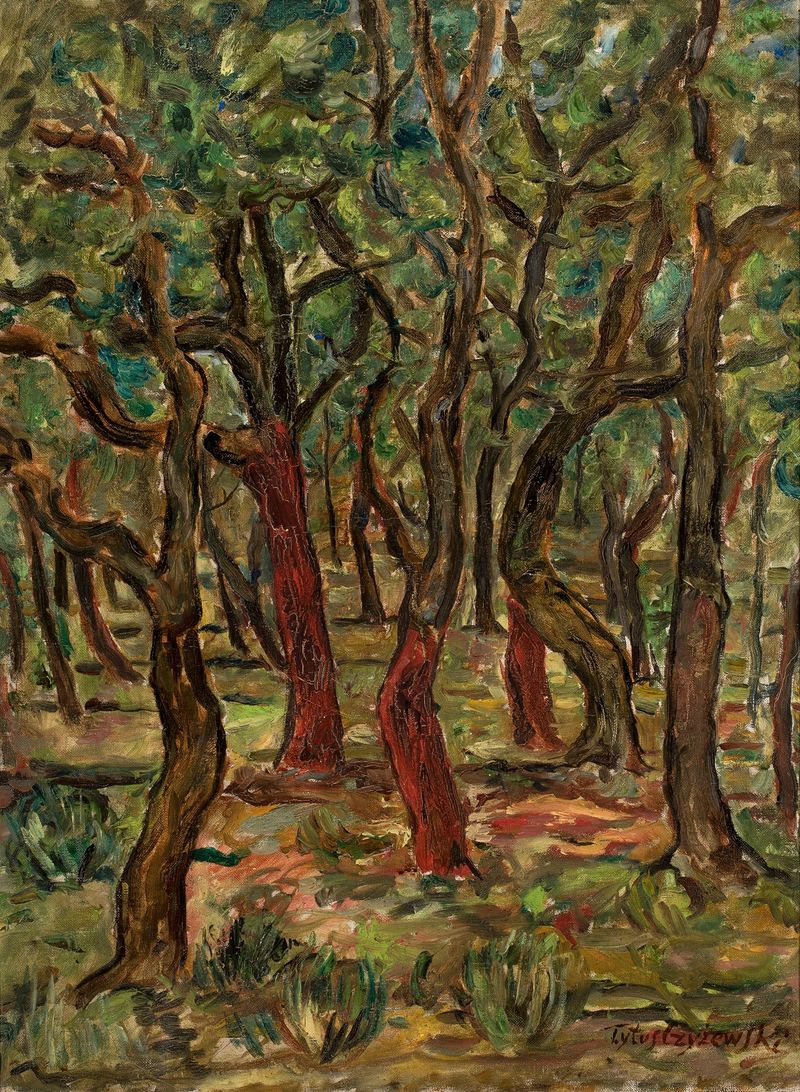
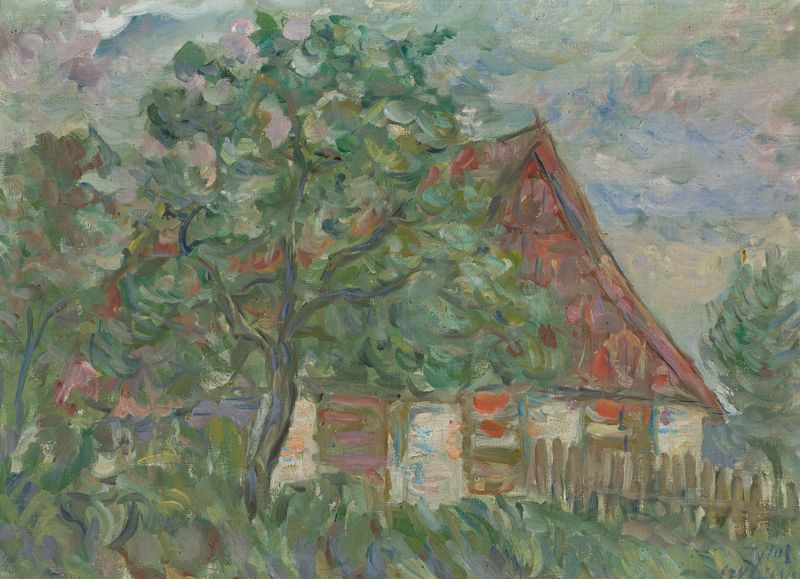
Who listens when art speaks of silence? In Polish Landscape, Tytus Czyżewski captures the essence of rebirth through a harmonious interplay of colors and forms that invites quiet reflection. Look to the foreground where warm earth tones blend into cooler greens and vibrant yellows, establishing a gentle gradient that nurtures the viewer’s gaze. Notice how the bold brushstrokes create a rhythm across the canvas, evoking the undulating hills that roll into the distance, while trees rise like sentinels, silhouetted against a luminous sky. The light, diffused yet radiant, seems to breathe life into the landscape, outlining the contours of nature's serene majesty. As you delve deeper, consider the contrasting colors that pulse with emotional significance— the tumultuous blues of the sky juxtaposed against the soft pastels of the earth, hinting at the tension between chaos and tranquility.
The artwork evokes a sense of nostalgia, suggesting not just a landscape, but a yearning for renewal amidst the shadows of a past marked by upheaval. Each element serves as a reminder of nature's resilience, silently narrating stories of hope and transformation. In 1936, Czyżewski was immersed in a period of profound change in Poland, experiencing the tensions of an evolving artistic landscape. This painting emerged during a time when the nation grappled with its identity, reflecting both personal and collective desires for revival.
The artist, influenced by the avant-garde movements of the day, sought to infuse his work with a sense of optimism—an echo of the rebirth felt, not just in nature, but in the spirit of his country.