Landscape — History & Facts
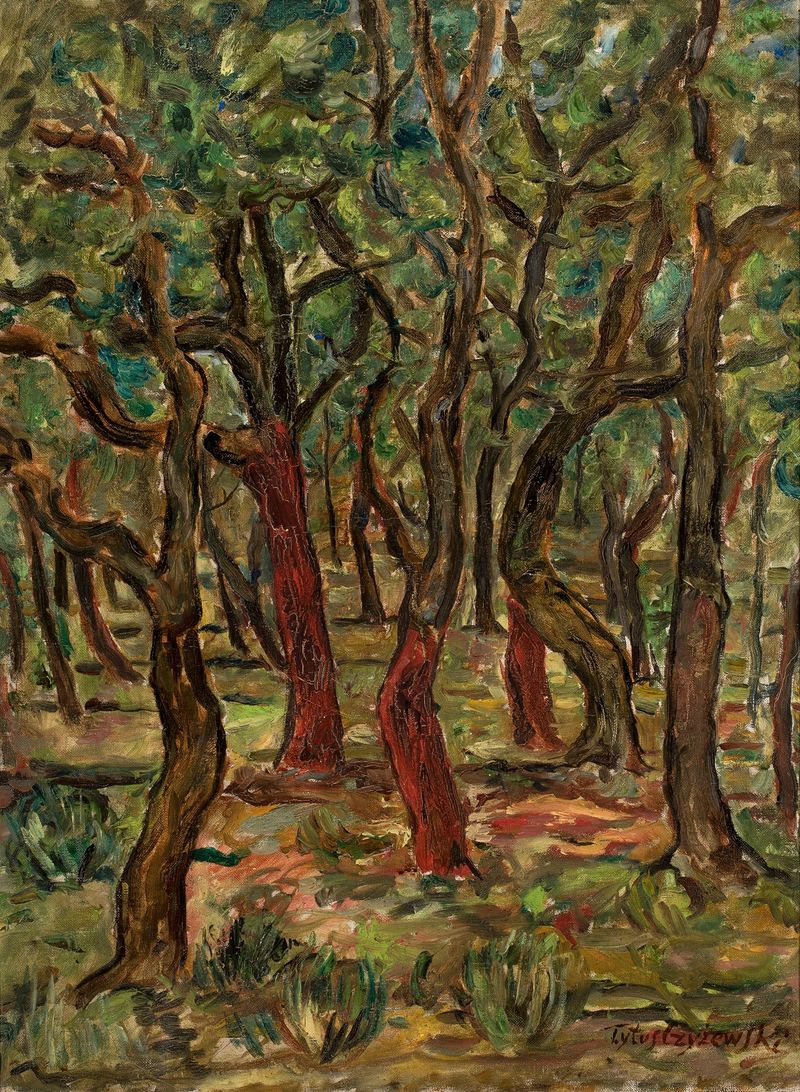
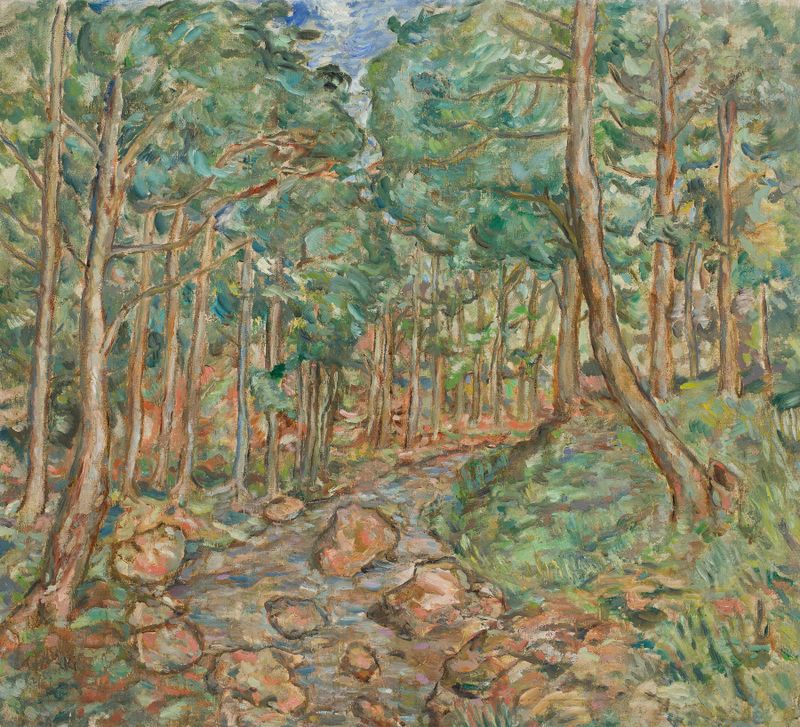
When did color learn to lie? This question lingers, inviting us into a world where hues and forms weave a tapestry of longing, a silent conversation between the heart and the canvas. Look to the bottom of the painting, where vibrant greens intertwine with soft, almost melancholic blues. Notice how the brushstrokes pulse with life, creating a rhythmic dance that draws your gaze upwards toward a radiant horizon. The artist’s choice of bold, unblended colors contrasts sharply with the gentle lines that outline distant hills, evoking a sense of yearning as the landscape stretches toward an unseen destination. In this work, emotional tension simmers beneath the surface.
The vividness of the colors suggests a vibrancy that belies the tranquility of the scene; it’s as if each hue holds a secret, whispering of dreams and memories that pulse with unfulfilled desires. The juxtaposition between the lush foreground and the barren expanse of the sky creates a poignant contrast, reflecting the struggle between hope and reality. Each element invites contemplation, urging viewers to delve deeper into their own feelings of nostalgia and aspiration. During this period, Czyżewski was navigating the complexities of his artistic identity, influenced by the avant-garde movements sweeping through Poland in the early 20th century.
The date of Landscape remains uncertain, yet it reflects the artist's exploration of color and form in an era marked by experimentation and a search for new expressions. This painting serves as a testament to his evolving vision, capturing a moment of introspective longing amidst the chaos of change.