
En mand, der sidder på et klippefremspring. I baggrunden en bjergskråning — History & Facts
In the quiet solitude of nature, fear lurks in the corners of human existence, whispering unspoken truths. It is a reminder that beauty exists alongside vulnerability, forever entwined in the landscape of our lives. Look to the foreground, where a solitary figure sits on a rocky outcrop, enveloped by the vastness of an imposing mountain range. The careful use of muted earth tones contrasts sharply with the vibrant greens and blues of the background, creating a palpable tension.
The light falls gently on the man’s thoughtful posture, suggesting a moment of quiet reflection, while the craggy cliffs loom ominously behind him, emphasizing his isolation against the grandeur of nature. The emotional depth of this piece lies in the delicate interplay between the figure and his environment. The man’s stillness amidst the rugged terrain speaks to the fragility of human resolve. Notice the way his gaze seems to pierce the horizon, perhaps confronting a personal fear or contemplating the unknown, as the looming mountains cast both a protective and menacing shadow over him.
This duality evokes a profound sense of introspection, suggesting that each moment spent in nature can be both a source of solace and a confrontation with one’s inner turmoil. Created between 1829 and 1832, this artwork emerges during a transformative period in European art, as Romanticism began to take hold. Martinus Rørbye, navigating his own artistic development, sought to merge natural landscapes with human emotion, reflecting a growing fascination with the sublime and the existential. In this work, he captures not only the breathtaking beauty of the Danish countryside but also the complexities of the human spirit in the face of nature’s grandeur.
More Artworks by Martinus Rørbye
Browse all →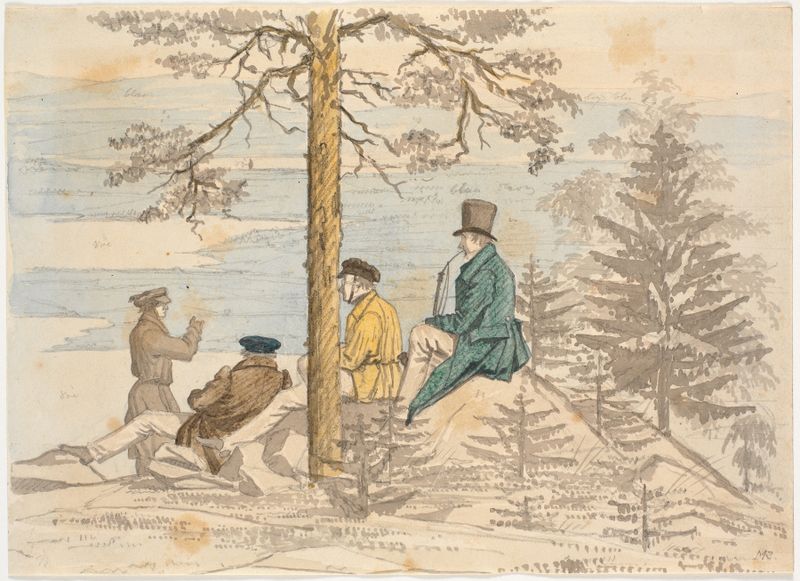
Fire mænd betragter udsigten fra Holmekollen
Martinus Rørbye
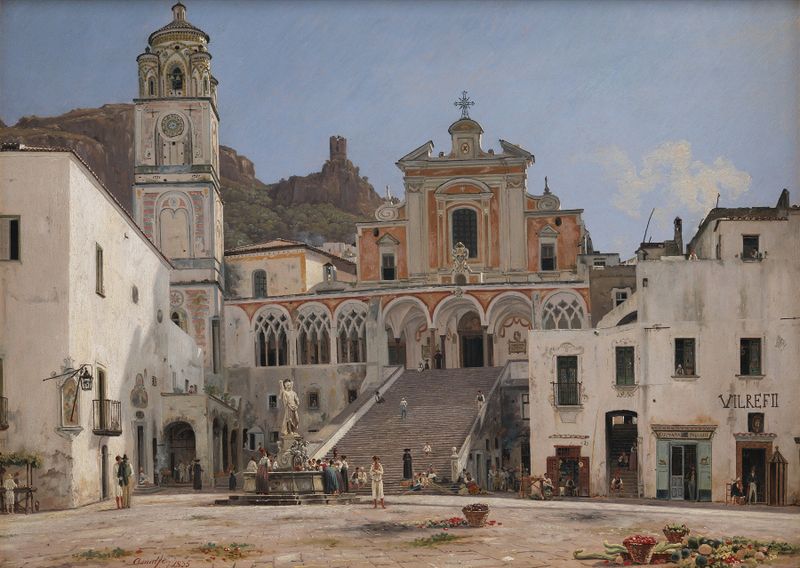
View of the Square in Amalfi
Martinus Rørbye
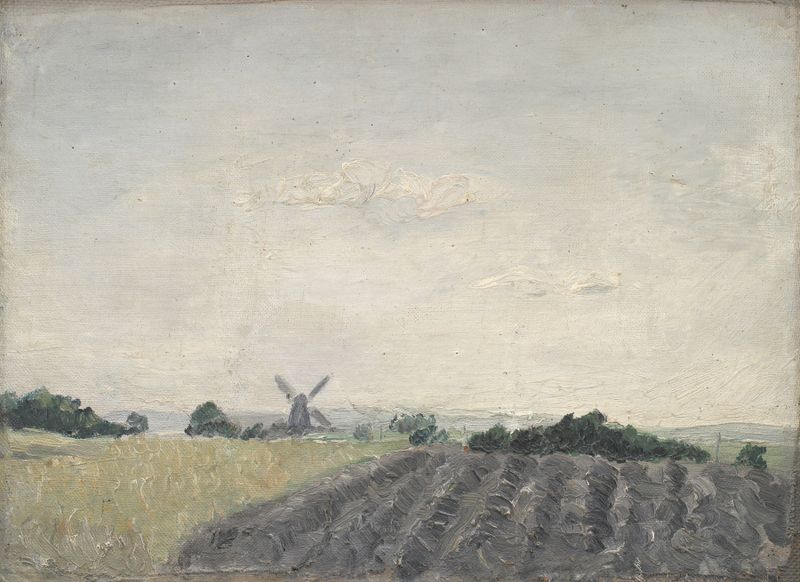
A Courtyard in Rome. Copy after Eckersberg
Martinus Rørbye
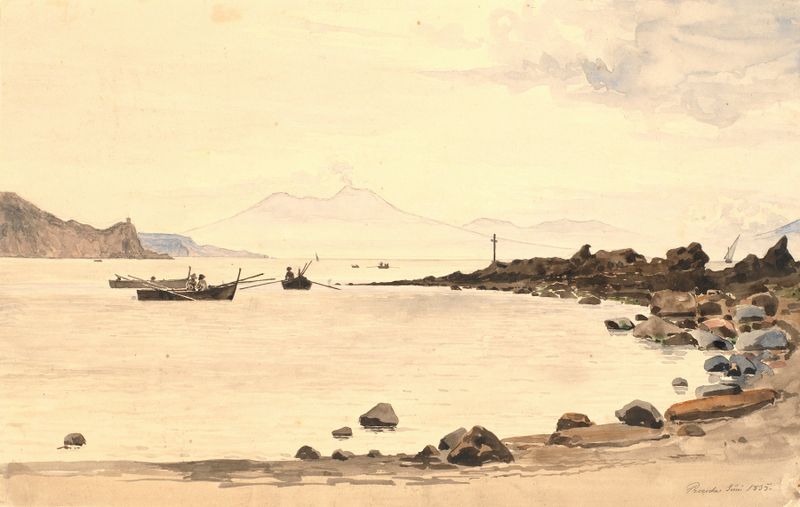
Udsigt mod Vesuv fra Procida
Martinus Rørbye
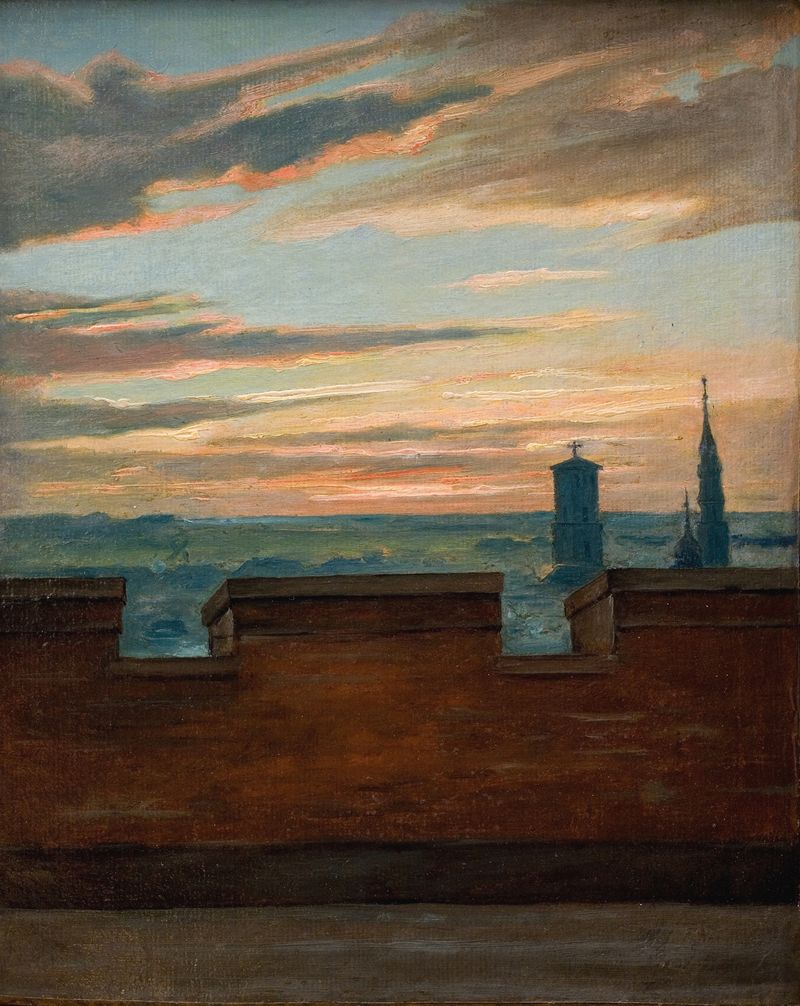
View of Copenhagen at Sunset
Martinus Rørbye
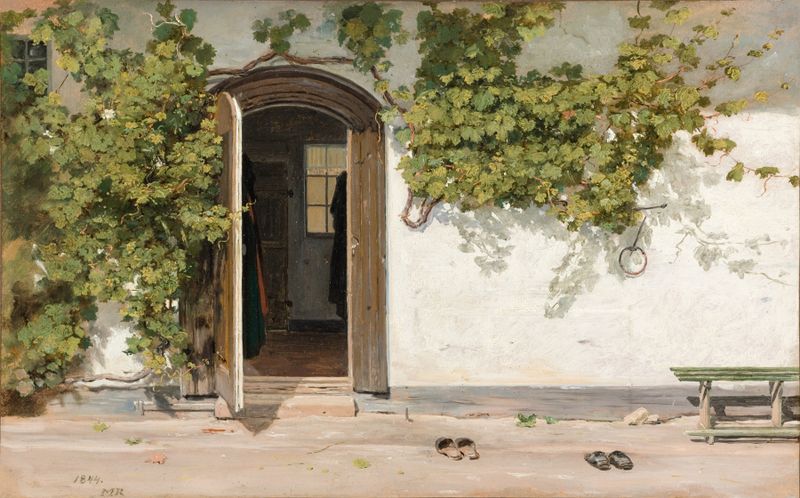
Entrance to an Inn in the Praestegarden at Hillested
Martinus Rørbye
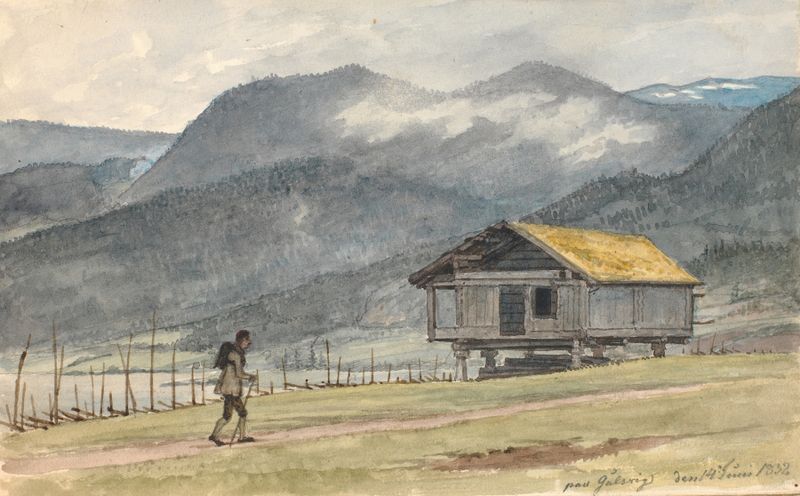
Fjeldlandskab med hytte og vandrer
Martinus Rørbye
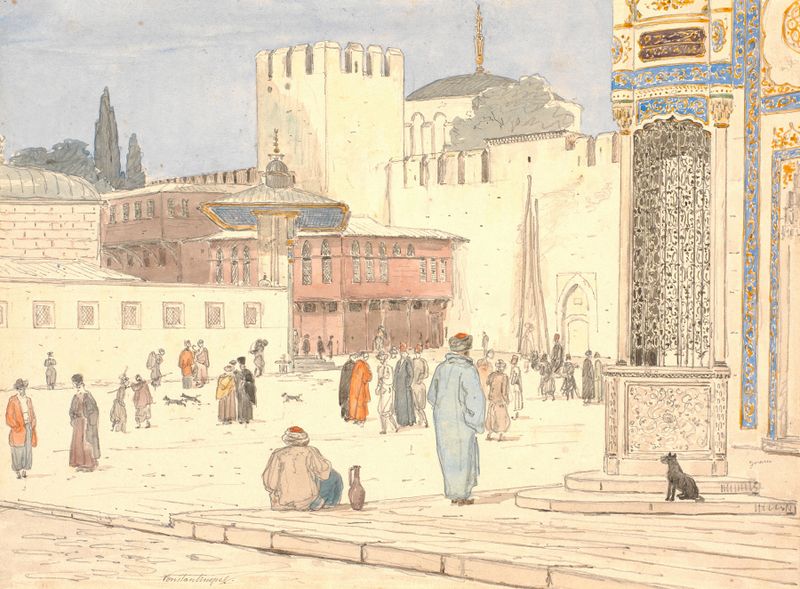
The Square in Front of Bab-i-Hümayan in Constantinople
Martinus Rørbye
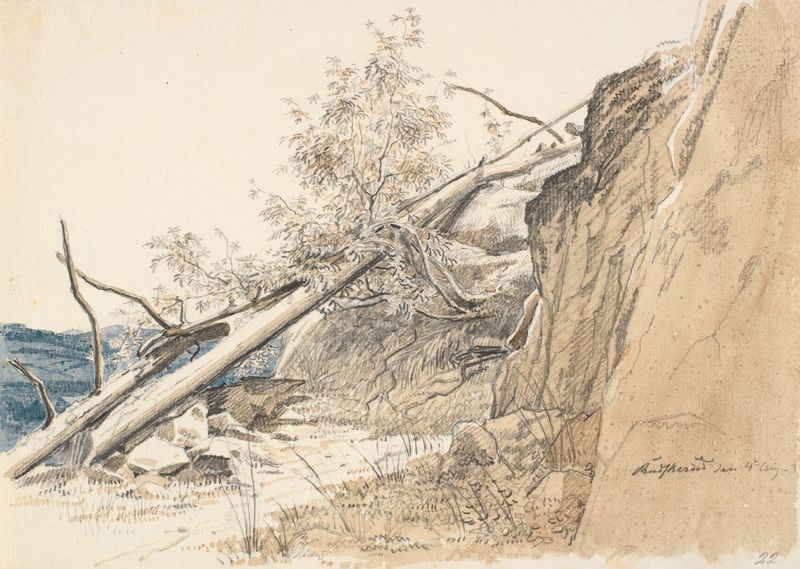
Tree Trunk Leaning Against a Rock. Norway
Martinus Rørbye
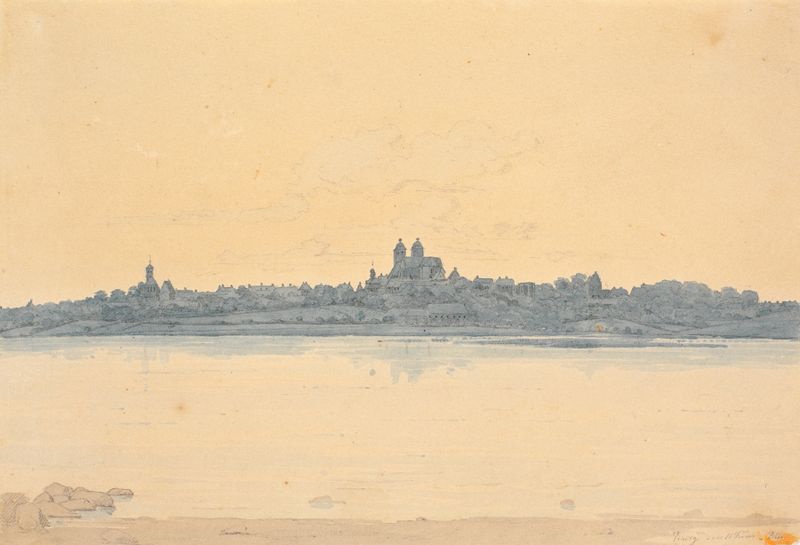
Viborg Seen from Asmild Klosterhave near Søndersø
Martinus Rørbye





