English Garden — History & Facts
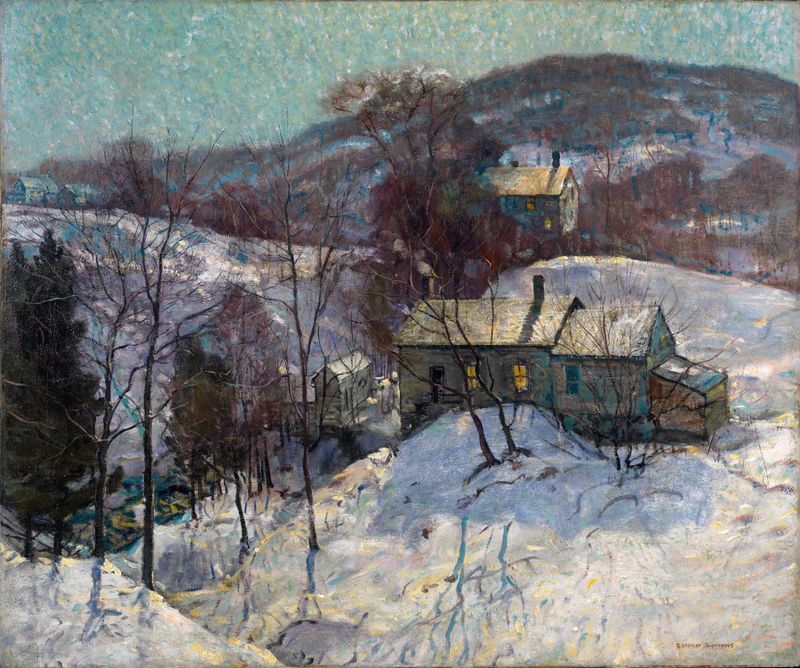
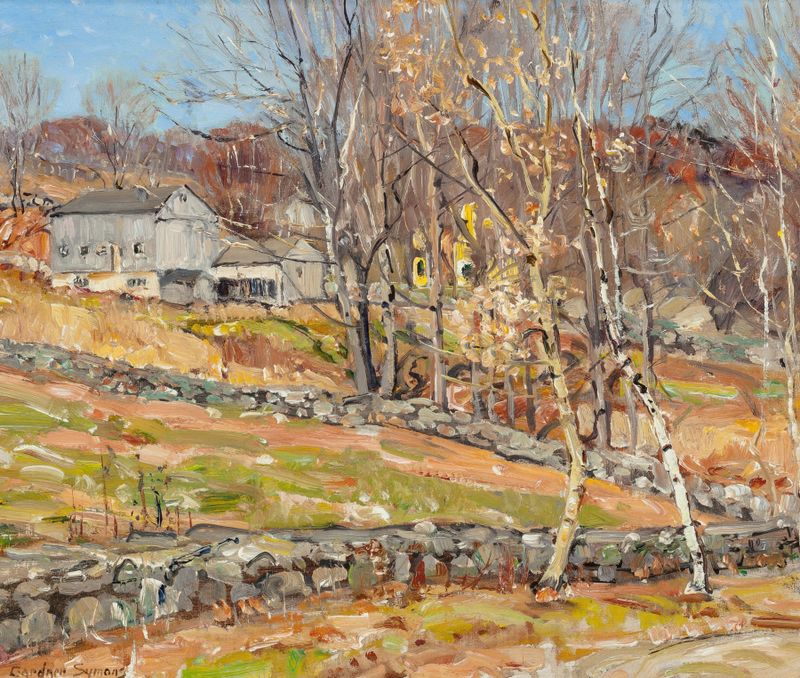
A soft mist hangs in the air, diffusing the morning light as it sweeps across the tranquil garden. A lone figure, perhaps a woman in a flowing dress, stands at the edge of a winding path, her gaze wandering over the blooms that seem to stretch infinitely. The silence is palpable, broken only by the rustle of leaves, as if nature holds its breath in anticipation of a shared secret. Look to the left at the vibrant bursts of color, where delicate petals of roses and lilies dance in a gentle breeze, their hues inviting the eye to linger.
The artist employs a rich palette—lush greens intermingled with bursts of pink, white, and yellow—to create a harmonious tapestry. Notice how the light falls upon the garden, casting dappled shadows that add depth and movement, while the soft brushwork conveys an ethereal quality, inviting the viewer deeper into this serene sanctuary. Yet beneath this idyllic surface lies a profound sense of emptiness. The solitary figure, reminiscent of a ghostly presence, hints at isolation and longing, contrasting sharply with the vibrancy of the garden.
This juxtaposition evokes a complex interplay of emotions: beauty and solitude coexist in a delicate balance, suggesting that even in nature’s splendor, one can feel profoundly alone. In 1904, George Gardner Symons painted this piece during a period of personal and artistic exploration. Living and working in England, he was deeply influenced by the Impressionist movement, which emphasized light and color. As he captured the essence of English gardens, he also faced the tumult of a society grappling with modernization, reflecting an era that sought solace in nature amid the chaos of change.