Evening Light on the Hill, Berkshire Mountains — History & Facts
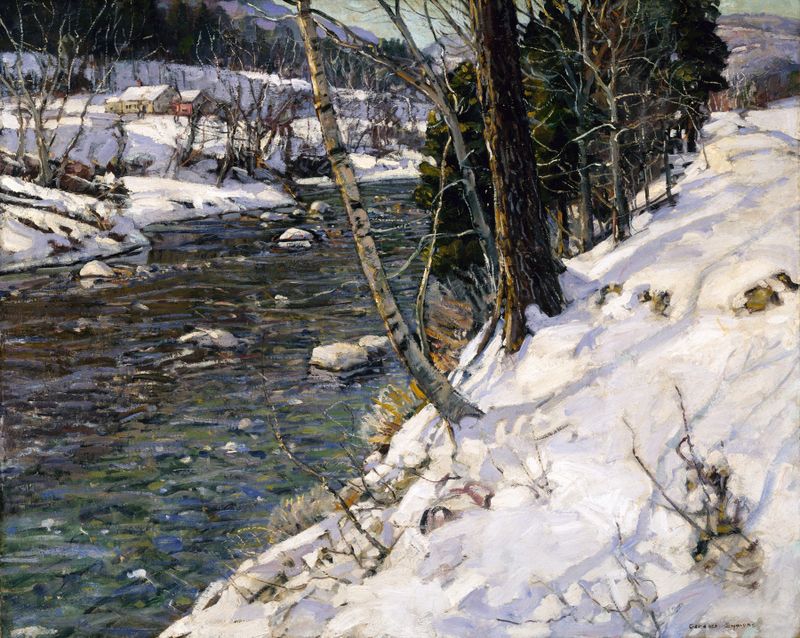
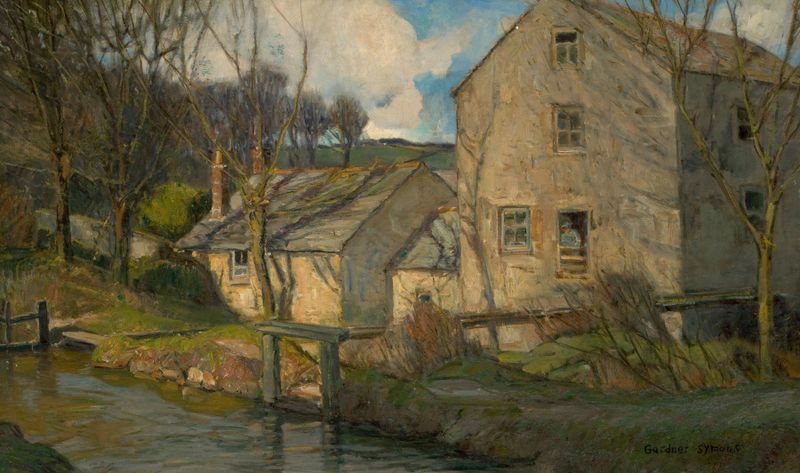
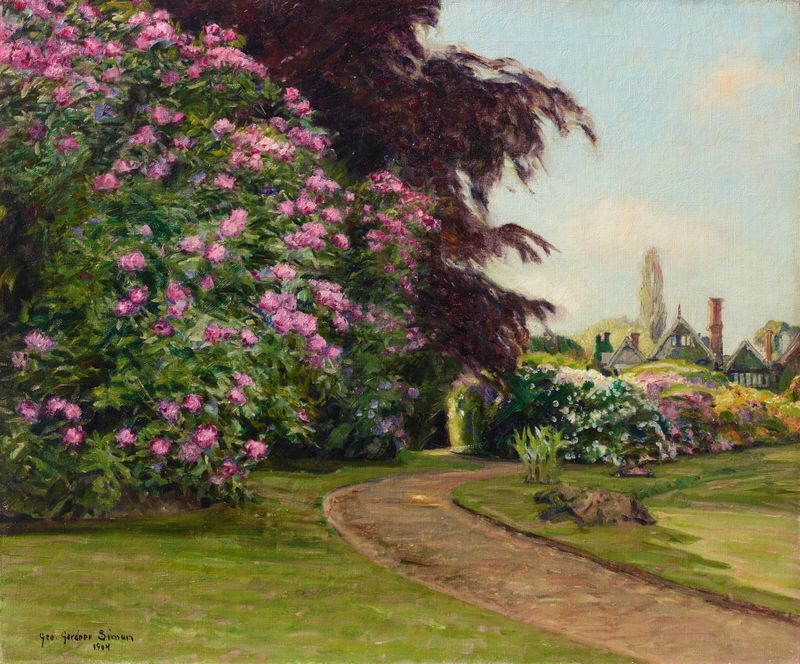
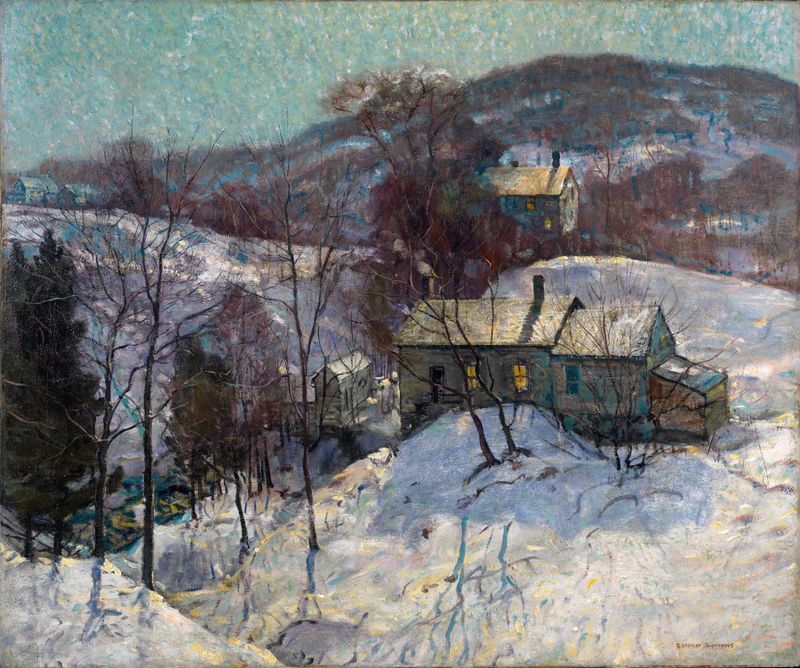
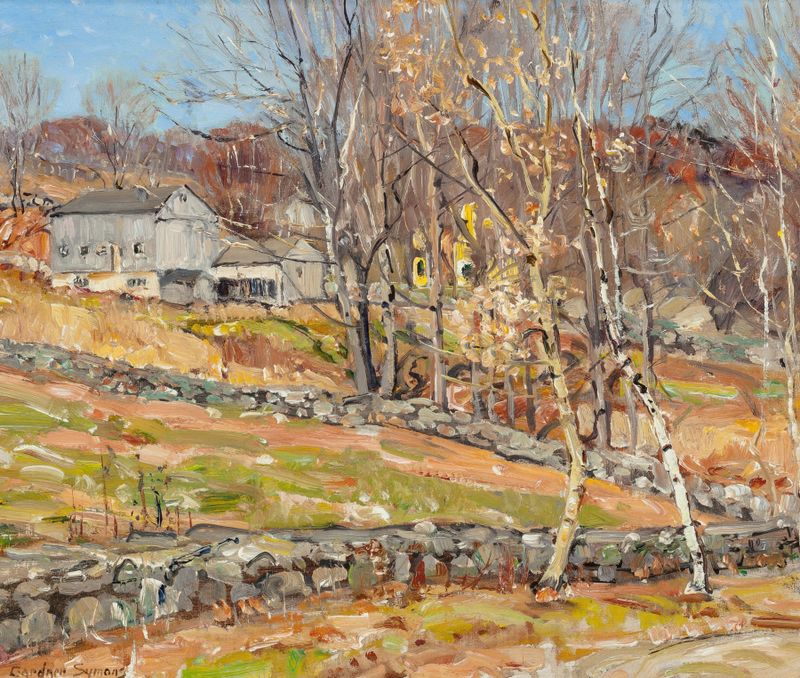
What if beauty was never meant to be finished? The fleeting nature of light, captured in a single moment, beckons us to ponder our own impermanence. Look to the horizon, where the Berkshire Mountains rise majestically, bathed in the warm, golden glow of evening light. The brushstrokes, soft yet deliberate, create an ethereal atmosphere that draws the eye towards the interplay of shadows and highlights across the landscape. Notice how the vibrant greens of the foliage contrast with the muted blues of the sky, inviting contemplation of a world that exists in both tranquility and transition. In this painting, there lies a delicate tension between the serenity of the mountain scene and the inevitable passage of time.
The brilliance of sunset suggests closure, while the lingering light evokes a sense of hope and renewal. Each element—the gently rolling hills, the whispering trees—reflects a moment caught between day and night, urging us to appreciate the beauty in what cannot last. George Gardner Symons painted this work during a time when Impressionism was evolving and gaining popularity, primarily in the late 19th century. The artist often focused on the harmonious relationship between light and landscape, seeking to capture the essence of nature through his unique approach.
During this period, he was influenced by the American plein air movement, which emphasized painting outdoors to capture the natural world's nuances, a practice that would deepen his exploration of light and atmosphere.