Farmstead and Stone Fence — History & Facts
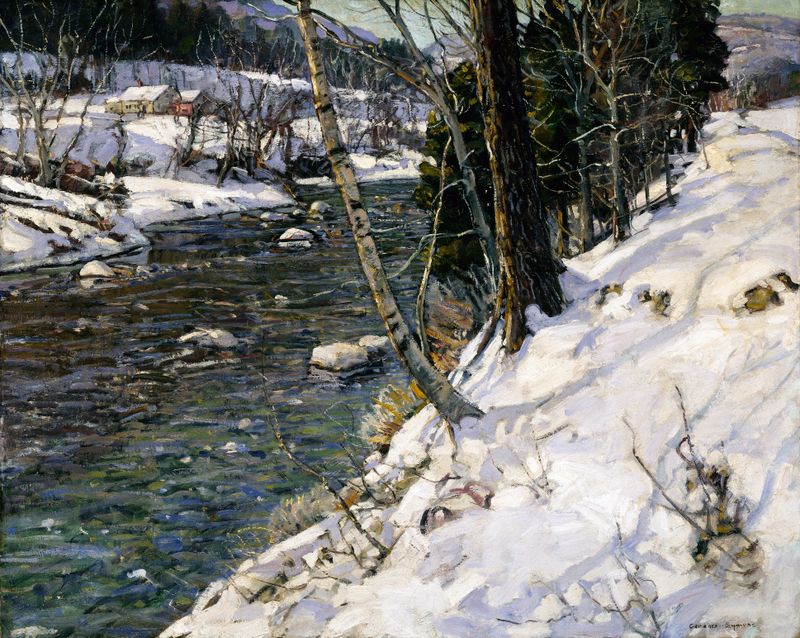
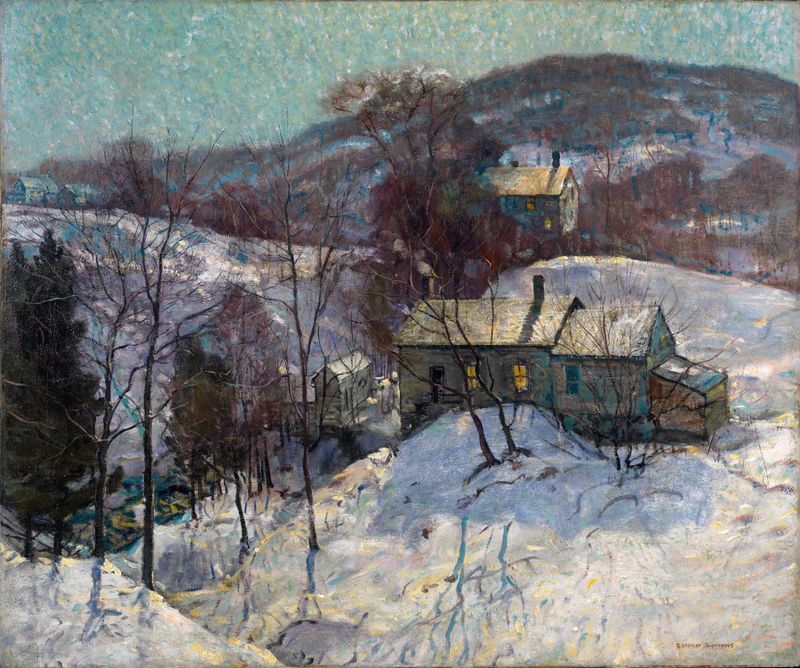
What if beauty was never meant to be finished? In the stillness of Farmstead and Stone Fence, a delicate truth emerges, inviting contemplation on the impermanence of landscapes and life itself. Look to the left at the warm hues of the farmhouse, where ochres and muted reds blend seamlessly with the earthy tones of the surrounding fields. Notice how the stone fence, with its robust texture, frames the scene and guides the eye toward the horizon, creating a sense of depth and permanence against the fleeting nature of the clouds above. The delicate interplay of light and shadow reveals the artist's deft brushwork, each stroke revealing a landscape both familiar and ethereal, as if it exists at the edge of reality. Hidden within this tranquil scene are emotional contrasts: the sturdy stone fence symbolizes security and the passage of time, while the soft, sweeping fields suggest a vulnerability, ever-changing and alive.
The gentle movement of the clouds hints at an unfolding narrative, perhaps one of seasons shifting, echoing the transient beauty of nature. The colors resonate with a nostalgic longing, evoking memories of a rural past that feels both distant and near, a delicate balance between permanence and ephemerality. During the late 19th century, George Gardner Symons found himself at the heart of an evolving artistic landscape in the United States. His work emerged amid the American Impressionist movement, reflecting a growing appreciation for natural beauty and atmospheric light.
While the exact date of this piece remains uncertain, his dedication to capturing the essence of rural life and the nuances of light signify a period of exploration and personal expression in his artistic journey.