
Erythraean Sibyl — History & Facts
A monumental seated woman dominates the centre, her powerful arms and broad shoulders rendered with sculptural clarity. She turns her head to the left while her right arm stretches forward, holding open a large book whose pages are inscribed with delicate lines. Her left hand rests on her knee, the fingers curled in a gesture of concentration or anticipation.
The figure’s face is calm and focused, her gaze directed away from the book as if lost in thought or prophecy. She wears a white garment draped over a coral bodice, with a golden sash and a voluminous skirt of ochre, green, and blue, the folds described in broad, confident strokes. Light falls from the upper left, illuminating the Sibyl’s forehead, arm, and the open book, while casting subtle shadows that model her form and the deep pleats of her clothing.
The background is a shallow architectural setting, with a stone bench and pilasters framing the scene, painted in warm, creamy tones. On either side, grisaille figures of nude youths are painted in monochrome, echoing sculpted reliefs and adding a sense of depth and complexity to the composition. The brushwork is smooth and precise, with subtle transitions of light and shadow, characteristic of the High Renaissance.
Every detail, from the intricate hairstyle to the veins in her foot, is rendered with meticulous attention. Two youthful figures appear behind the central woman, one holding a shallow dish with a flame and the other partly obscured, their bodies rendered in warm flesh tones and soft contours. The bench on which the woman sits is covered with a blue drapery that falls in angular folds over the edge, contrasting with the creamy stone beneath.
In the upper corners, the architectural frame is decorated with painted moldings and pilasters, adding depth and structure to the composition. On the left and right edges, monochrome reliefs depict pairs of intertwined nude figures, their forms outlined in delicate gray tones. Light highlights the woman’s left shoulder and the upper part of her arm, while the lower right edge of the scene is cast in deeper shadow, emphasizing the three-dimensionality of the figures and architecture. This work belongs to the High Renaissance movement, as noted in the museum record.
Sources: Wikidata Q3960006 · Image source (Wikimedia Commons)
More Artworks by Michelangelo

Libyan Sibyl
Michelangelo
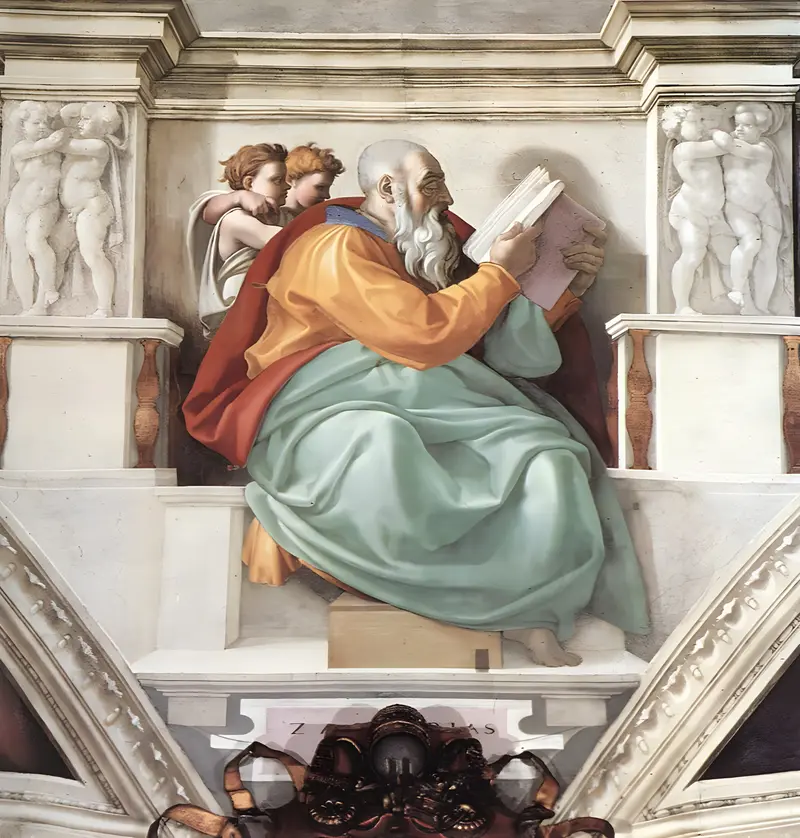
Prophet Zechariah
Michelangelo

Cumaean Sibyl
Michelangelo
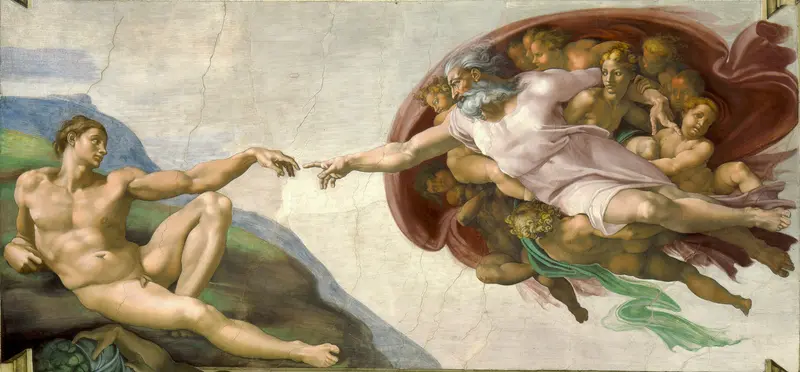
The Creation of Adam
Michelangelo
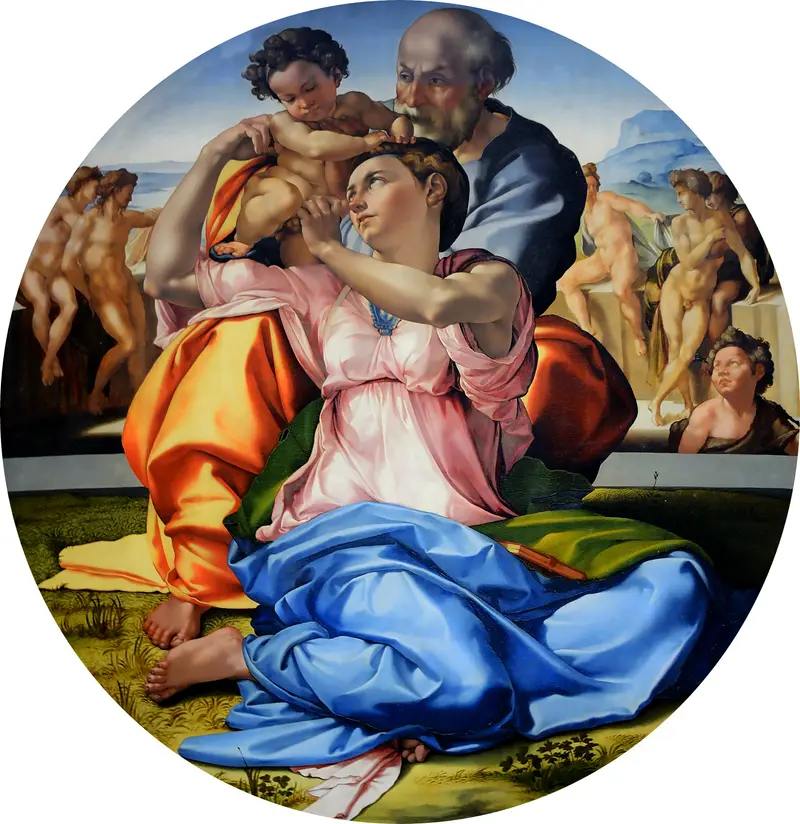
Doni Tondo
Michelangelo
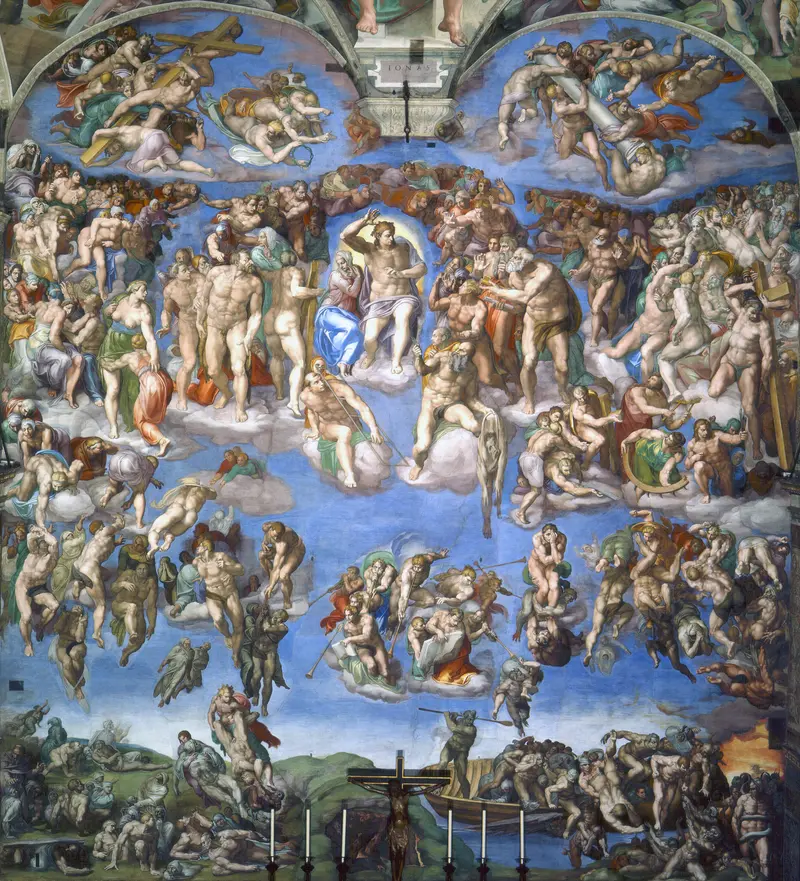
The Last Judgment
Michelangelo
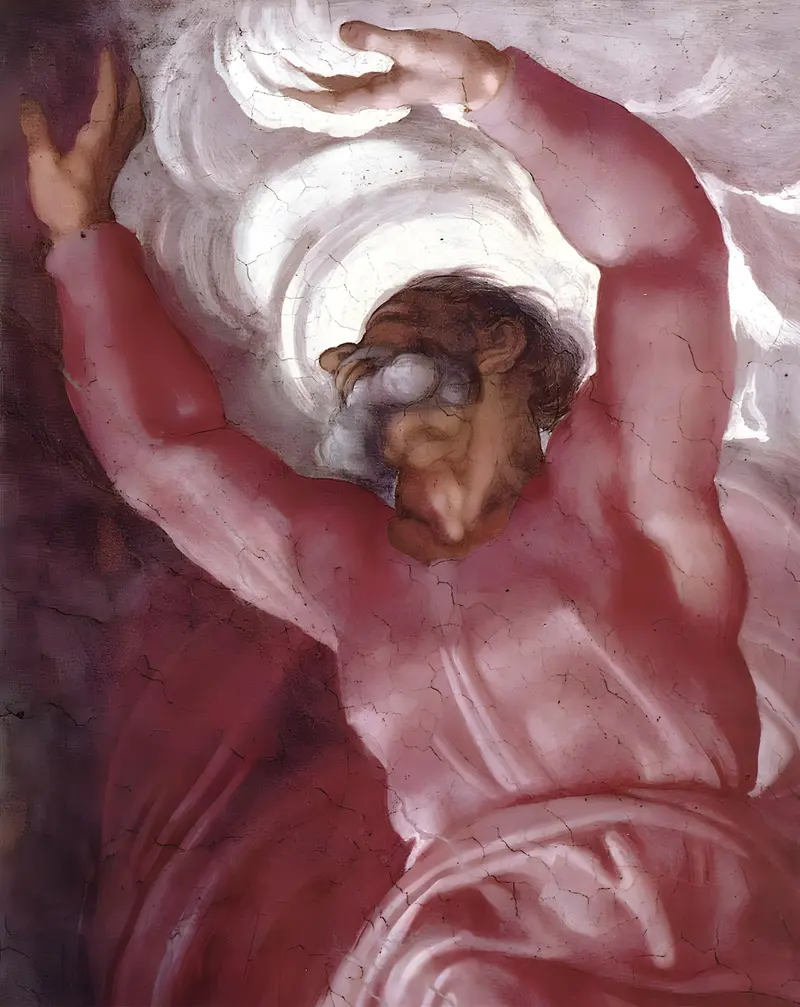
Separation of Light from Darkness
Michelangelo
The Separation of the Earth and Waters
Michelangelo
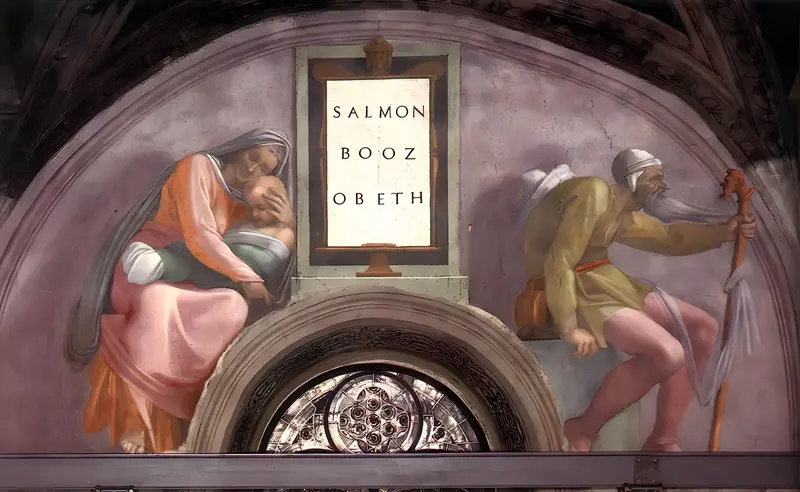
Salmon, Boaz, Obed
Michelangelo
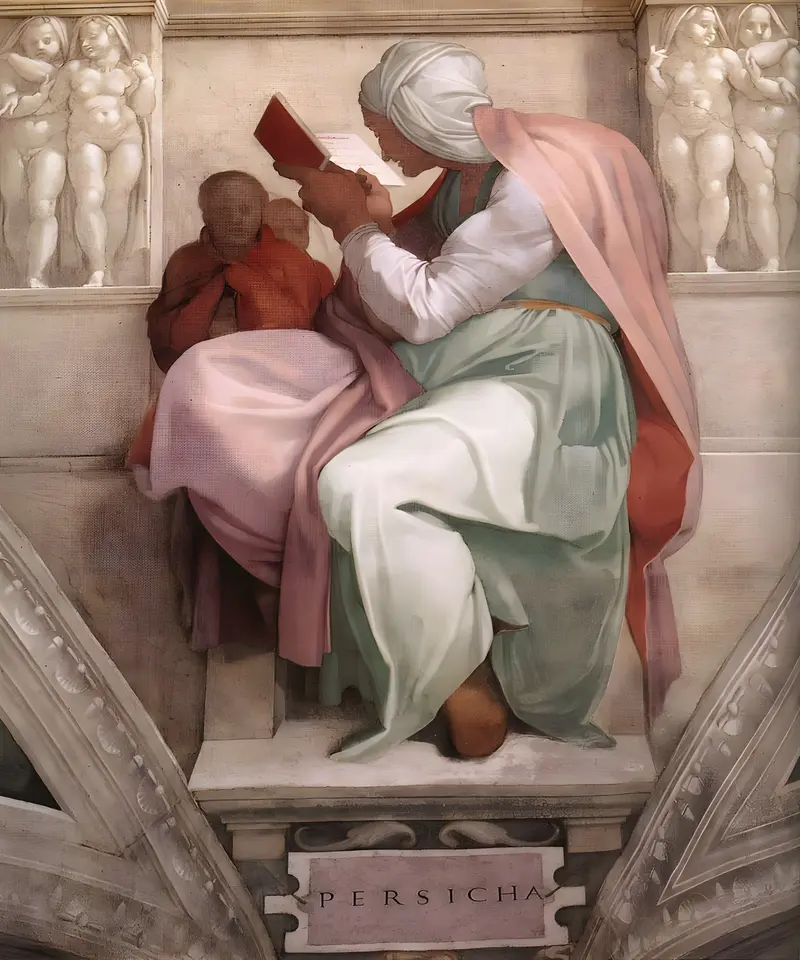
Sistine Chapel ceiling - Persian Sibyl
Michelangelo




