
Ettermiddagsstemning — History & Facts
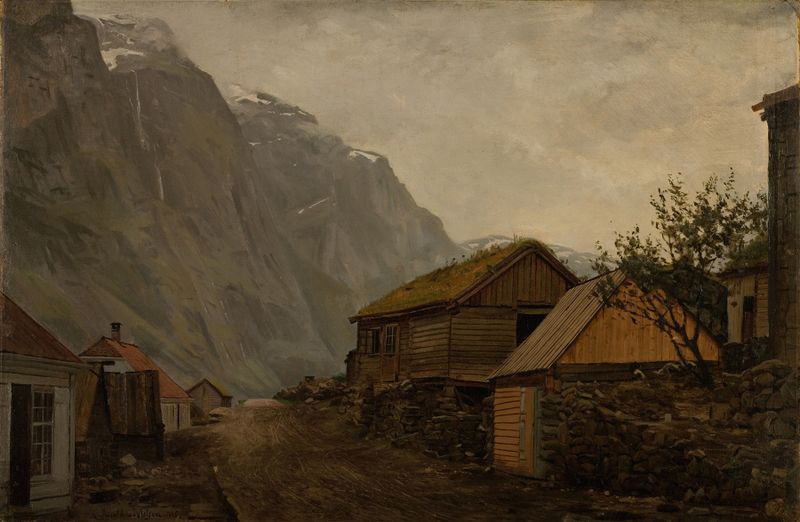
In the interplay of light and color, we find not just a scene but an echo of emotion lingering in the air. Look to the foreground of Ettermiddagsstemning, where soft hues of ochre and mauve blend seamlessly, evoking the tender embrace of twilight. The artist expertly captures the warm glow of the setting sun, its rays spilling gently over the landscape, inviting the viewer to linger. Notice the delicate brushwork in the trees, their leaves shimmering with a golden sheen, while the distant hills dissolve into a soft violet haze.
This masterful composition creates a harmony that envelops the viewer, drawing them into a moment suspended in time. Beneath the surface of this serene vista lies an emotional tension between tranquility and the inevitable arrival of night. The juxtaposition of warm and cool tones symbolizes the fleeting nature of daylight, hinting at the contemplation that dusk often brings. The gentle ripples on the water's surface reflect not only the sky’s colors but also the deeper introspections of life, love, and longing, inviting viewers to connect with their own experiences of transition and change. Amaldus Nielsen painted Ettermiddagsstemning in 1889, during a period of significant artistic exploration in Norway.
At this time, he was part of a movement that sought to harness the beauty of natural light and atmosphere. His dedication to capturing the nuances of the Norwegian landscape marked him as a notable figure in the development of Impressionism in Scandinavia, reflecting a broader shift in the art world towards embracing the ephemeral qualities of nature.
More Artworks by Amaldus Nielsen
Browse all →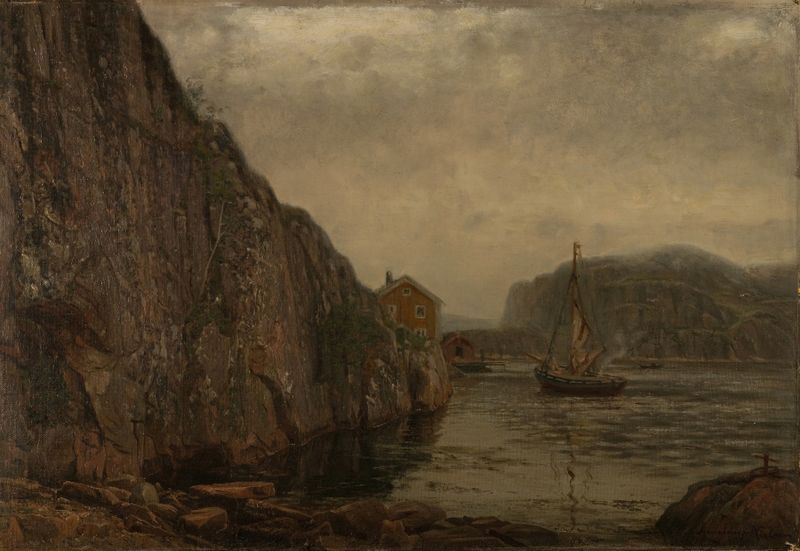
Skjærgård, Ny-Hellesund
Amaldus Nielsen
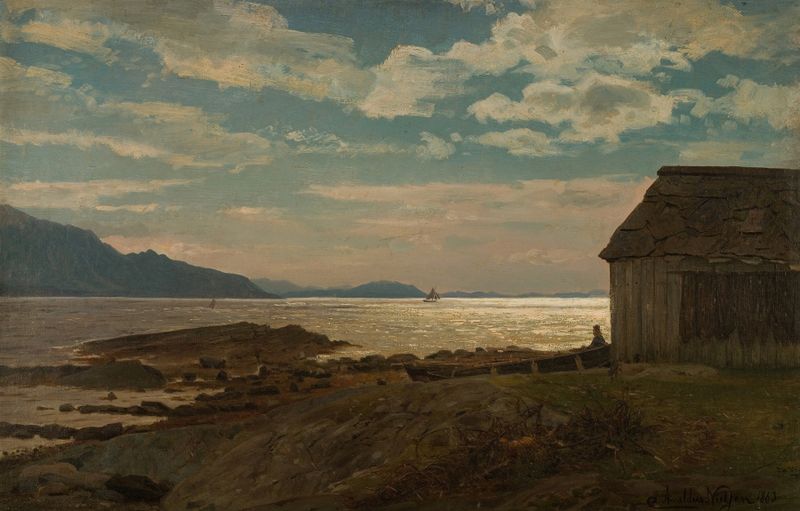
Fra Ølvestranden, Hardanger
Amaldus Nielsen
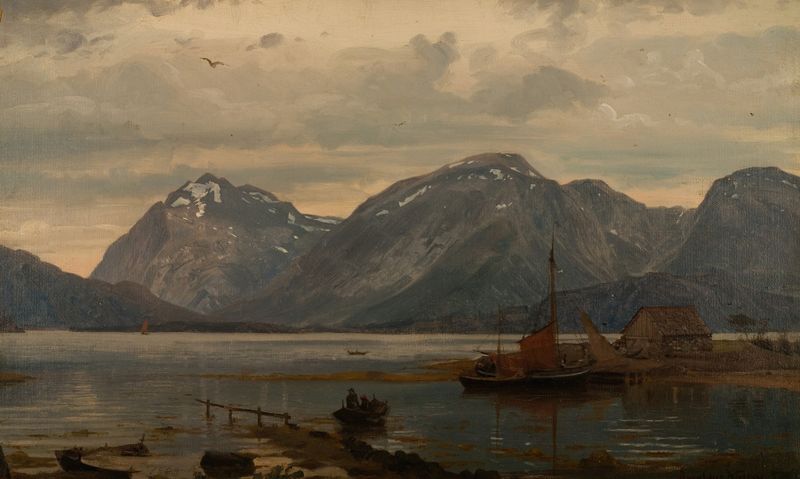
Fra Englafjellene, Hardanger
Amaldus Nielsen
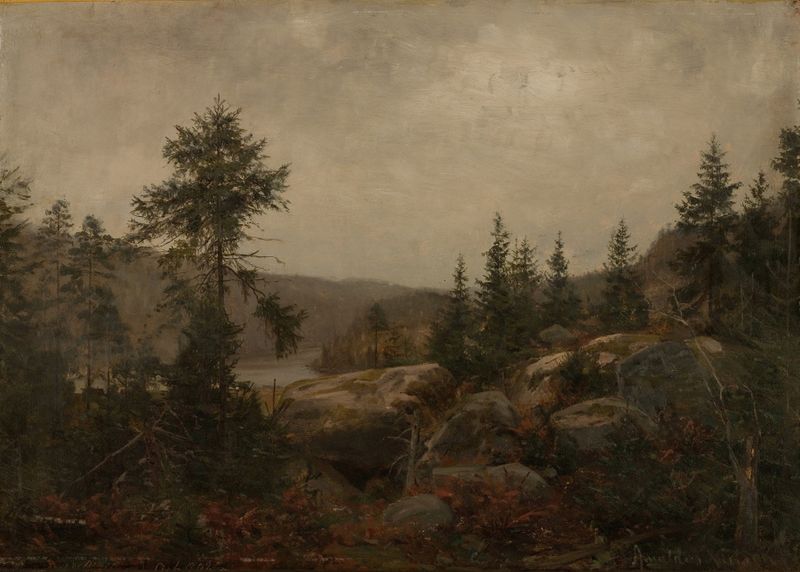
Duskregn . Gården Foss, Mandalselven
Amaldus Nielsen
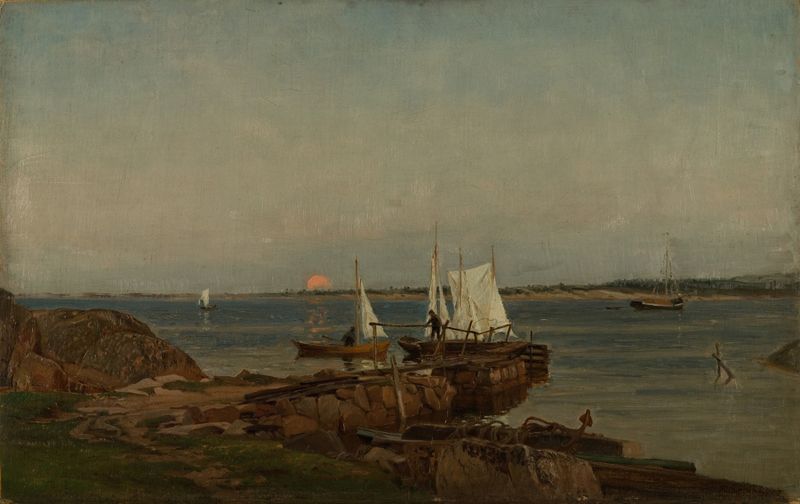
Sommernatt, Hvaler
Amaldus Nielsen
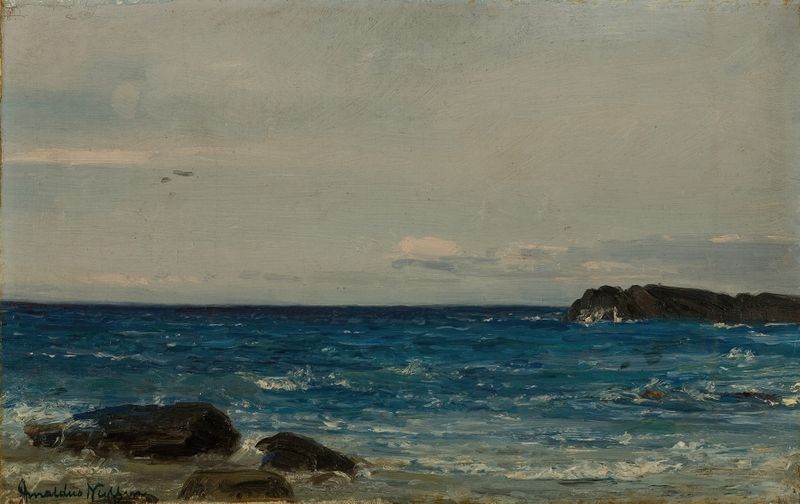
Fra Jæren
Amaldus Nielsen
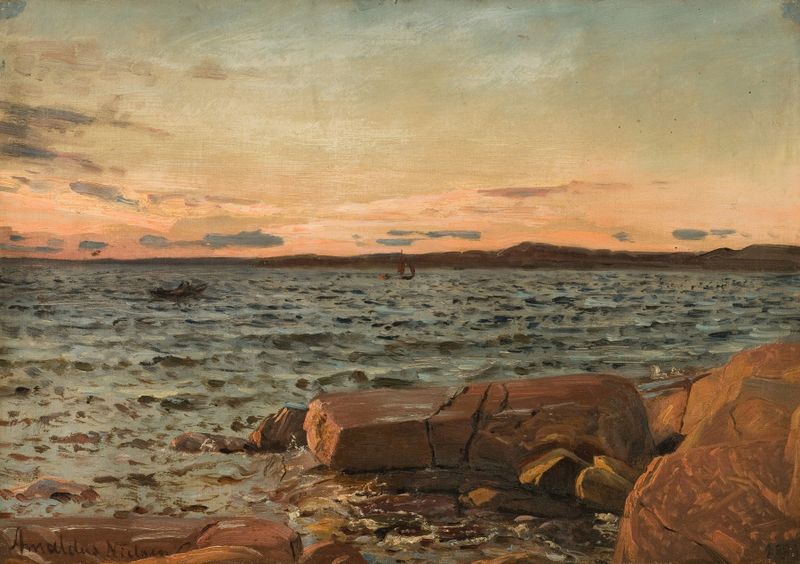
Solgangsvind, Hvaløene
Amaldus Nielsen
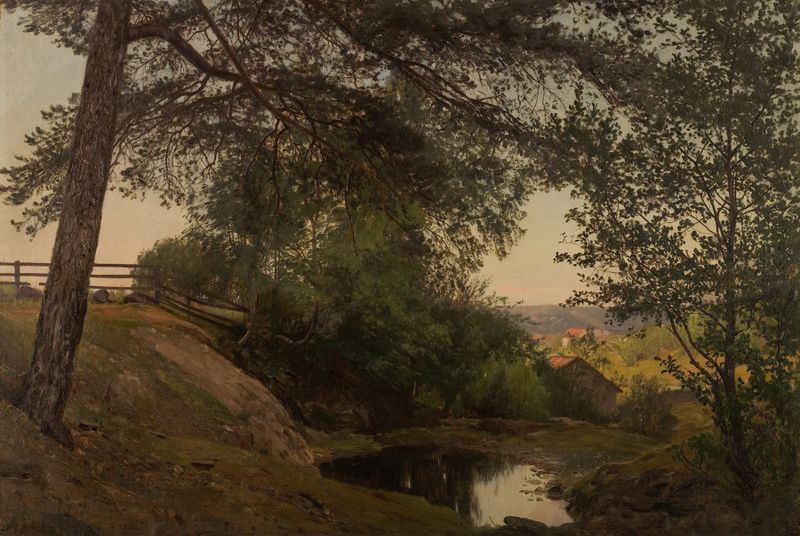
Mellom trærne. Lervik, Stord
Amaldus Nielsen

Båtbyggeri, Lillesand
Amaldus Nielsen
Regnstemning, Gudvangen
Amaldus Nielsen





