
Evening — History & Facts
Can paint confess what words never could? In Evening, the essence of destiny unfolds through a delicate interplay of color and texture, inviting contemplation far beyond the canvas. Look to the warm hues enveloping the horizon, where soft oranges and deep purples meld seamlessly into one another. Notice how the light cascades across the landscape, illuminating the figures in the foreground—a woman gazing pensively into the distance, her silhouette framed by the encroaching dusk. The harmony of brushwork suggests a fleeting moment, as if time itself pauses to reflect on the weight of unspoken thoughts and emotions resting in the air. There is an interplay between solitude and connection, captured in the woman's stance.
Her body leans slightly forward, yet her gaze is turned away, emphasizing a profound sense of longing. The encroaching night serves as both a cloak and a revelation, hinting at the inevitability of change while preserving the beauty of the present moment. Each stroke speaks to the silent conversations that shape our destinies, leaving the viewer to ponder what lies beyond the horizon. Wojciech Weiss painted Evening in 1900 during a transformative period in Polish art history.
This was a time of burgeoning modernism, where artists began exploring emotional depth and existential themes, moving away from rigid academic conventions. Weiss, influenced by Symbolism, sought to convey the subtleties of human experience, reflecting both personal introspection and the broader cultural shifts of his time.
More Artworks by Wojciech Weiss
Browse all →
Kraków w oddali II
Wojciech Weiss
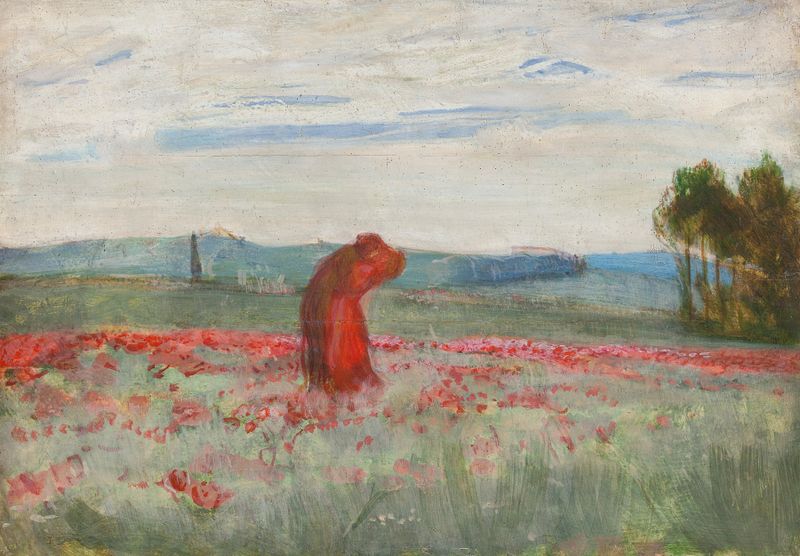
Pocałunek wśród maków
Wojciech Weiss

Calvary
Wojciech Weiss
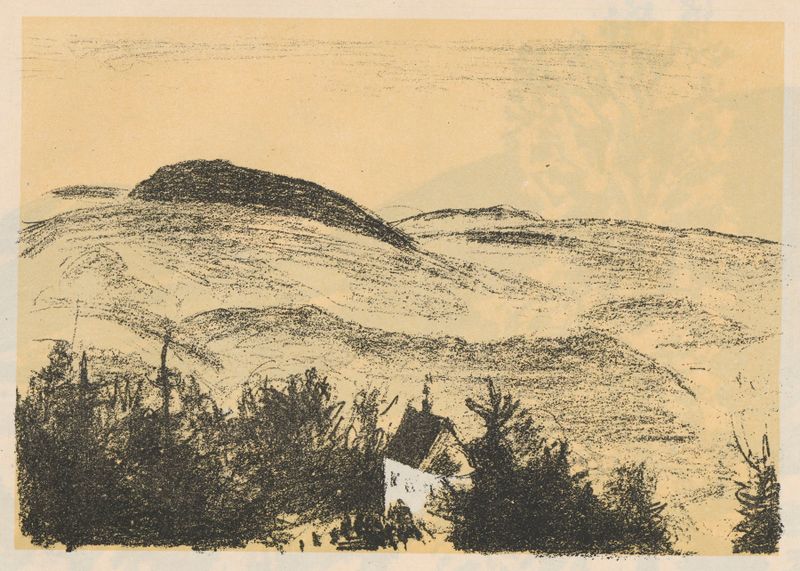
Kalwaria
Wojciech Weiss

Landscape with Trees
Wojciech Weiss
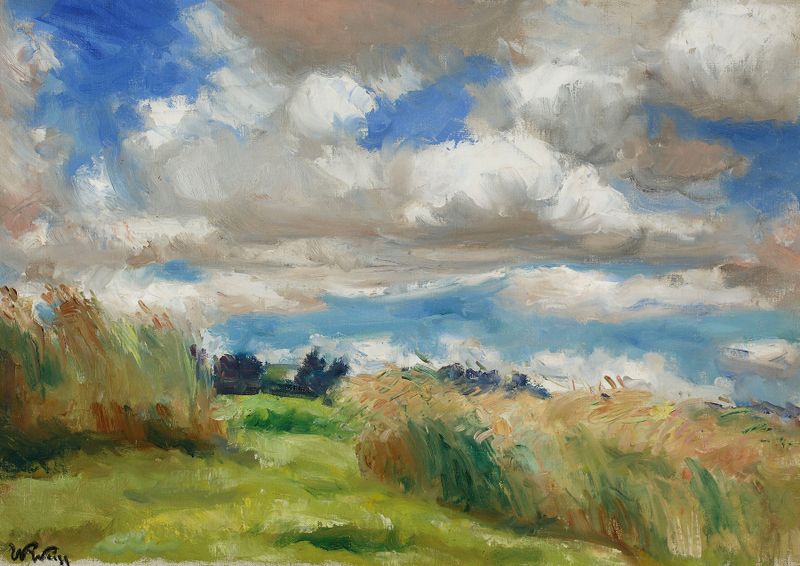
Landscape of Kalwaria Zebrzydowska
Wojciech Weiss

Apple-Trees
Wojciech Weiss
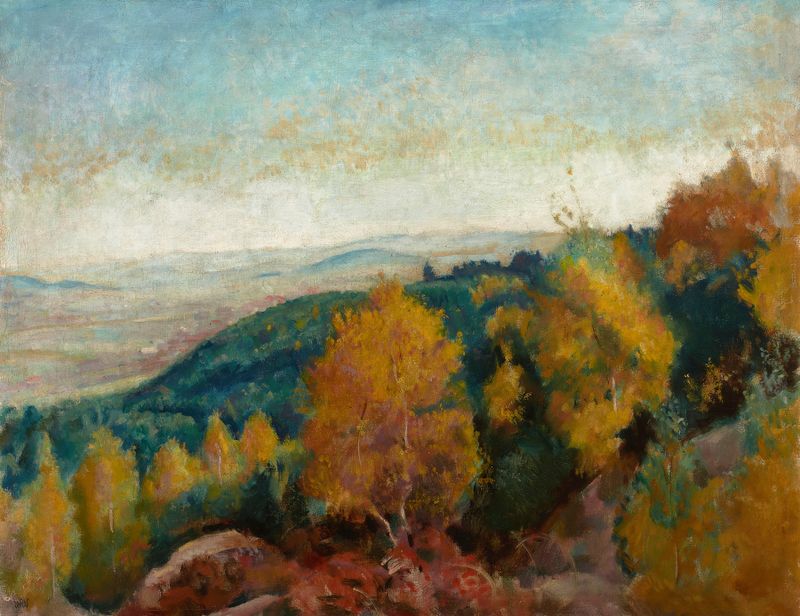
Autumn Landscape – Environs of Kalwaria Zebrzydowska
Wojciech Weiss

In the garden
Wojciech Weiss

Landscape with hollyhocks
Wojciech Weiss





