Evening Landscape with Crows — History & Facts
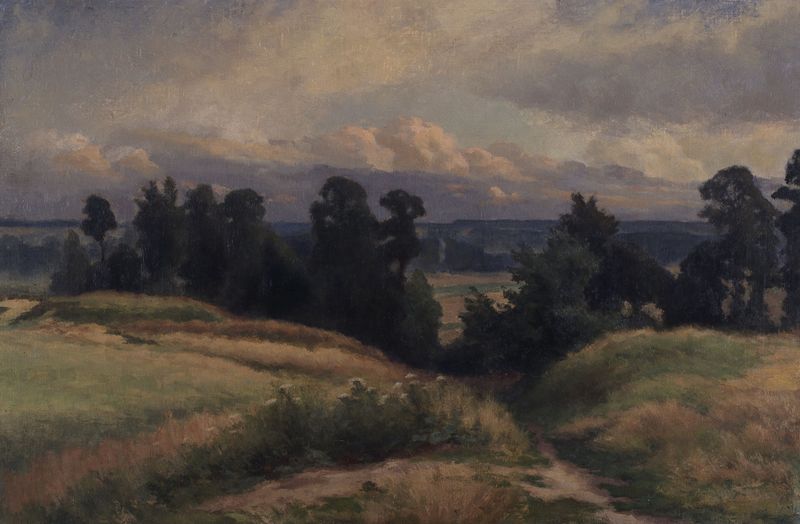
Did the painter know this moment would outlive them? In Evening Landscape with Crows, shadows stretch and deepen, weaving a tapestry of time that whispers of both presence and absence. Look to the lower left, where the silhouetted crows take flight, their dark forms stark against the fading gold of the sky. Notice how Bytebier skillfully balances earthy greens and muted browns in the foreground, creating a serene yet haunting ambiance. The brushwork, thick and deliberate, invites your gaze to meander through the landscape, while the soft, diffused light bathes the scene in a tranquil glow, suggesting both the end of the day and the passage of time. Beneath the tranquil surface lies a tension between freedom and confinement.
The crows, symbols of both mystery and the unknown, evoke a sense of transition, dancing between dusk and darkness. The landscape, though lush, hints at isolation, urging the viewer to ponder the paradox of beauty found in solitude. The shadows stretch not just across the canvas but across the continuum of life itself, suggesting the inevitability of change. In 1932, Bytebier painted this piece during a time of significant turmoil in Europe, reflecting the uncertainties of the era.
He was exploring themes of nature and existence, embedding emotional profundity in his landscapes. This work emerged from an artist grappling with both personal and societal shadows, connecting deeply with viewers who continue to find relevance in its quiet yet powerful narrative.