Water Mill — History & Facts
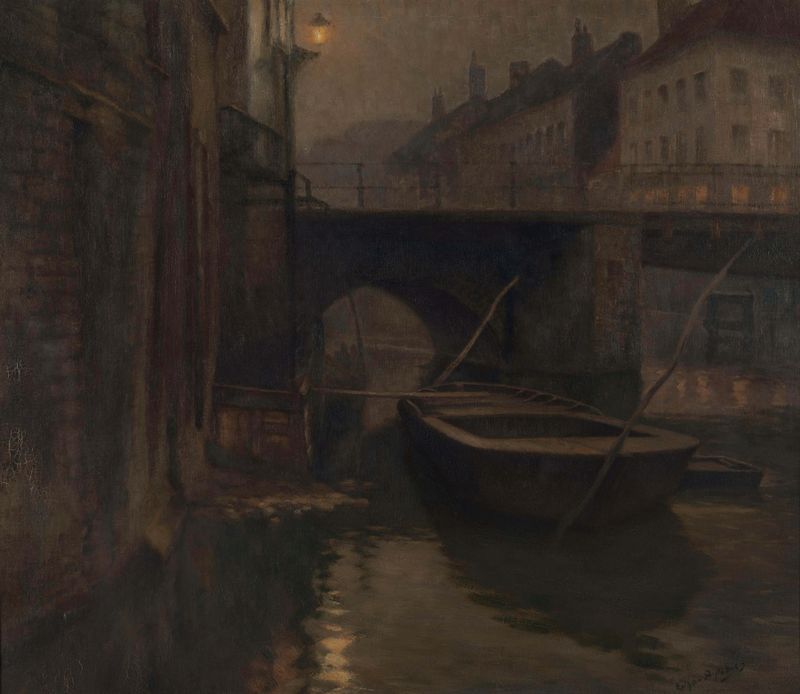
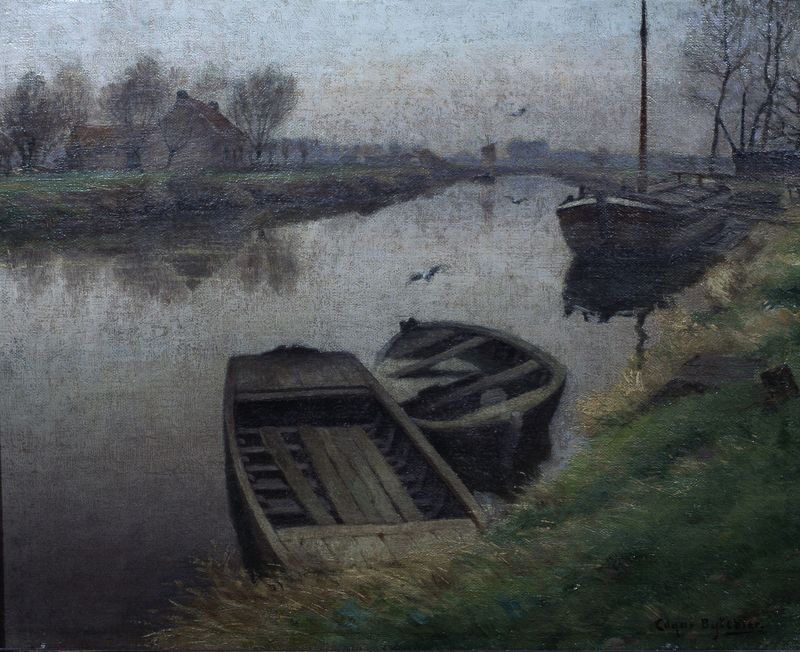
Could a single brushstroke hold eternity? In Water Mill, Edgar Bytebier captures the relentless passage of time, inviting us to ponder the moments that flow like water, ceaseless and inevitable. Look to the left at the soft, rippling water that reflects the ethereal hues of the sky, a blend of blues and grays that evoke both tranquility and nostalgia. The mill stands steadfast on the right, its structure defined by precise lines that contrast with the fluidity of the surrounding landscape. Notice how Bytebier employs a delicate balance of light and shadow, highlighting the interplay between nature and architecture, while the brushstrokes convey a sense of movement, as if the scene breathes with each passing second. There is a profound tension between permanence and transience in this work.
The mill, sturdy yet vulnerable to the passage of time, symbolizes human endeavor, while the flowing water beneath it represents the relentless march of nature. The muted palette adds a layer of melancholy, reflecting a world caught between the desire to endure and the inevitability of change. Each element within the composition works together to remind us of our own fleeting moments, echoing the emotions we often struggle to articulate. Bytebier painted Water Mill in 1921, during a time of great social and artistic upheaval in Europe.
Fresh from the trauma of World War I, artists were grappling with new ideas and techniques, seeking to express the complexities of the human experience. This work reflects Bytebier’s exploration of time and memory, embodying the tensions of his era while also capturing the universal truth of life’s impermanence.