November in Sint-Martens-Bodegem (Dilbeek) — History & Facts
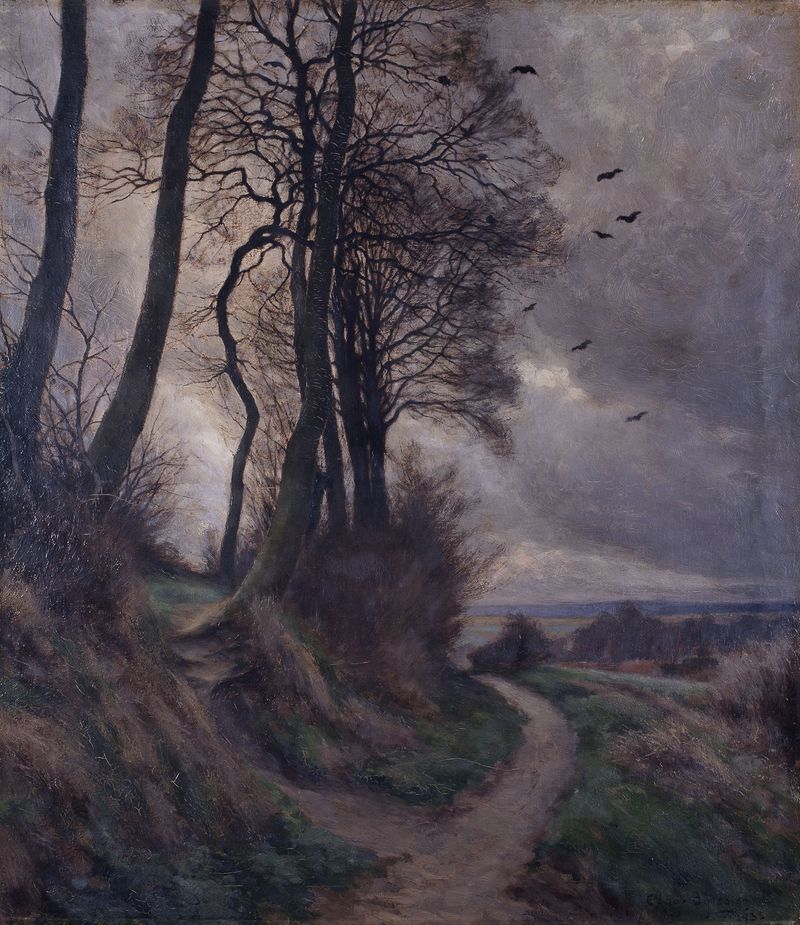
Could beauty survive in a century of chaos? In the quiet folds of a suburban landscape, a moment of reflection trembles amid the shadows of grief. Look to the center of the canvas, where a solitary tree stands resilient against a backdrop of muted blues and earthy browns. The branches, bare and stark, reach out like fingers grasping for the warmth of forgotten summers. Notice how the light filters delicately through the clouds, casting a soft glow that highlights the contours of the land.
The painter’s brushwork, both precise and expressive, captures a tranquil yet somber atmosphere, urging the eye to wander and contemplate. As you delve deeper, small details emerge—a fallen leaf rests on the damp ground, a symbol of loss and the inevitable passage of time. The stillness of the scene contrasts sharply with the emotional undercurrents of melancholy woven into the landscape. Here, the simplicity of nature becomes a poignant metaphor for resilience and memory, inviting viewers to reflect on their own experiences of grief and the beauty that can arise from it. Created in the 20th century, this piece reflects Edgar Bytebier's introspective approach during a time marked by social upheaval and artistic experimentation.
Living in Belgium, Bytebier often explored themes of memory and loss, mirroring the collective consciousness of a world grappling with change. His work speaks to the quiet strength found in nature, a solace for both artist and observer amidst the chaos of contemporary life.